print, etching
# print
#
etching
#
landscape
#
etching
#
cityscape
#
realism
Copyright: National Gallery of Art: CC0 1.0
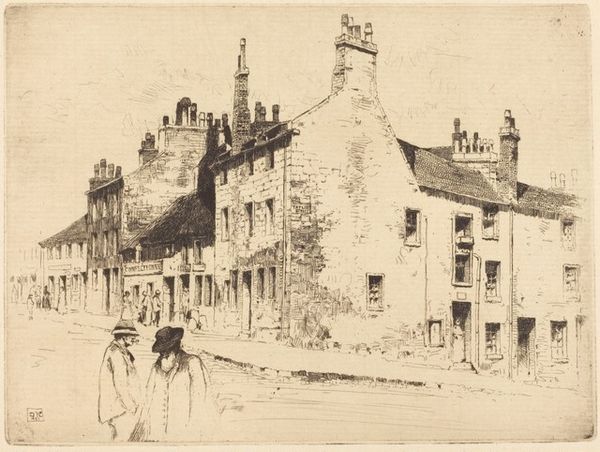
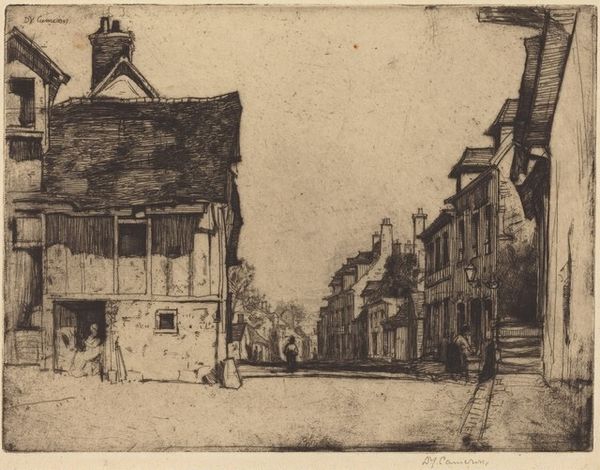
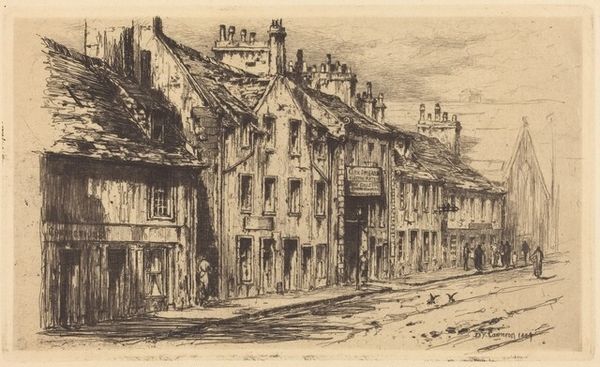
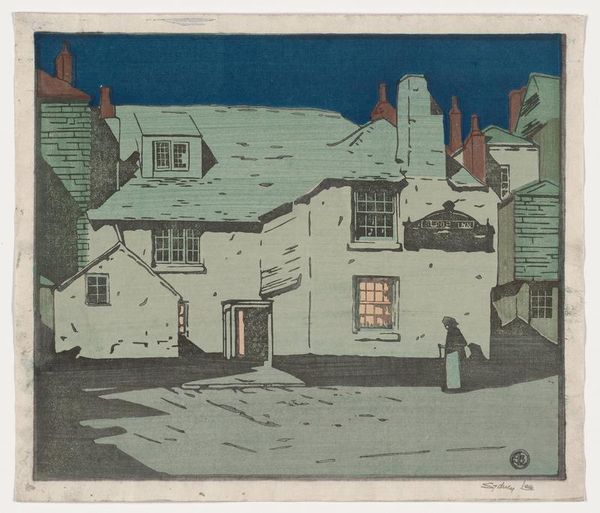
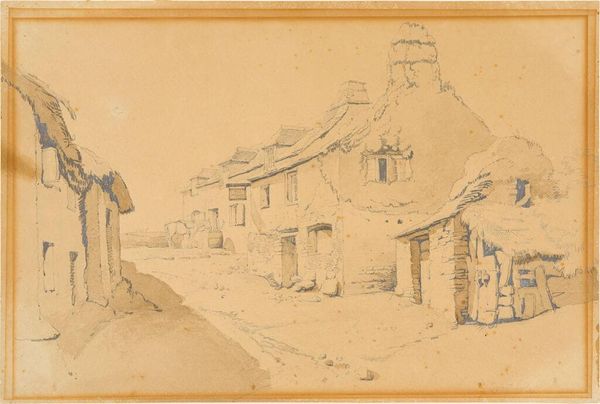
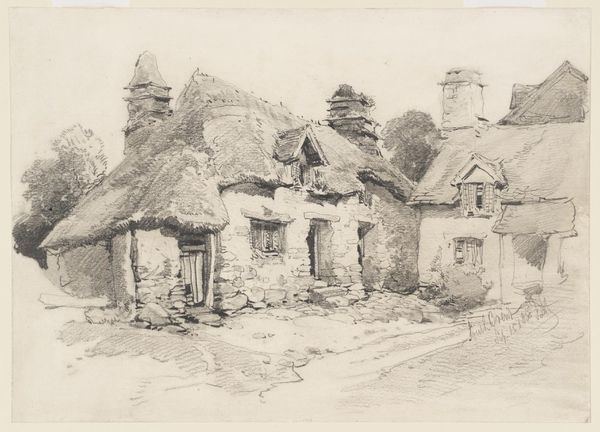
Editor: This is "Old Houses, Byres Road, Partick", an etching by David Young Cameron from 1894. There's such a detailed depiction of these old buildings, but there's something melancholy about it. What strikes you most about this scene? Curator: It captures a specific moment in Glasgow's history, just as it was modernizing. These older buildings, rendered so meticulously in the etching, were likely already marked for demolition or redevelopment. This print then, functions as a record of a vanishing way of life and invites a reflection on urban change. How does this connect to Glasgow's urban identity at the time? Editor: I guess it's about preserving something that was rapidly disappearing. Like a last look at the city's roots before they're gone forever. So, would people then have seen it as a kind of social commentary? Curator: Possibly. But it is not overt or aggressive; there’s an appreciation for the scene, even beauty. Consider who was buying and exhibiting these etchings: often wealthy patrons or galleries showcasing "fine art". While documenting social change, Cameron’s work wasn't necessarily created as radical critique, but offered a view of the changing urban landscape. Editor: That makes sense. So it’s less about protest and more about observation. I wonder what those people walking down the road thought about this process of change, and about someone documenting their homes in this way. Curator: That's the important part - to understand who had the privilege to observe and depict, and whose stories were being told. Who do you think benefitted the most from this artwork, and how? Editor: I see now; thinking about the socio-political forces that shape how we even *see* art gives so much more context. Thanks! Curator: Exactly! Thinking about the wider social forces help us better interpret the artwork.
Comments
No comments
Be the first to comment and join the conversation on the ultimate creative platform.
 Collect
 React
React Comment
More like this