1856 - 1935
Ekslibris


Listen to curator's interpretation
Curatorial notes
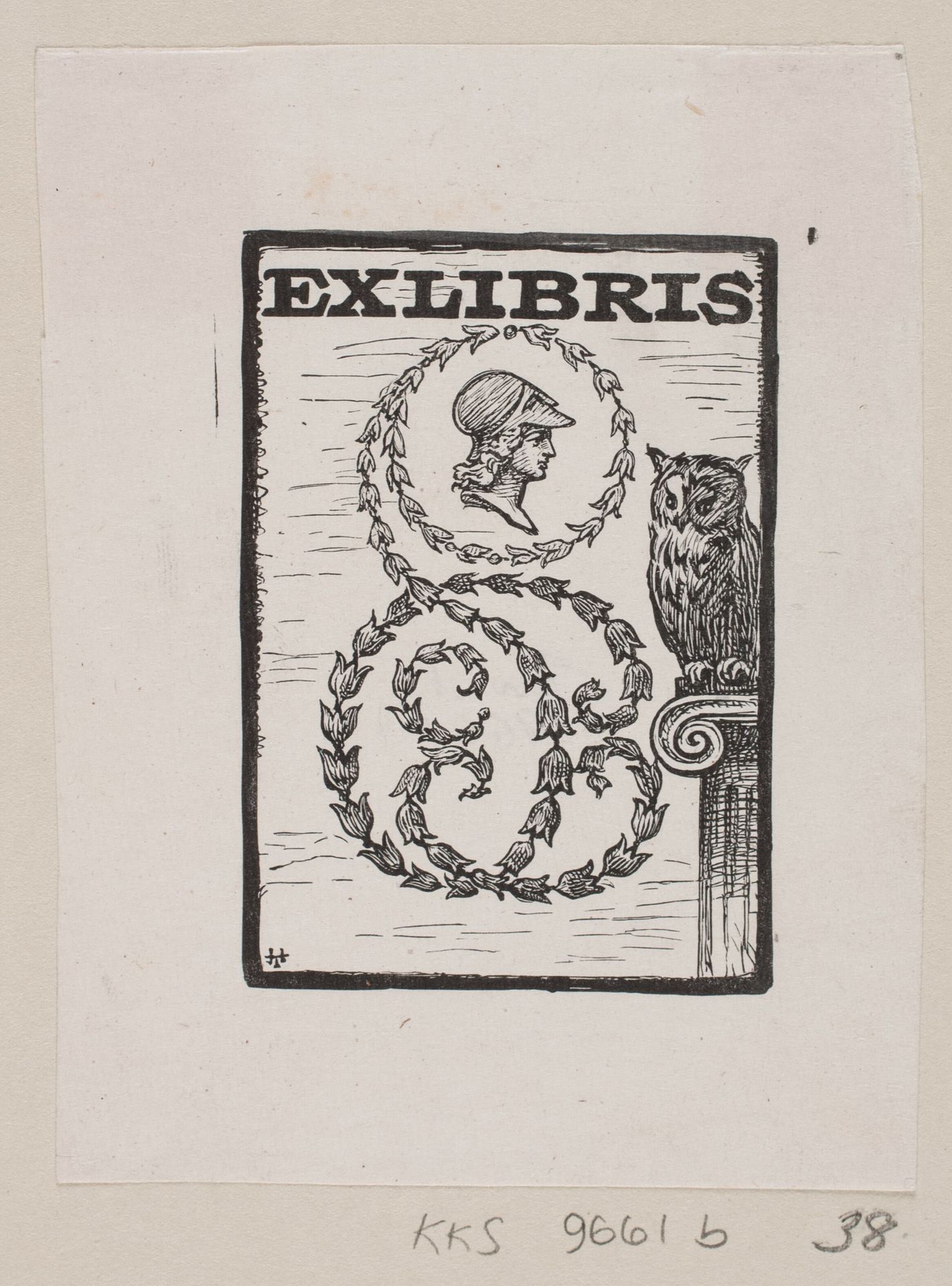
Curator: This small, but fascinating piece is titled "Ekslibris," and it dates roughly from 1856 to 1935. It’s currently held in the collection of the SMK, the Statens Museum for Kunst. Herman Rudolf Müller is credited as the artist behind its creation. Editor: I must say, even at a glance, the contrasting textures draw me in. The geometric lines and the softness of the floral elements make a compelling pairing. What can you tell me about the symbolic nature of this graphic? Curator: Well, an "ex libris," or bookplate, always says something about the owner. Müller’s piece is rendered using ink in several graphic art processes, including engraving. Consider the labor required for each tiny line, the precision involved...it speaks to a tradition of meticulous craft inherent in printmaking during that time. Editor: From my point of view, I think the execution of the composition provides significant information about the meaning, too. The balance between the geometric forms and the curvilinear lines. Then there’s the suggestion of a portrait – likely Athena – counterposed by an owl. All those precise engraved lines seem to represent a specific intellectual ambition. Curator: Absolutely! And, in many cases, prints such as this were made to order. These bookplates signal social status; a commitment to books as material objects within a household economy and hierarchy. Think about who would commission such a personalized item. Who would have the means? Editor: Thinking visually, that classic image in profile, helmeted and wreathed, is fascinating set beside an owl perched atop a column – traditional emblems of wisdom and classical learning. Together these images speak volumes about knowledge, or, better put, about a desire to present oneself as a learned person. Curator: Right. We see an individual claiming access to this historical lineage, aligning themselves with notions of intellectual rigor, and classical aesthetics… Editor: Ultimately, looking closely at the design, production method, and its classical emblems can guide our reading. Curator: Precisely, and also towards an understanding of its original owner and its place within a network of makers and consumers. Editor: It makes me wonder if we will be analyzing e-readers as carefully in the centuries to come! Curator: A very different set of circumstances, indeed!