1784
Marie Antoinette: The Queen of Fashion: Gallerie des Modes et Costumes Français

Nicolas Dupin
1753 - 1789Location
RijksmuseumListen to curator's interpretation
Curatorial notes
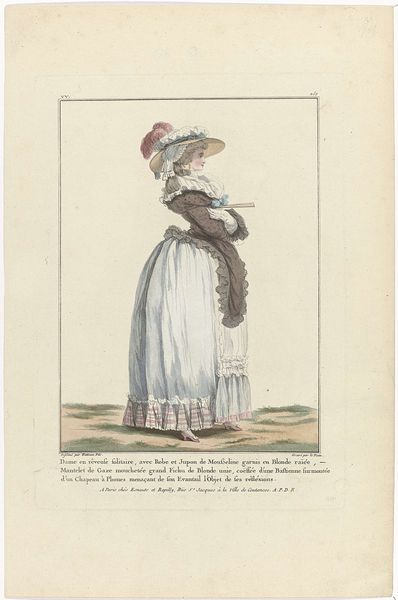
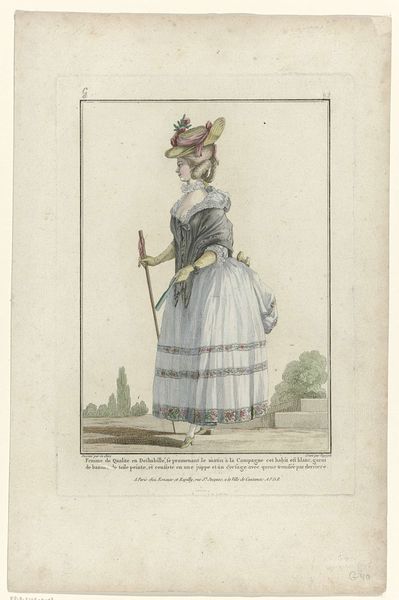
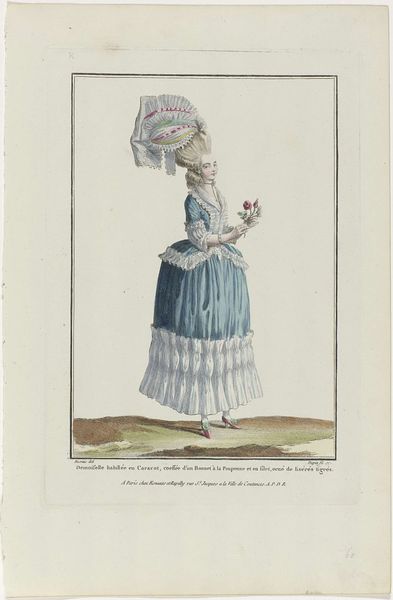
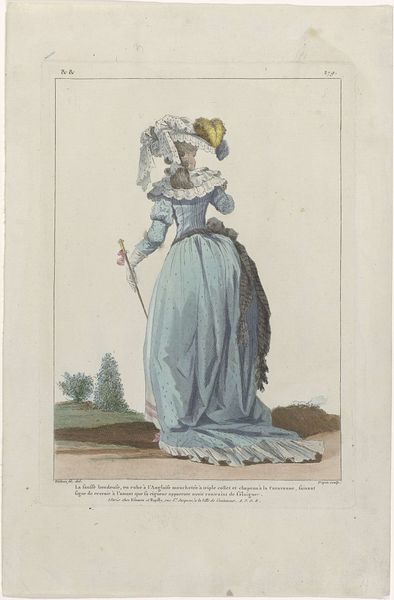
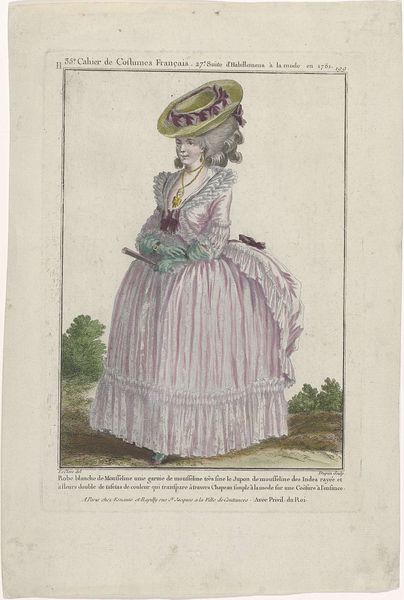
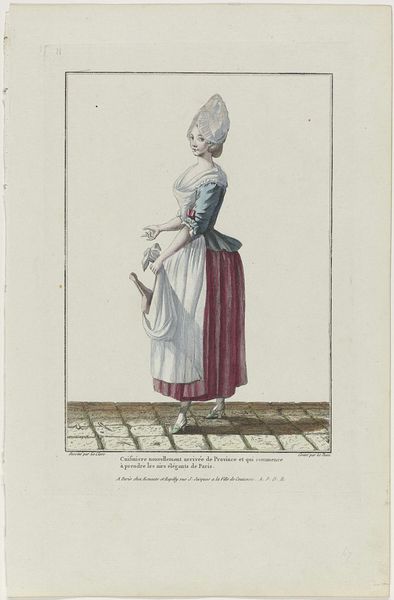
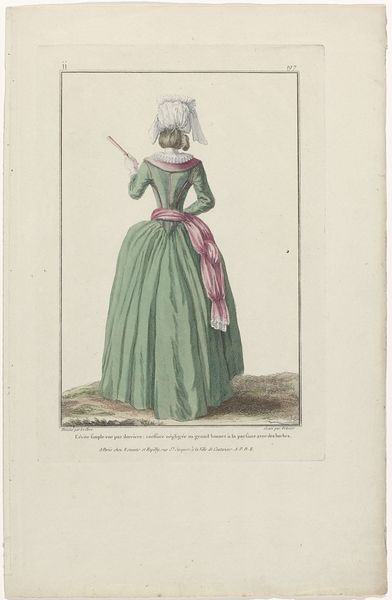
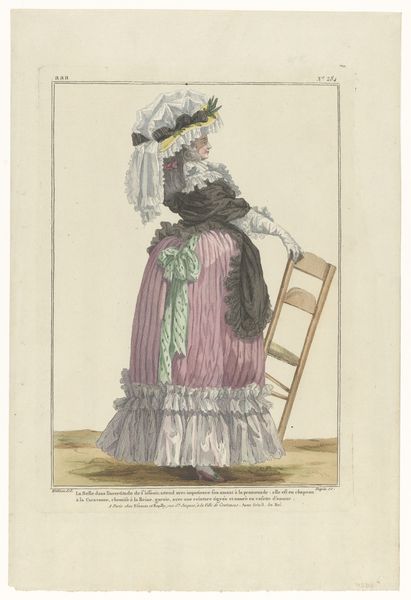
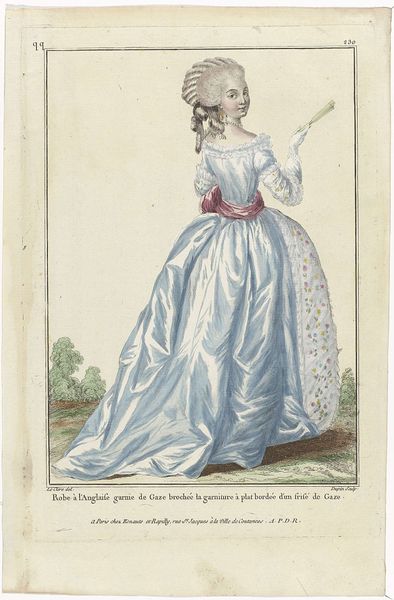
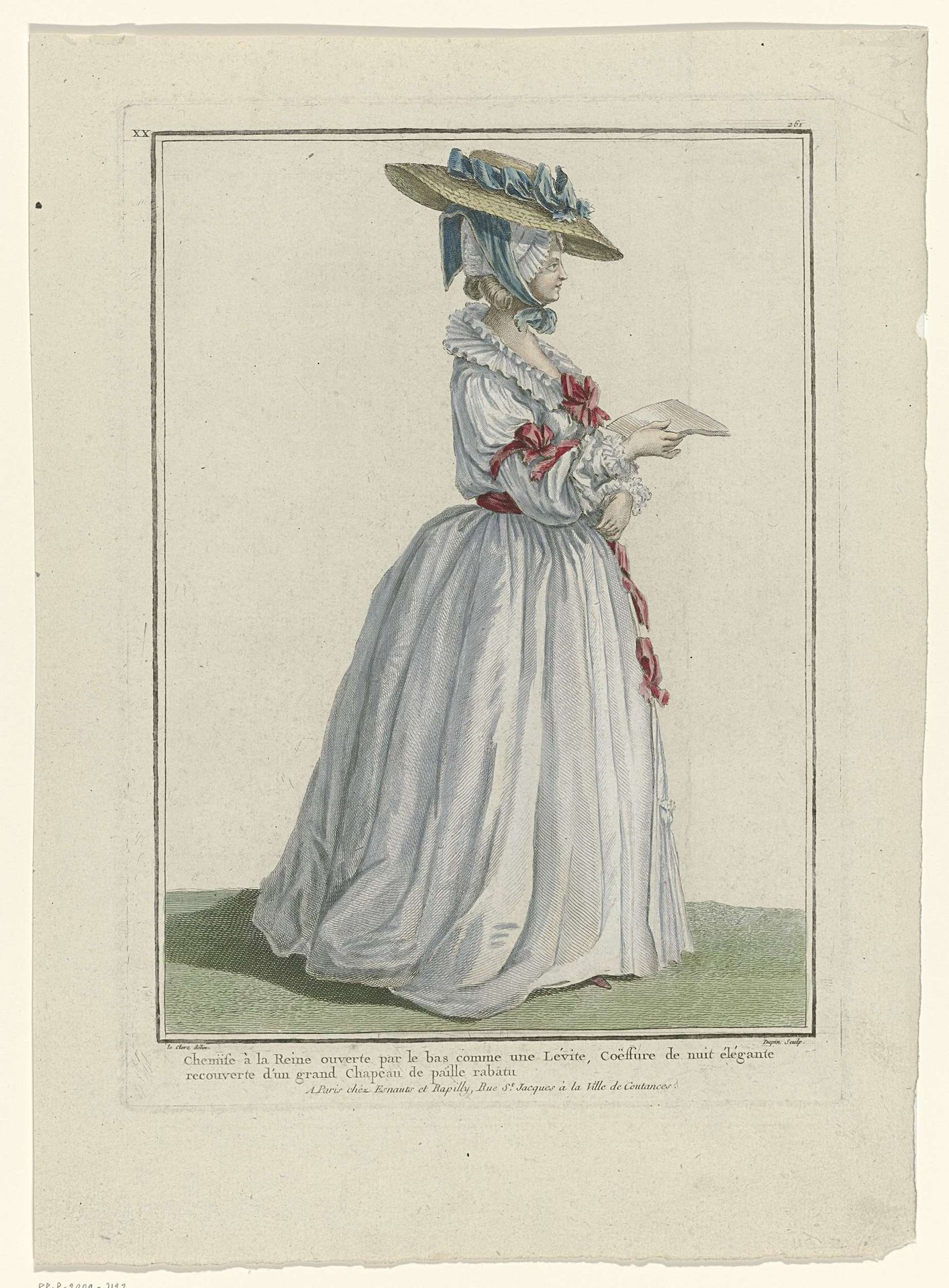
Curator: This print from 1784, titled "Marie Antoinette: The Queen of Fashion: Gallerie des Modes et Costumes Français", offers a snapshot of elite fashion during the late 18th century. Editor: It strikes me as deceptively simple. The lines are delicate, almost airy, but that enormous dress...it speaks of such opulence and the intensive labor involved in creating something so voluminous. Curator: Precisely. It’s a watercolor and pen drawing, and its existence points to the burgeoning fashion industry of the time, one dependent on detailed depictions disseminated as print. Consider the scale of the textile production necessary to fuel this kind of fashion. Editor: The artist, Nicolas Dupin, seems focused on capturing the texture of the fabrics, from the ruffles at the neck to the ribbon accents and the sweeping skirt. The attention to detail invites scrutiny. Were such garments mass-produced or were they strictly bespoke at this time? Curator: These "Gallerie des Modes" prints functioned much like fashion magazines do today, dictating trends to a consuming elite. And this was before industrial looms fully transformed textile production. Much of what you see here depended on skilled hand labor, further cementing class divisions. Editor: I'm particularly interested in how Marie Antoinette used fashion as a political tool, both to assert her power and to cultivate a certain image. It feels somewhat radical in this image due to her style choices that deviate from the expectations from royal figures. Curator: Absolutely, these prints both document and participate in that construction of image. They fueled public fascination and scrutiny, while normalizing increasing excess—excess that, of course, contributed to the discontent simmering beneath the surface of French society. Editor: A seemingly innocent fashion plate, brimming with so many complicated material and political realities. Curator: It's a reminder that even seemingly superficial objects can be incredibly rich sources for understanding the past. Editor: Indeed, every frill and fold speaks volumes, it's time to dive deeper in other artworks from the collection!