

1788 - 1802
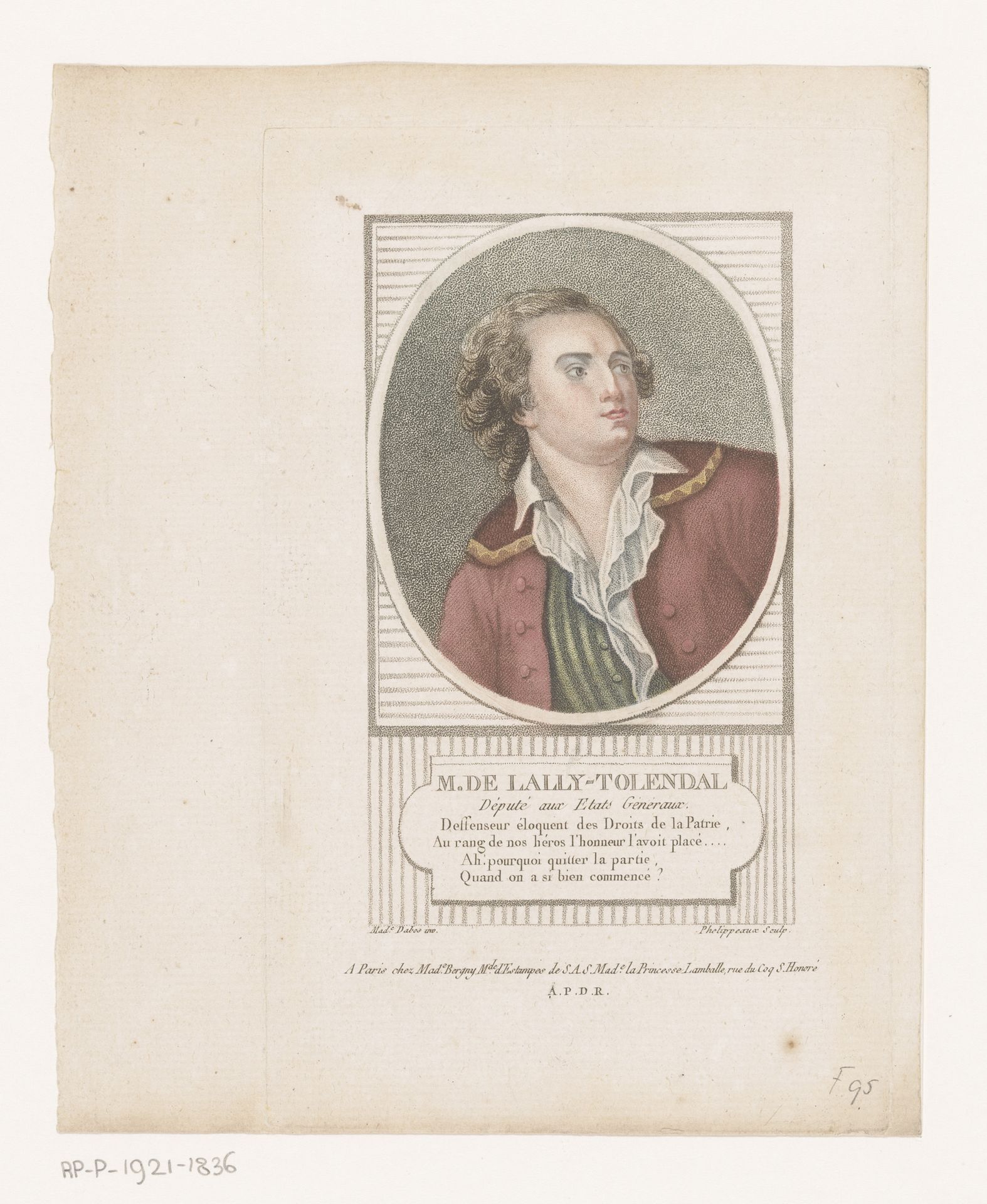
Portret van Gérard de Lally-Tollendal

Listen to curator's interpretation
Curatorial notes
Curator: Looking at this artwork, one feels immediately transported to another era. It seems as though we are peering through time, directly into the late 18th century. Editor: Exactly. The somewhat faded pastel colors contribute a soft, nostalgic effect, like looking at an antique Valentine card. Before us is an engraving titled "Portret van Gérard de Lally-Tollendal." The artist is Antoine Phelippeaux and it's believed to have been created sometime between 1788 and 1802. It has such presence! Curator: Phelippeaux captures the essence of a tumultuous time. Lally-Tollendal was a significant figure during the French Revolution, known for defending his father, unjustly accused and executed, and later advocating for constitutional monarchy. Notice how this engraving attempts to elevate him to almost heroic status. Editor: Heroic is one word for it. His intense expression and direct gaze have a forceful quality. The oval format, mimicking classical portraiture, seems an attempt to place him within a lineage of celebrated figures. But I am wondering, how successful do you think it is in doing so? Curator: Its impact is undoubtedly constrained. While evoking classical ideals, its circulation within printed media aimed to create a populist appeal and spread his image amongst the burgeoning public sphere. Consider how portraits disseminated through engravings played a pivotal role in shaping public opinion and constructing political identities. Editor: I agree with you. It's fascinating how different layers of meaning we can find within a seemingly straightforward portrait. What once might have seemed like a simple act of honoring a figure can, in hindsight, have some complex cultural values. Curator: Indeed. As you study it more, this image reminds us that even seemingly straightforward artistic endeavors can be deeply entangled with socio-political forces, serving as both reflections of and active participants in historical processes. Editor: I leave this viewing with a newfound curiosity regarding the way artworks influence, in turn, how we think and act.