1517
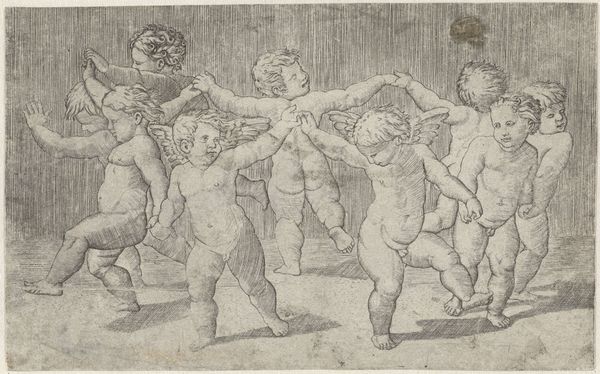
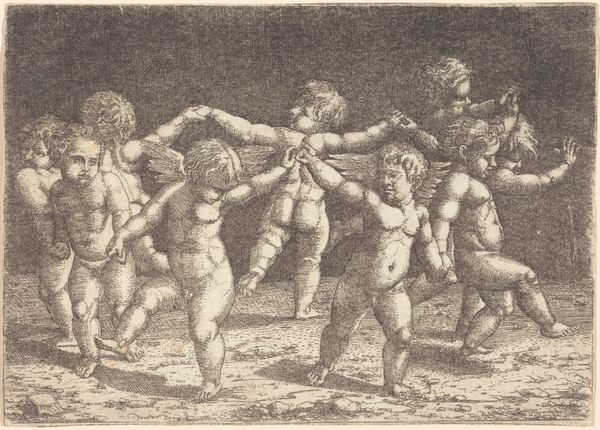
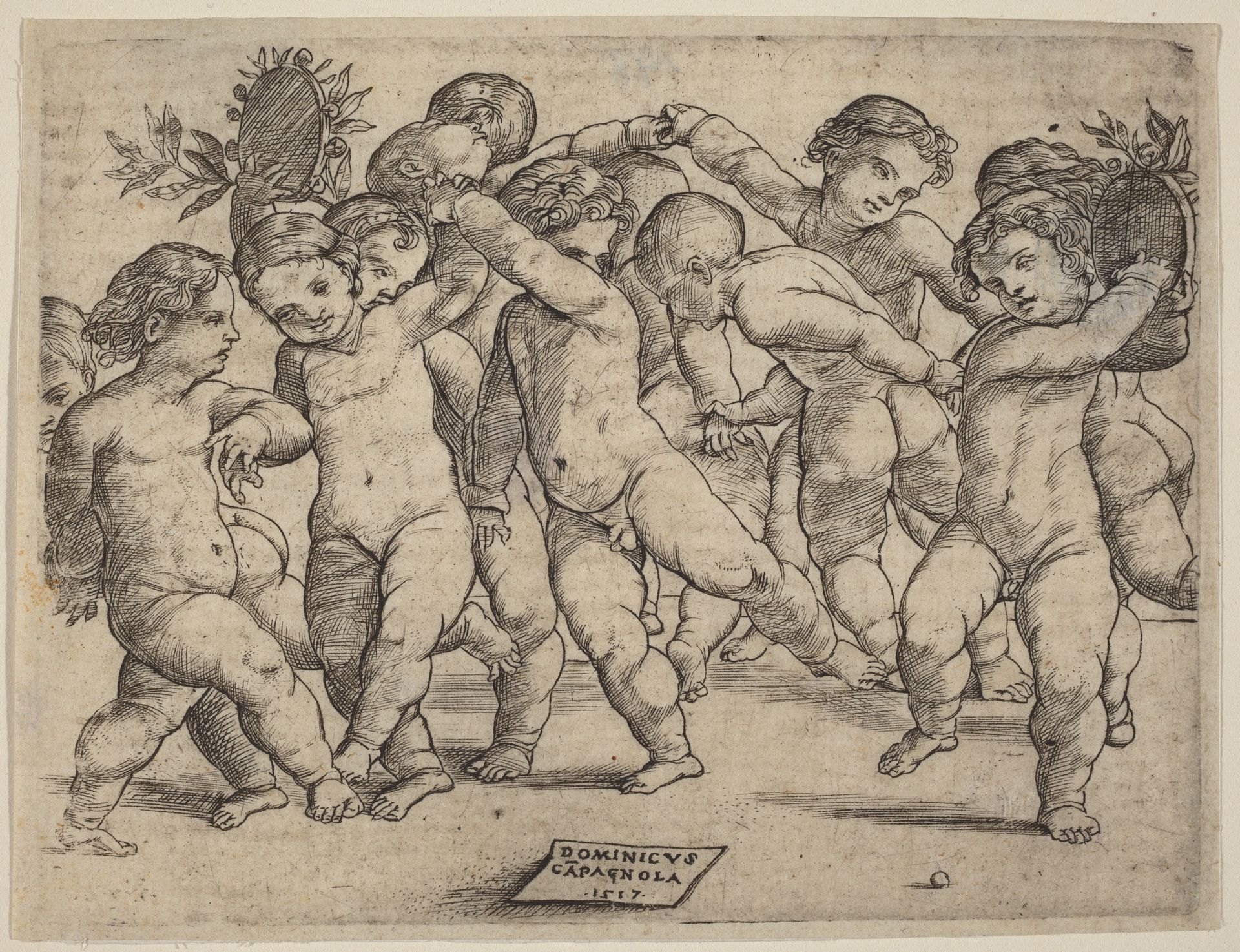
Twelve Children Dancing


Listen to curator's interpretation
Curatorial notes
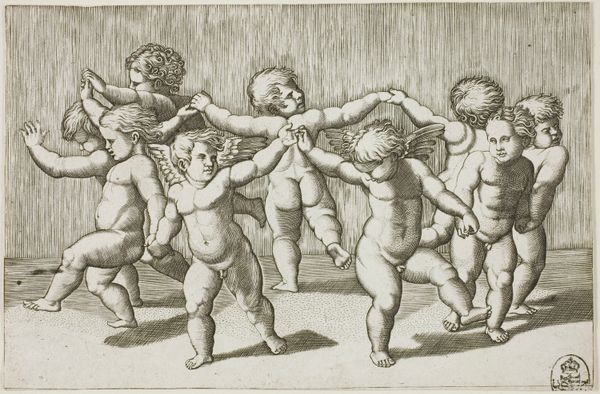
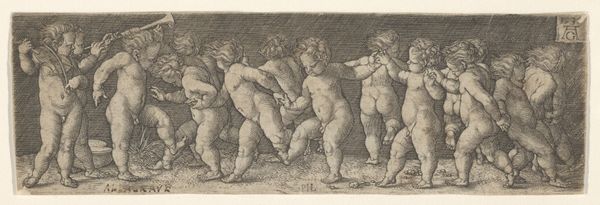
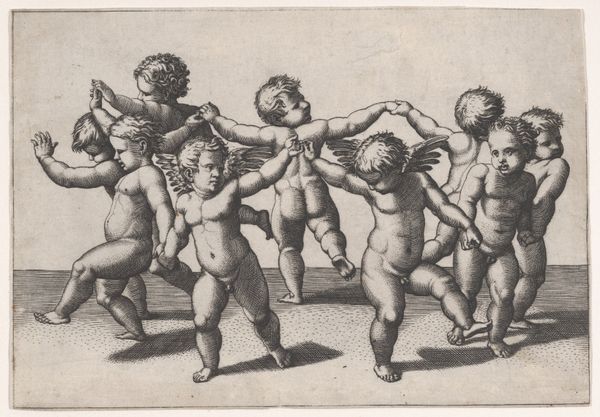
Curator: Look at this intriguing engraving, "Twelve Children Dancing" by Domenico Campagnola, created in 1517. The figures leap right out. Editor: It strikes me as a strange sort of Bacchanal. An innocent revelry, but those chubby bodies recall classical depictions of Bacchus and his followers. What's your take on Campagnola's method here? Curator: He employs very fine, precise lines in the engraving. Consider that printmaking allowed for a wider dissemination of images than painting, offering increased opportunities for audience engagement with these forms and figures. Editor: Absolutely. Notice also the tamborines some of the children are holding. Sound and motion; they seem caught in a timeless ritual. In older art these actions may evoke notions of cyclical time and perpetual renewal. Do you find those concepts resonant? Curator: What intrigues me is thinking about workshops at the time. Engraving was both craft and art. How were these prints consumed? As accessible art for a rising merchant class perhaps, eager to emulate aristocratic aesthetics at a lower cost? Editor: It makes one wonder about accessibility then as it does today. But considering these children, with their vaguely antique faces, are meant to convey purity and delight, and I can’t help but see in them symbols of joy, perhaps even a touch of Edenic innocence, now rendered affordable for common enjoyment. Curator: Right, considering it, Campagnola masterfully balanced those humanist themes with production concerns, opening Renaissance ideals to more people by changing how art was being disseminated through Europe at the time. Editor: Indeed. His composition, so rooted in older symbol sets, became accessible to broader populations thanks to material innovations in the print world. Interesting stuff!