About this artwork
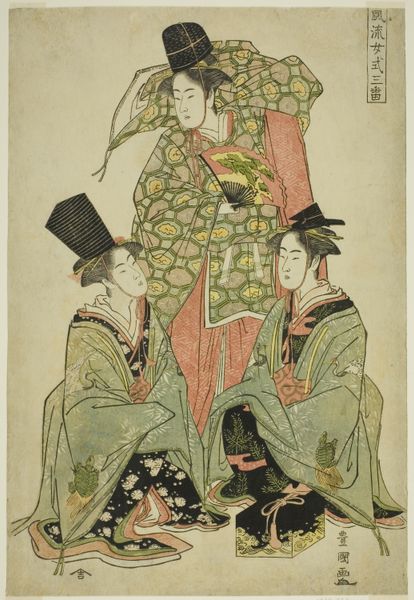
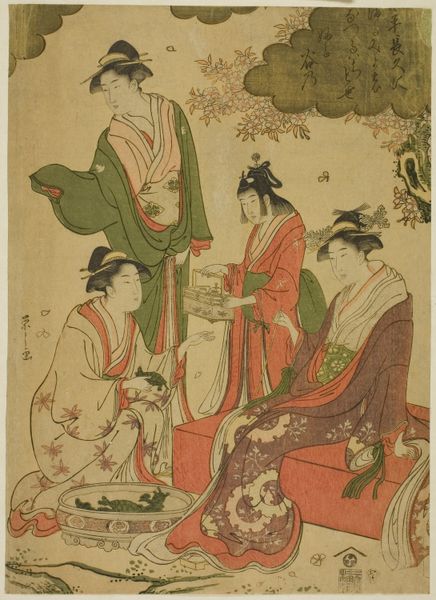
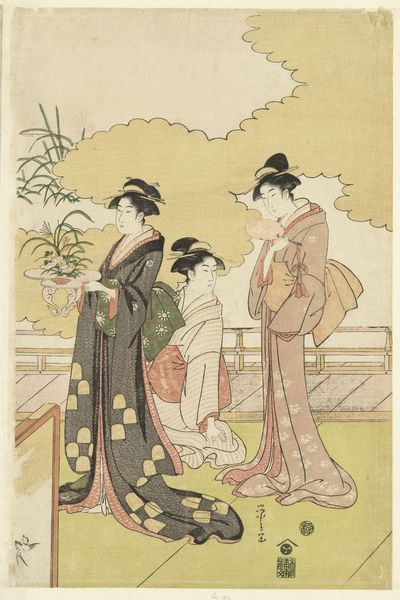
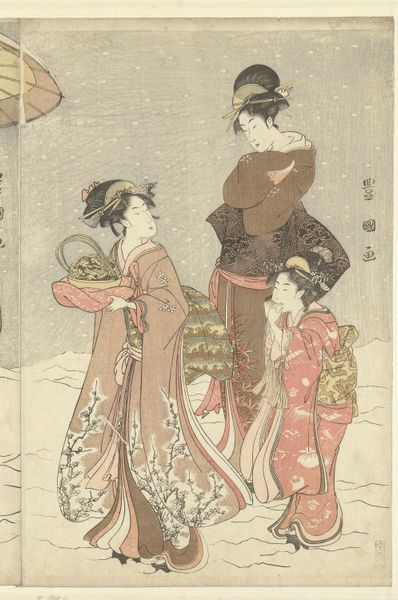
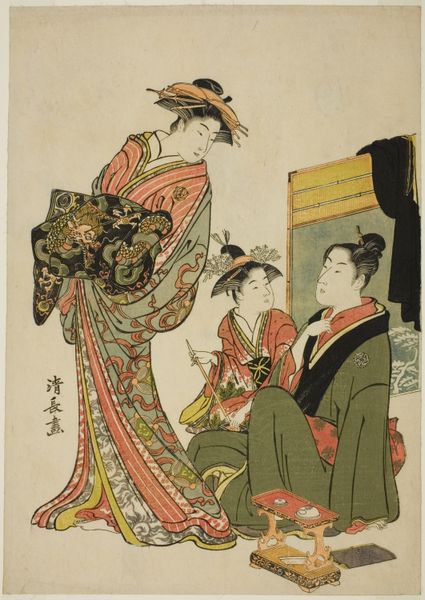
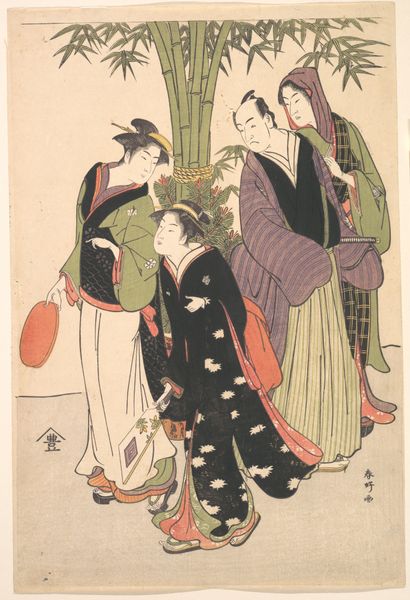
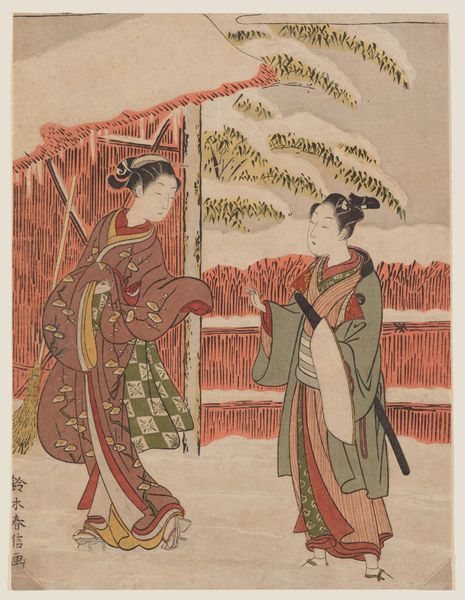
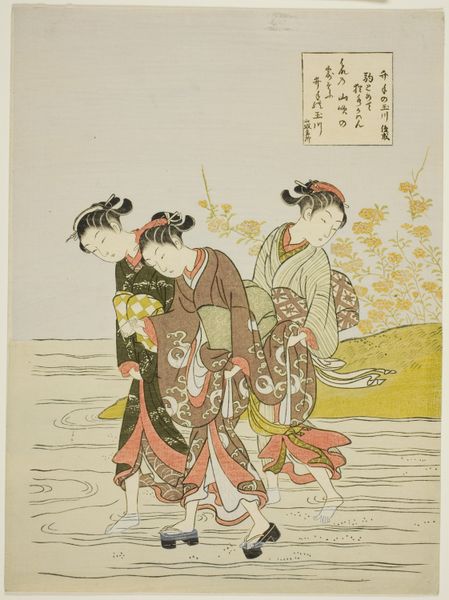
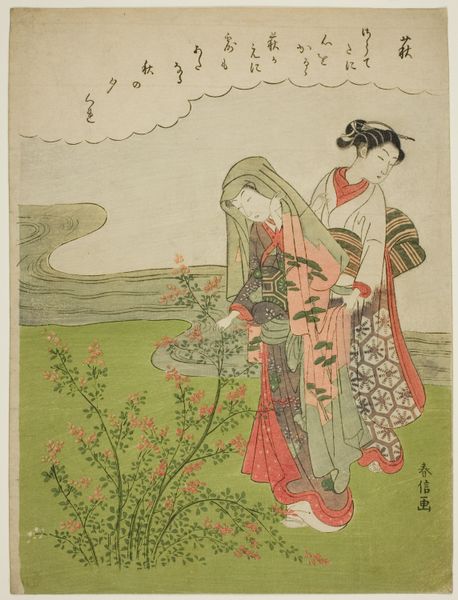
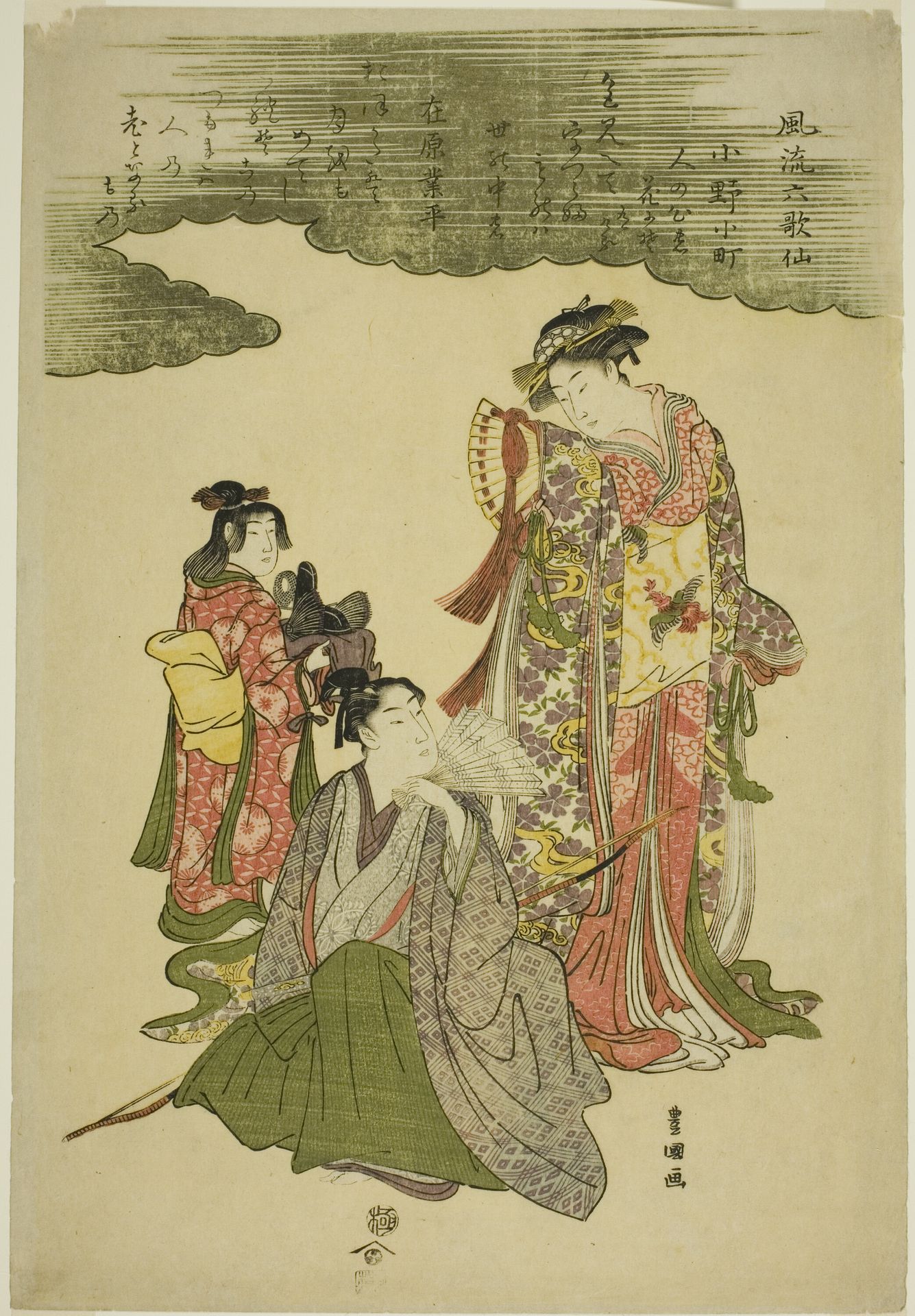
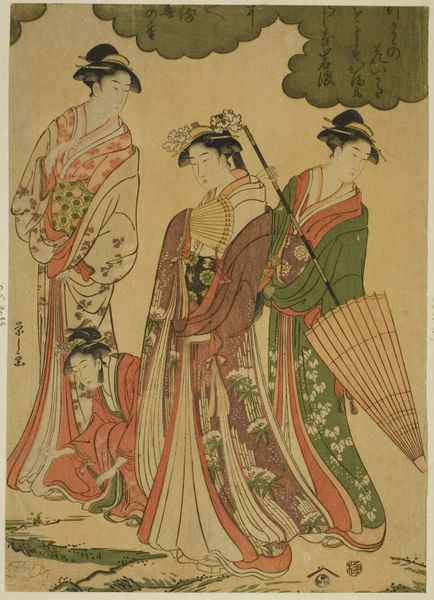
Utagawa Toyokuni I created this woodblock print titled 'Fashionable Six Immortal Poets', during the Edo period in Japan. This was a time of economic growth and relative peace, when a vibrant urban culture flourished. Here, we see a contemporary reimagining of the Six Immortal Poets, celebrated figures known for their exceptional skill in composing waka poetry. Toyokuni translates these legendary poets into images of fashionable women, or perhaps courtesans. Notice the elaborate kimonos, hairstyles and makeup. This print offers a fascinating commentary on gender, class, and cultural values in Edo society. These women are not simply beautiful objects; they embody a fusion of artistic expression and social identity. It prompts us to consider how women negotiated their roles within a patriarchal society. It also invites reflection on the blurred lines between admiration, objectification, and the agency of the subjects represented.
Fashionable Six Immortal Poets (Furyu rokkasen)
c. 1793
Artwork details
- Medium
- print, woodblock-print
- Dimensions
- 15 3/8 × 10 1/8 in.
- Location
- The Art Institute of Chicago
- Copyright
- Public Domain
Tags
Comments
Share your thoughts
About this artwork
Utagawa Toyokuni I created this woodblock print titled 'Fashionable Six Immortal Poets', during the Edo period in Japan. This was a time of economic growth and relative peace, when a vibrant urban culture flourished. Here, we see a contemporary reimagining of the Six Immortal Poets, celebrated figures known for their exceptional skill in composing waka poetry. Toyokuni translates these legendary poets into images of fashionable women, or perhaps courtesans. Notice the elaborate kimonos, hairstyles and makeup. This print offers a fascinating commentary on gender, class, and cultural values in Edo society. These women are not simply beautiful objects; they embody a fusion of artistic expression and social identity. It prompts us to consider how women negotiated their roles within a patriarchal society. It also invites reflection on the blurred lines between admiration, objectification, and the agency of the subjects represented.
Comments
Share your thoughts