About this artwork
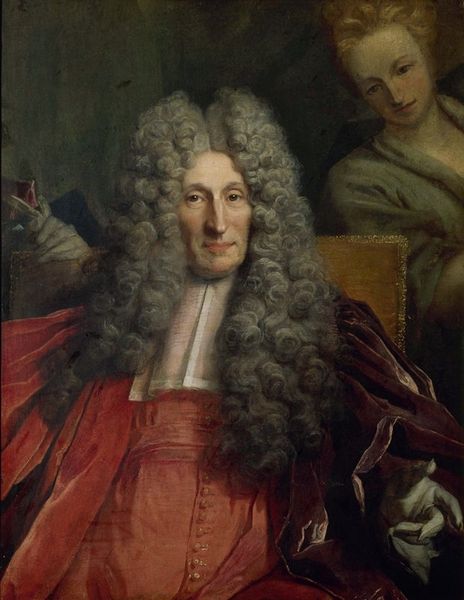
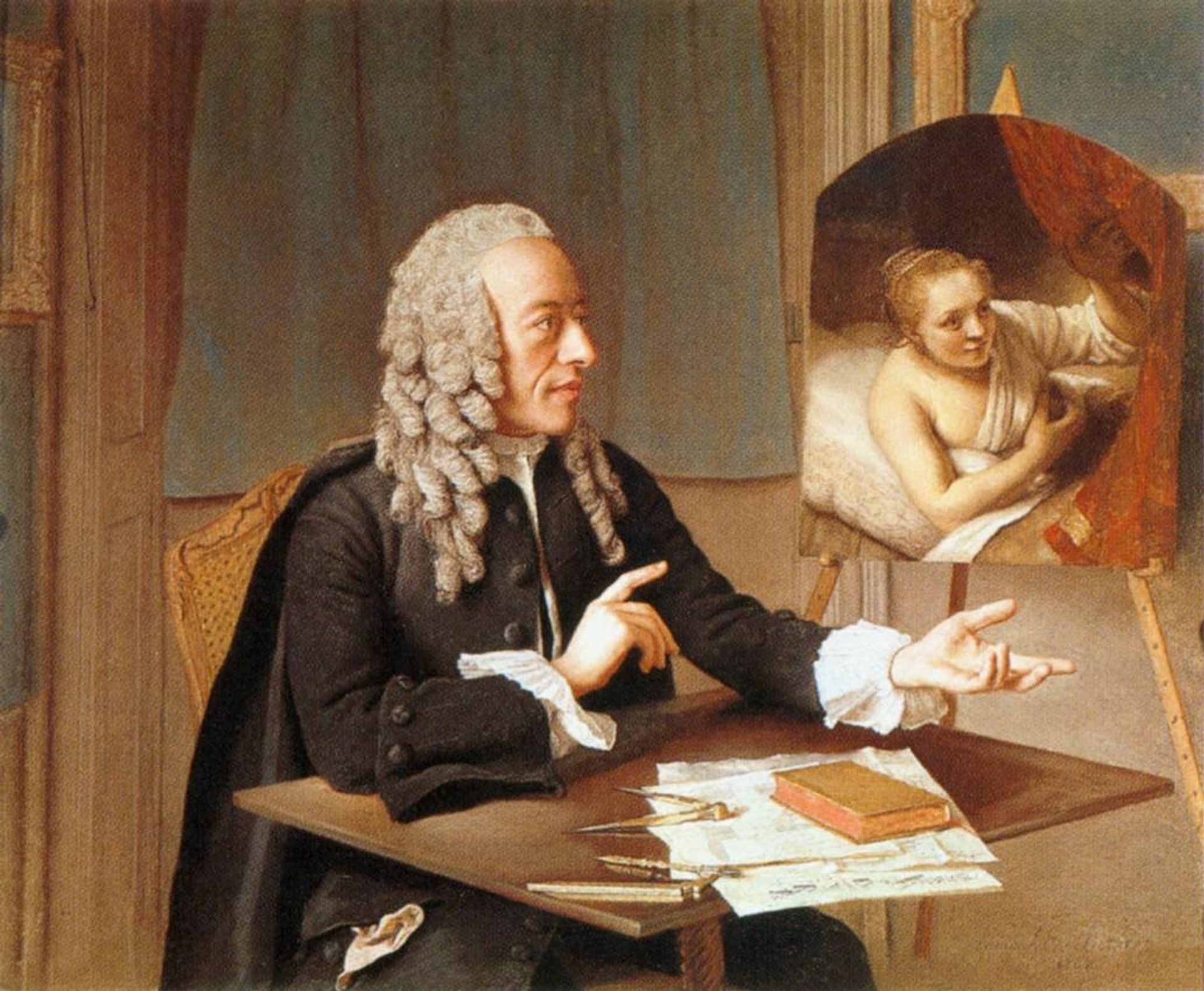
Jean-Étienne Liotard painted this portrait of François Tronchin, a prominent Genevan figure, capturing him amidst symbols of intellect and sensuality. Tronchin’s gesture of discourse contrasts with the painting of a nude woman behind him on an easel, a juxtaposition that reveals the complex layers of 18th-century thought. This motif of a figure accompanied by a suggestive artistic piece echoes through time. Consider Titian's "Venus of Urbino", where the goddess's sensuality is balanced by the domestic setting. The act of viewing, so central to the Enlightenment, becomes intertwined with desire. Here, the nude painting may provoke a psychological tension between intellectual pursuits and primal instincts, mirroring a dichotomy present since antiquity. Observe how such a concept transcends epochs, resurfacing in contemporary art, continually renegotiating the boundaries of perception and desire.
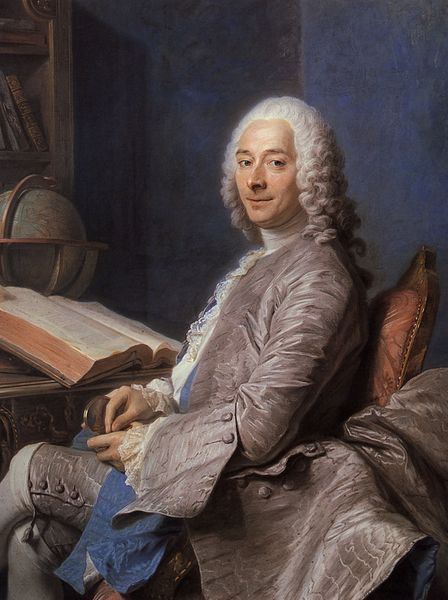
Portrait of François Tronchin 1757

Jean-Étienne Liotard
1702 - 1789Location
Cleveland Museum of Art (CMA), Cleveland, OH, USArtwork details
- Medium
- painting, oil-paint
- Location
- Cleveland Museum of Art (CMA), Cleveland, OH, US
- Copyright
- Public domain
Tags
portrait
painting
oil-paint
history-painting
rococo
Comments
No comments
About this artwork
Jean-Étienne Liotard painted this portrait of François Tronchin, a prominent Genevan figure, capturing him amidst symbols of intellect and sensuality. Tronchin’s gesture of discourse contrasts with the painting of a nude woman behind him on an easel, a juxtaposition that reveals the complex layers of 18th-century thought. This motif of a figure accompanied by a suggestive artistic piece echoes through time. Consider Titian's "Venus of Urbino", where the goddess's sensuality is balanced by the domestic setting. The act of viewing, so central to the Enlightenment, becomes intertwined with desire. Here, the nude painting may provoke a psychological tension between intellectual pursuits and primal instincts, mirroring a dichotomy present since antiquity. Observe how such a concept transcends epochs, resurfacing in contemporary art, continually renegotiating the boundaries of perception and desire.
Comments
No comments