About this artwork
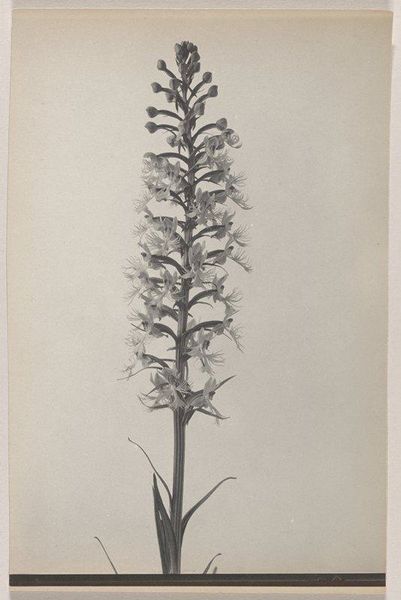
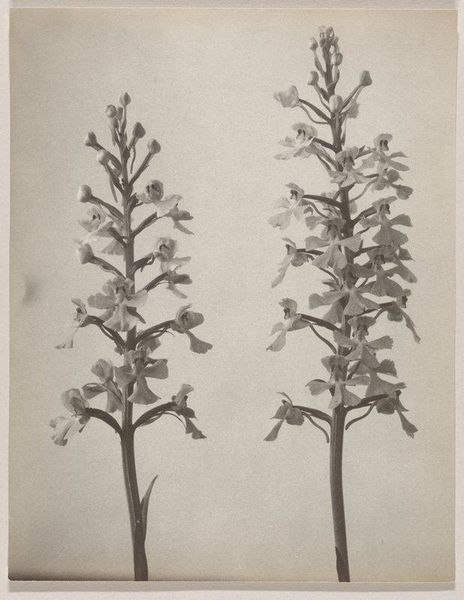
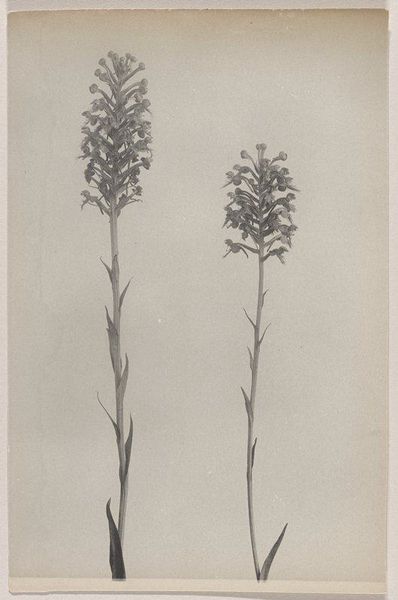
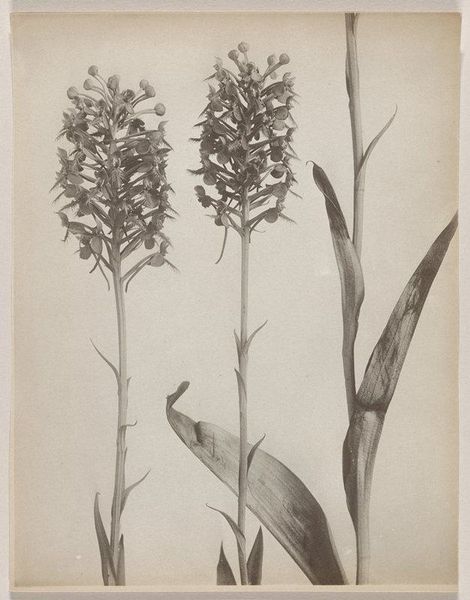
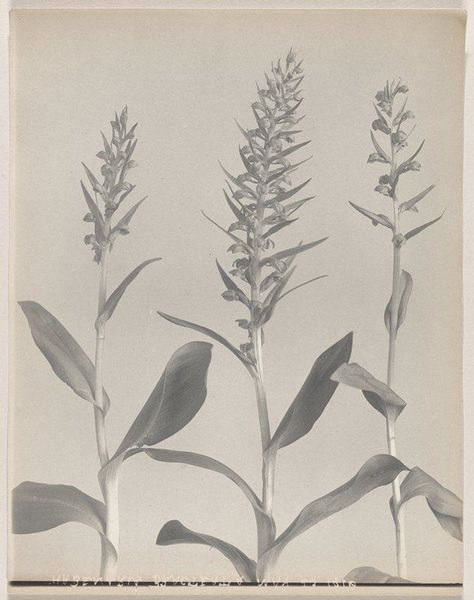
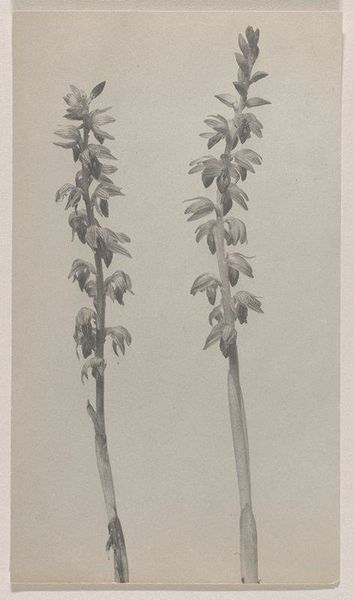
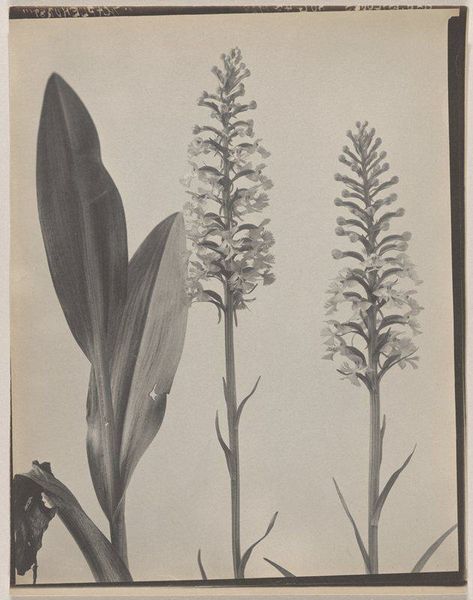
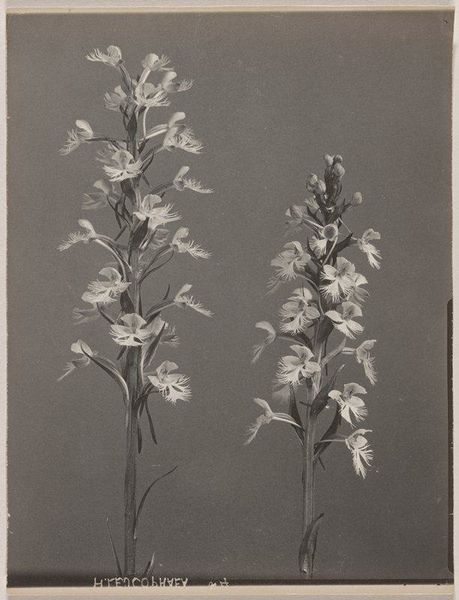
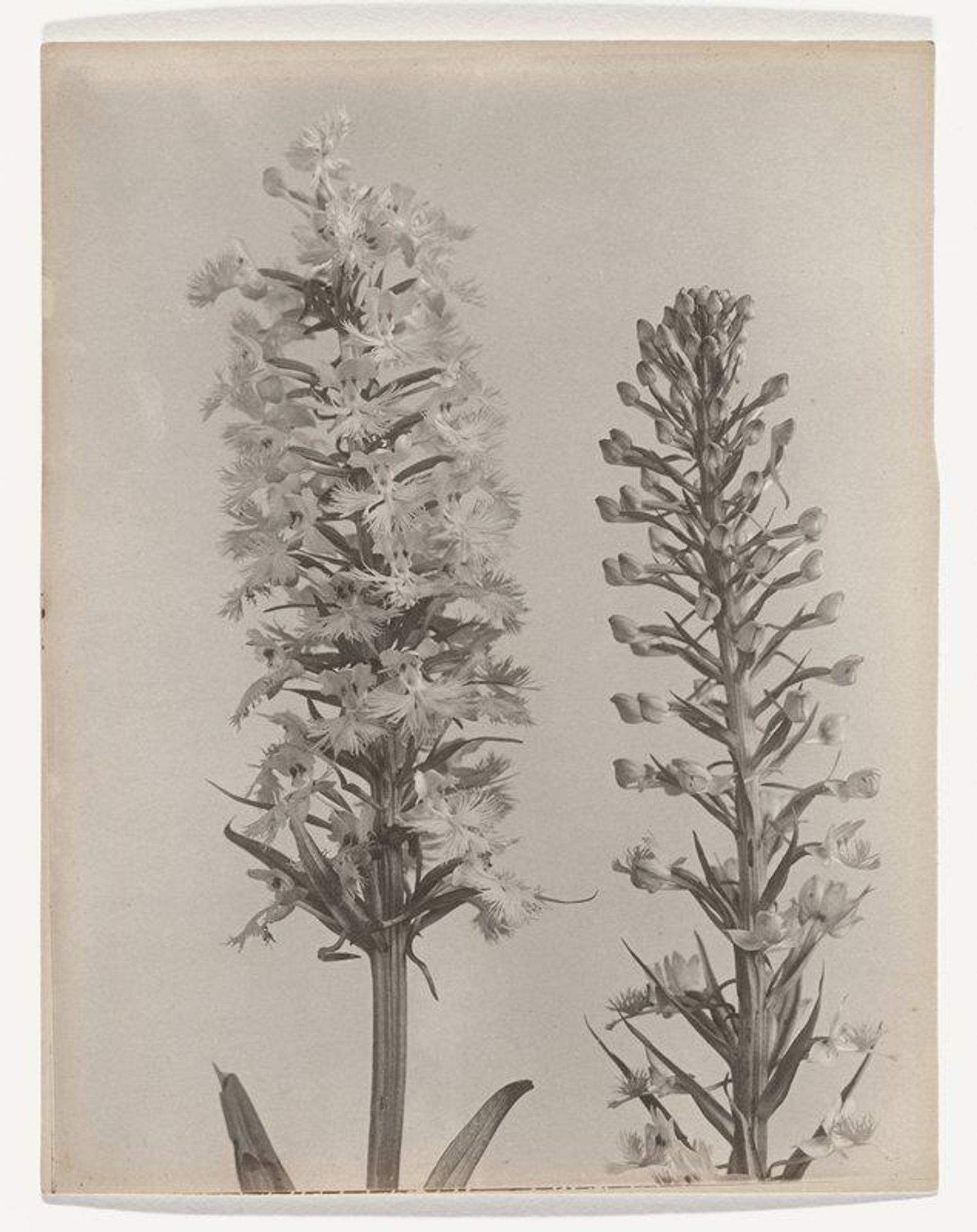
Curator: Up next, we have Edwin Hale Lincoln's 1931 gelatin silver print, "Habenaria timbriata – Large Purple Fringed Orchid," part of the Minneapolis Institute of Art's collection. Editor: Immediately, I feel a certain stillness—a botanical hush. It reminds me of pressed flowers tucked between the pages of an old book, or maybe a cherished memory fading to sepia tones. Curator: The stark monochromatic rendering certainly lends itself to that nostalgic mood. The subject matter itself—the fringed orchid—was of considerable interest to Lincoln throughout his career. Editor: Orchids, of course, have always carried this almost erotic charge, haven’t they? In Victorian England, particularly, their exoticism was seen as so dangerous, so sexually suggestive... Curator: Absolutely. Their complex structures and often vibrant colors hinted at hidden worlds and secret desires. But here, the black and white flattens those connotations somewhat, inviting a closer examination of form. Editor: Precisely! The emphasis on detailed texture and shape over seductive coloration transforms the symbolism. The orchids are rendered almost as anatomical studies, or specimens pinned carefully to a collector's board. This treatment feels intensely personal. Almost an attempt to both possess and understand nature through observation, but it renders nature distant and almost theoretical, a little lifeless, like an echo of a beautiful experience. Curator: Well said! Consider the cultural moment as well: Lincoln made this photograph between the wars. There's a subtle undercurrent of longing in this study, a turning to the quiet solace of the natural world amidst global uncertainty. He even hand-toned many of his photographs, further softening their appearance and enhancing their sentimental qualities. Editor: Which brings us back to those sepia tones. Ultimately, what remains for me is this sense of preserved memory—a tangible fragment of nature meticulously documented and held close. Curator: Indeed, Edwin Hale Lincoln offers not only a glimpse into the intricate beauty of orchids, but into the artist's yearning for understanding and tranquility in an era defined by turbulence.
Habenaria timbriata- Large Purple Fringed Orchid
1931


Artwork details
- Medium
- print, photography
- Dimensions
- 9 11/16 x 7 5/8 in. (24.61 x 19.37 cm) (image)9 7/8 x 7 3/4 in. (25.08 x 19.69 cm) (sheet)
- Location
- Minneapolis Institute of Art
- Copyright
- No Copyright - United States
Tags
Comments
Share your thoughts
About this artwork
Curator: Up next, we have Edwin Hale Lincoln's 1931 gelatin silver print, "Habenaria timbriata – Large Purple Fringed Orchid," part of the Minneapolis Institute of Art's collection. Editor: Immediately, I feel a certain stillness—a botanical hush. It reminds me of pressed flowers tucked between the pages of an old book, or maybe a cherished memory fading to sepia tones. Curator: The stark monochromatic rendering certainly lends itself to that nostalgic mood. The subject matter itself—the fringed orchid—was of considerable interest to Lincoln throughout his career. Editor: Orchids, of course, have always carried this almost erotic charge, haven’t they? In Victorian England, particularly, their exoticism was seen as so dangerous, so sexually suggestive... Curator: Absolutely. Their complex structures and often vibrant colors hinted at hidden worlds and secret desires. But here, the black and white flattens those connotations somewhat, inviting a closer examination of form. Editor: Precisely! The emphasis on detailed texture and shape over seductive coloration transforms the symbolism. The orchids are rendered almost as anatomical studies, or specimens pinned carefully to a collector's board. This treatment feels intensely personal. Almost an attempt to both possess and understand nature through observation, but it renders nature distant and almost theoretical, a little lifeless, like an echo of a beautiful experience. Curator: Well said! Consider the cultural moment as well: Lincoln made this photograph between the wars. There's a subtle undercurrent of longing in this study, a turning to the quiet solace of the natural world amidst global uncertainty. He even hand-toned many of his photographs, further softening their appearance and enhancing their sentimental qualities. Editor: Which brings us back to those sepia tones. Ultimately, what remains for me is this sense of preserved memory—a tangible fragment of nature meticulously documented and held close. Curator: Indeed, Edwin Hale Lincoln offers not only a glimpse into the intricate beauty of orchids, but into the artist's yearning for understanding and tranquility in an era defined by turbulence.
Comments
Share your thoughts