

1766
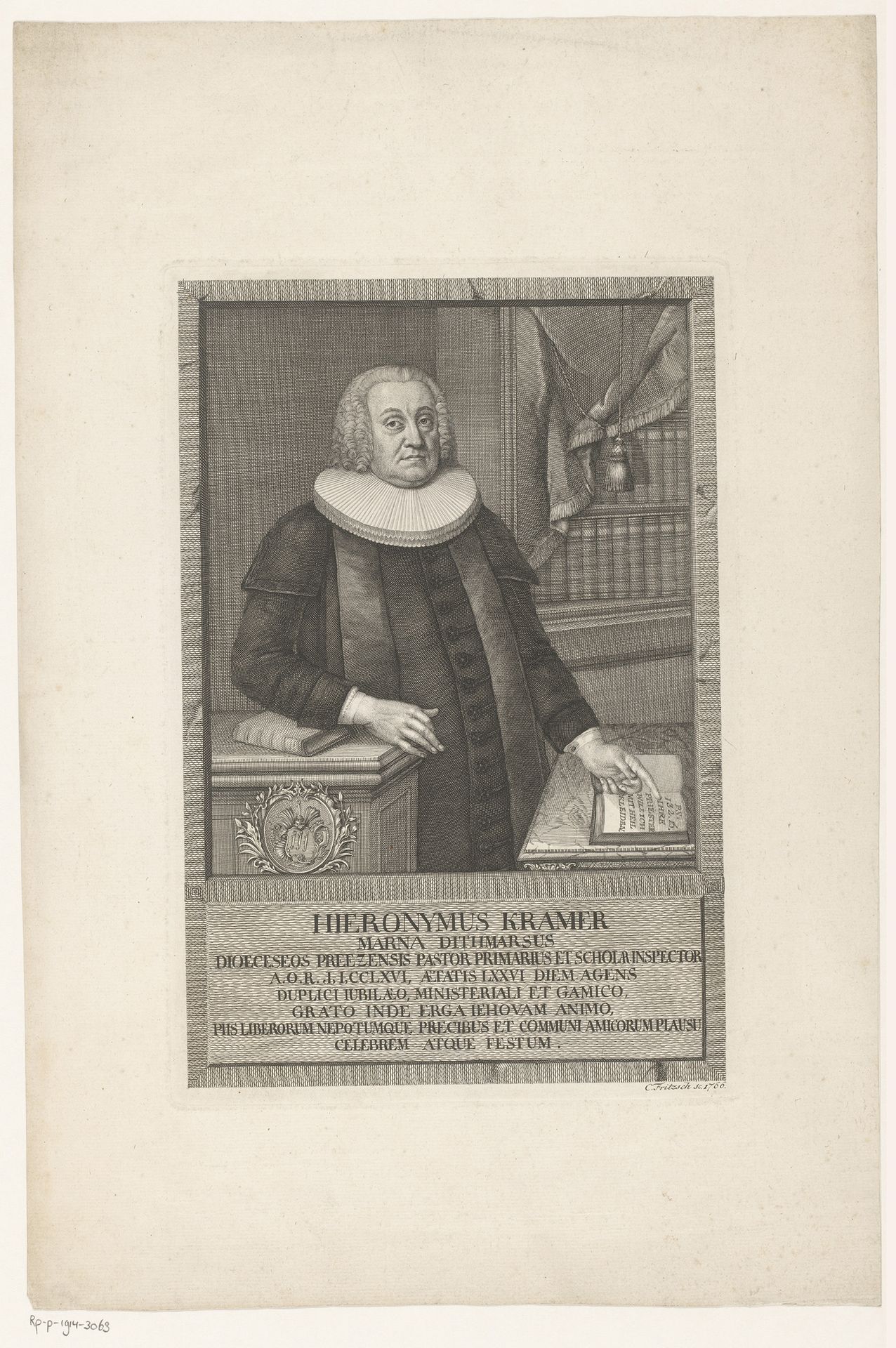
Portret van Hieronymus Kramer 76-jarige leeftijd

Christian Fritzsch
1695 - 1769Location
RijksmuseumListen to curator's interpretation
Curatorial notes
Editor: So, this is Christian Fritzsch's "Portret van Hieronymus Kramer 76-jarige leeftijd" from 1766, currently at the Rijksmuseum. It’s an engraving, and it's fascinating. There’s something very formal and austere about it... What strikes you most when you look at this piece? Curator: Well, considering its social context, this portrait offers us a glimpse into the construction of status and authority within 18th-century intellectual circles. The engraving, as a readily reproducible medium, suggests a desire to disseminate Kramer's image and, by extension, his reputation and influence more widely. How do you think this distribution might affect Kramer’s standing? Editor: That’s a really interesting point. It makes me think about the printing press democratizing information... so, more prints equals wider recognition, potentially more authority? Does the setting behind him contribute to that sense of authority too? Curator: Absolutely. Notice the books behind him, signifying knowledge and erudition. And what about the text beneath the portrait? What does that inscription tell us about Kramer’s societal role? Editor: I see "PASTOR PRIMARIUS ET SCHOLA" so probably something about religious leader and educator… the full inscription, based on OCR results, says "DIODCESEOS PRIE ZENSIS PASTOR PRIMARI'S ET SCHOLAINSPECTIE”, likely meaning pastor, primary and school inspector of Diocese Prie Zensise, right? How would those positions affect his position? Curator: Precisely! And being commemorated at 76 after "Duplici Jubilaeo" points towards recognition of lifetime achievements and commitment, underscoring how such images function within a system of social recognition and prestige. How does understanding Kramer’s context reshape your initial feeling of austerity? Editor: It feels less about severity now and more about respect and admiration, almost like a carefully managed PR image from that era. Curator: Indeed. Understanding the interplay of image, text, and societal context unveils the portrait's role in shaping public perception. I'm glad you pointed that out. Editor: Me too. Considering how many people might have seen and interpreted this portrait adds a whole other layer of meaning that I hadn't initially considered.