

c. 1705 - 1754
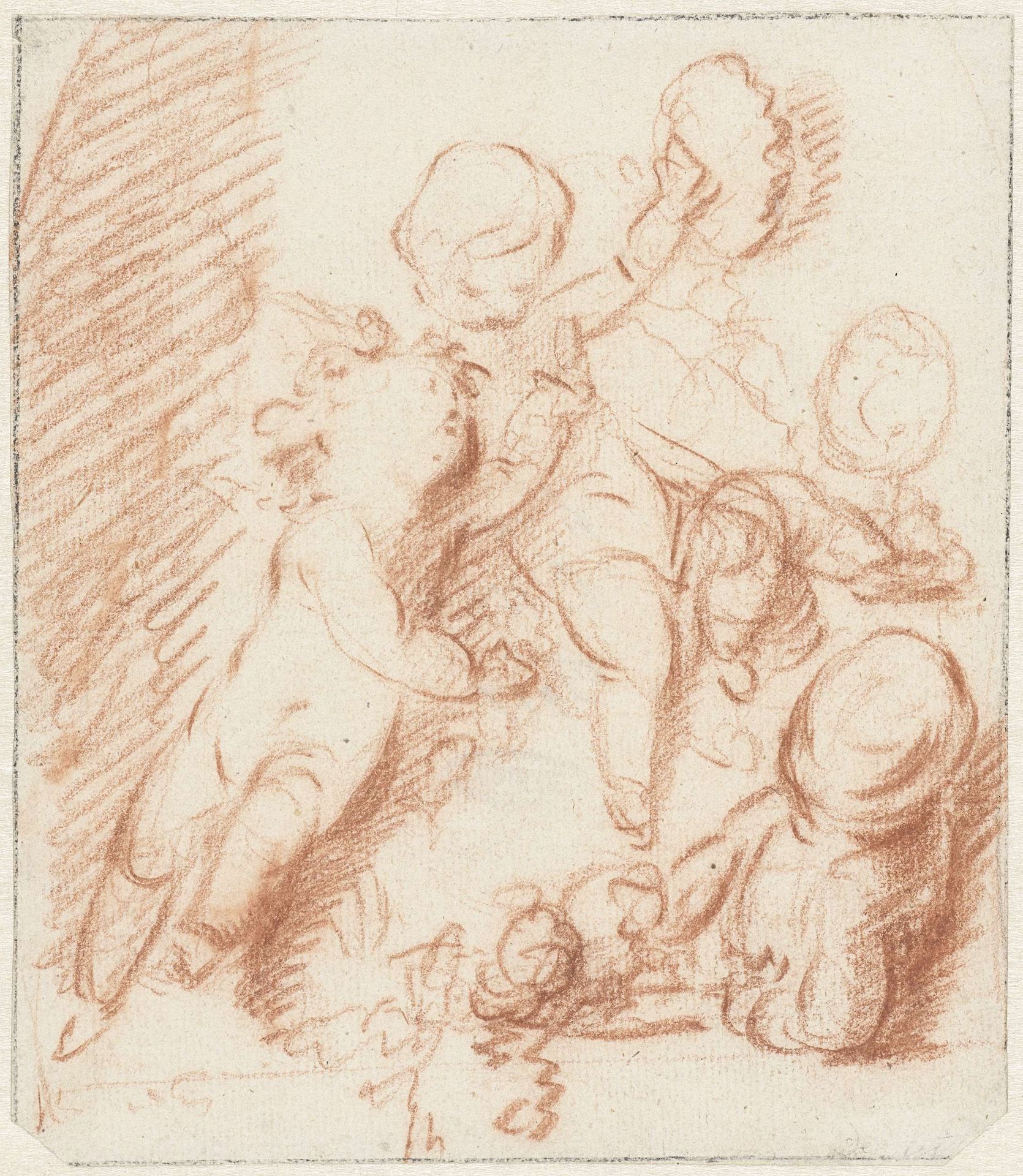
Ontwerp voor een deur- of schoorsteenstuk met drie putti

Listen to curator's interpretation
Curatorial notes
Jacob de Wit made this red chalk drawing of three putti, or cherubic figures, in the Netherlands sometime in the first half of the 18th century. The drawing is a design for a decorative panel, most likely to be placed above a door or fireplace. De Wit was well known in his time for these kinds of designs, often featuring playful putti arranged in lighthearted, allegorical scenes. His career coincided with the growth of private wealth in the Netherlands, as successful merchants sought to emulate the lifestyles of royalty. He made many paintings in the illusionistic style known as trompe-l'oeil, which were incorporated into elaborate interior designs. If we want to understand the success of an artist like de Wit, we need to consider the social history of art and architecture. To know more about the ways that Dutch domestic spaces were changing in this period, scholars study architectural plans, inventories of household possessions, and of course the artworks themselves.