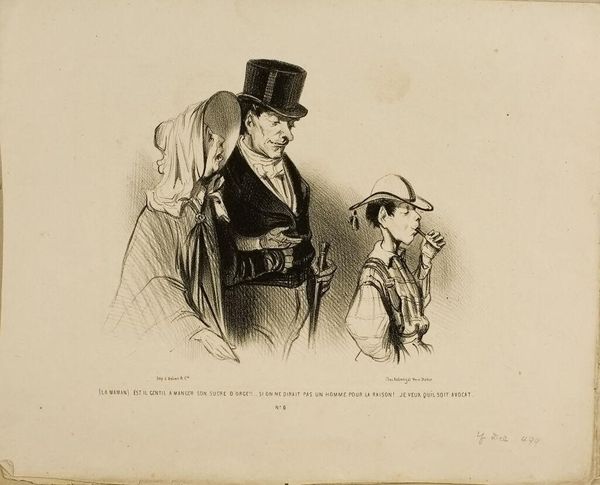
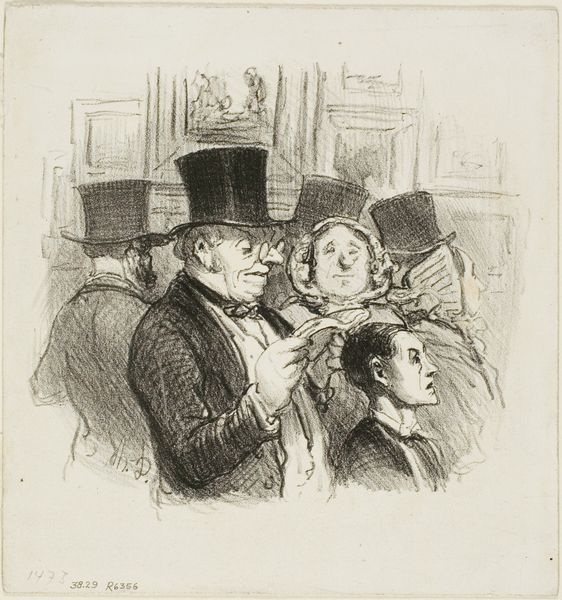
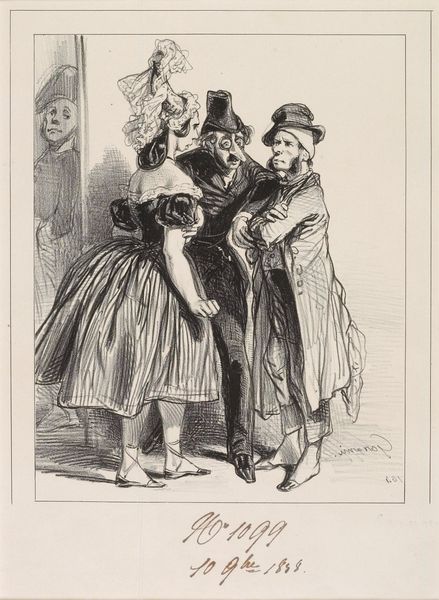
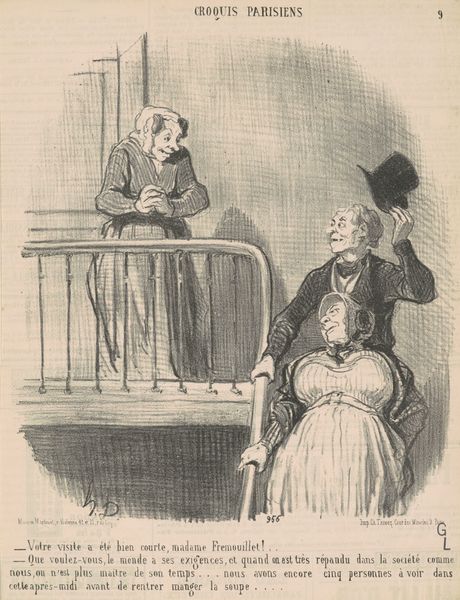
A Young Man Who is the Pride and Hope of the Badinguet Family, plate 16 from Les Bons Bourgeois 1846
0:00
0:00


drawing, lithograph, print, paper
#
drawing
#
lithograph
# print
#
caricature
#
paper
#
genre-painting
#
history-painting
#
modernism
Dimensions: 256 × 213 mm (image); 332 × 250 mm (sheet)
Copyright: Public Domain
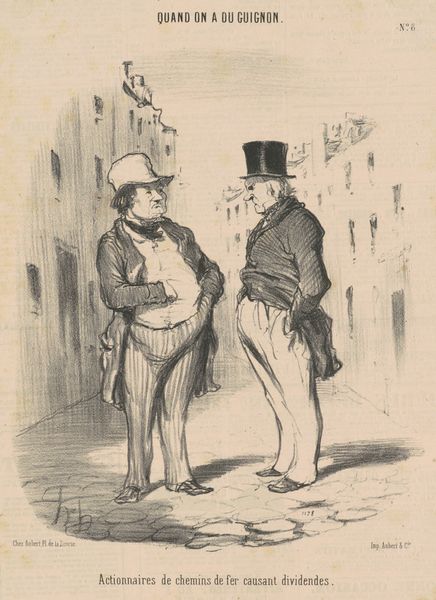
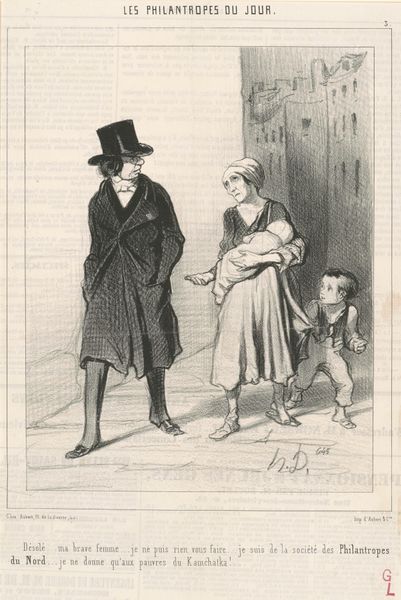
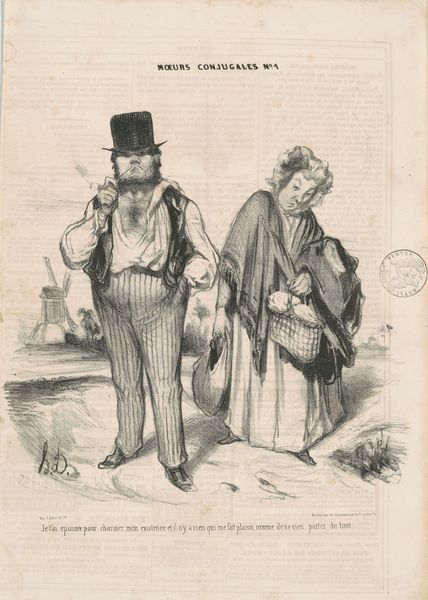
Curator: Let’s talk about Honoré Daumier’s lithograph, “A Young Man Who is the Pride and Hope of the Badinguet Family,” created in 1846. Editor: It’s interesting. The figures look so stiff and self-important, but somehow also kind of pathetic. What's your interpretation of the message here? Curator: This image, part of a series on the bourgeoisie, offers a sharp social critique. Daumier often used caricature to expose the hypocrisy and pretensions of the middle class. Consider the title: “Pride and Hope.” Who is propping up those ideals, and at what cost? Think about what the family’s presentation is telegraphing versus what might be concealed behind the façade of respectability. Editor: I see. The father is overdressed, the mother looks miserable, and the son, decked out in what looks like a military uniform, seems burdened rather than proud. Curator: Exactly! Daumier critiques the pressure placed on children to uphold family status and bourgeois values. The print underscores how these societal roles, particularly expectations around masculinity and class aspiration, stifle individuality. Note how the artist employs line and shading to amplify emotional undertones within this family portrait, effectively transforming what seems straightforward into a nuanced reflection on human conditions. What else does the title communicate? Editor: Well, the word "Badinguet" seems significant; is there a connection to political critique during the time this artwork was created? Curator: Good eye! "Badinguet" was a nickname for Napoleon III, associating this family directly with the rising power of the Second Empire and perhaps commenting on the nouveau riche and their aspirations. Do you think that knowing this impacts how we understand Daumier's commentary on class? Editor: Absolutely! It makes the print even more biting, connecting personal aspirations to larger political forces. I hadn't considered how thoroughly Daumier was embedding political messages through what appeared as simple family caricatures. Curator: It all underscores the importance of looking beneath the surface, understanding context, and recognizing how artists use satire to engage in powerful social commentary.
Comments
No comments
Be the first to comment and join the conversation on the ultimate creative platform.
 Collect
 React
React Comment
More like this