About this artwork
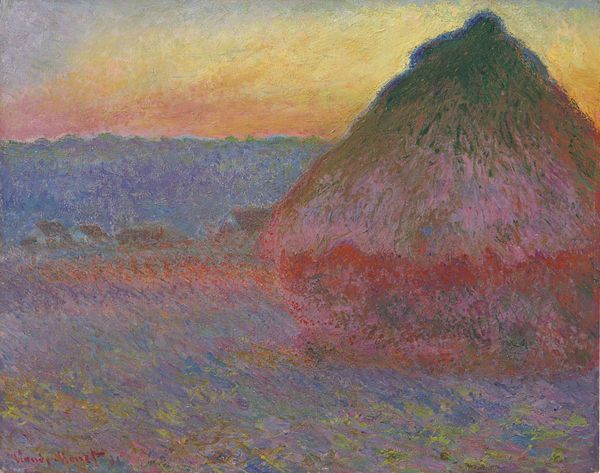
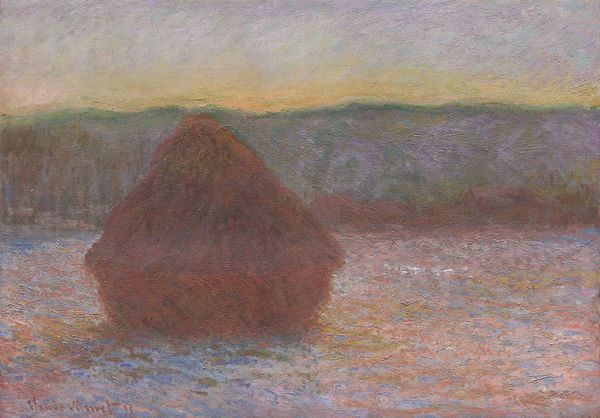
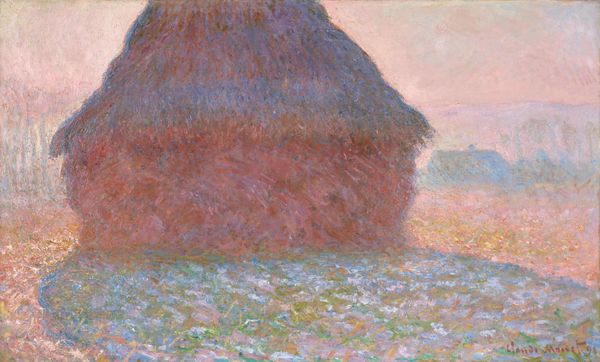
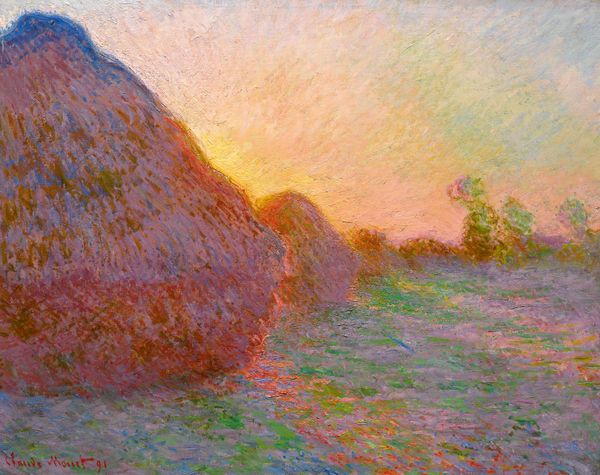
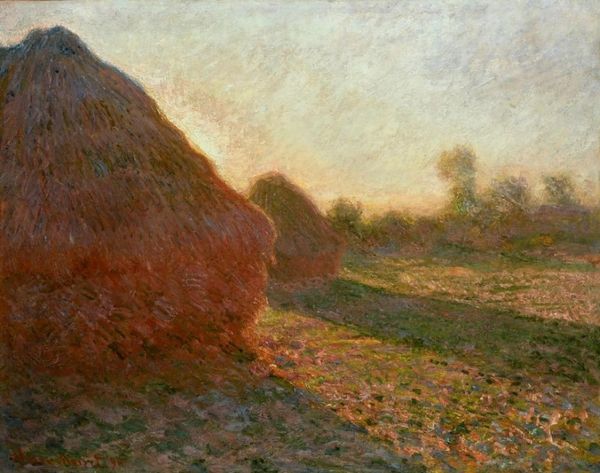
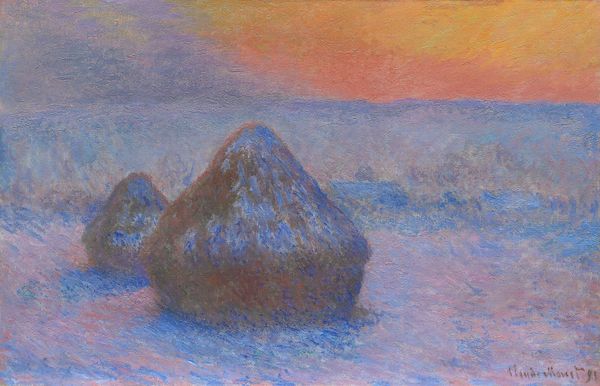
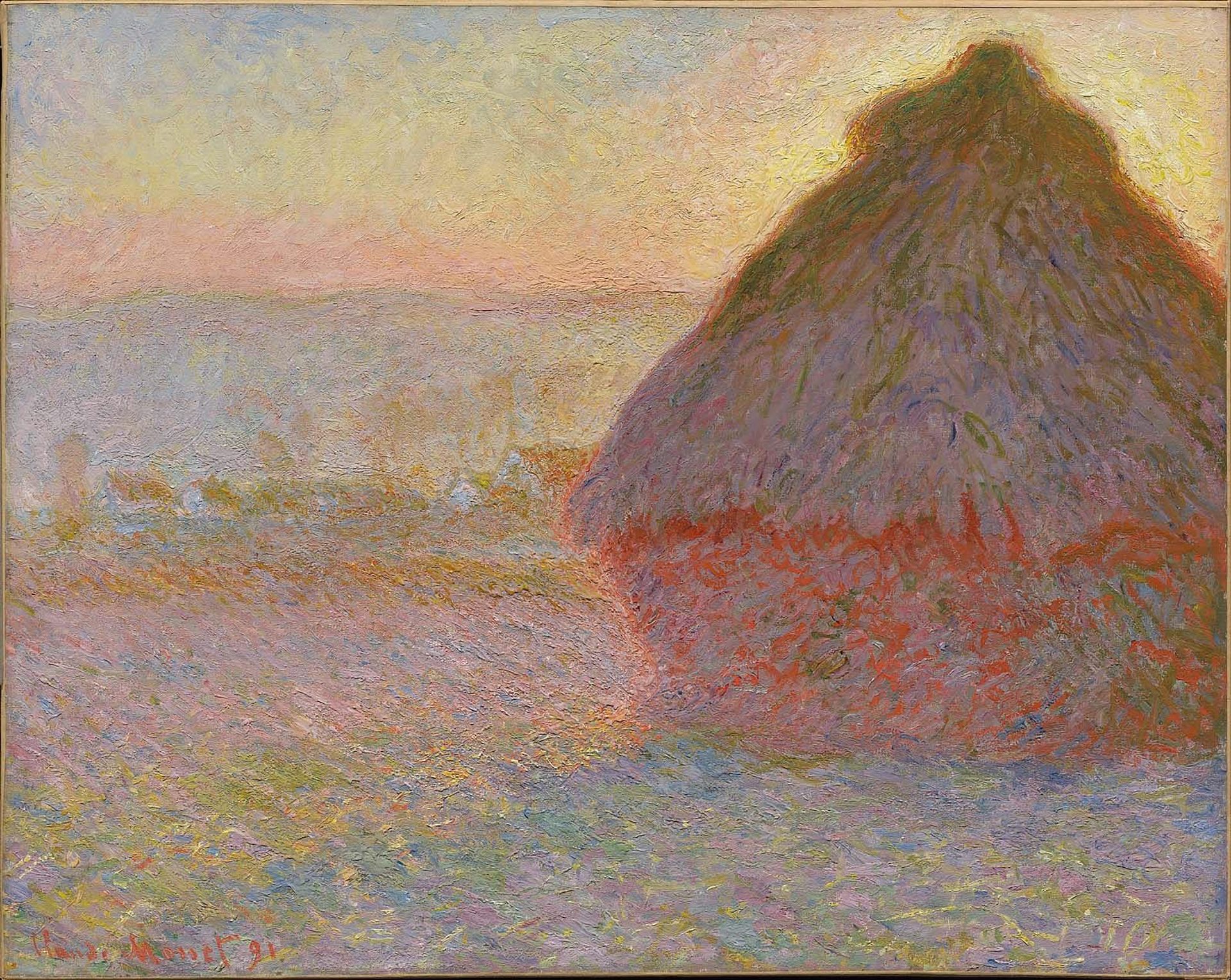
Claude Monet made Grainstack (Sunset) with oil on canvas. The material itself, oil paint, is interesting here. It has a capacity for blending and layering, which perfectly suited Monet’s interest in capturing fleeting atmospheric conditions. He wasn't using tempera or fresco, which demand a much more immediate approach. Oil allowed him to return to the canvas again and again, building up a surface through many increments. Consider the sheer labor involved in creating this painting, even though the subject seems simple. Each stroke is a decision, a response to the evolving light and shadow. This wasn't just about depicting a haystack; it was about embodying a sensory experience, a moment in time. Paint, brush, canvas, light, and above all, time; these were the materials Monet used to create this iconic image. The work challenges our assumptions about what is important: the subject, or the act of perception itself.
Grainstack (Sunset)
1891

Claude Monet
1840 - 1926Location
Museum of Fine Arts (MFA), Boston, MA, USArtwork details
- Dimensions
- 73 x 94 cm
- Location
- Museum of Fine Arts (MFA), Boston, MA, US
- Copyright
- Public domain
Comments
Share your thoughts
About this artwork
Claude Monet made Grainstack (Sunset) with oil on canvas. The material itself, oil paint, is interesting here. It has a capacity for blending and layering, which perfectly suited Monet’s interest in capturing fleeting atmospheric conditions. He wasn't using tempera or fresco, which demand a much more immediate approach. Oil allowed him to return to the canvas again and again, building up a surface through many increments. Consider the sheer labor involved in creating this painting, even though the subject seems simple. Each stroke is a decision, a response to the evolving light and shadow. This wasn't just about depicting a haystack; it was about embodying a sensory experience, a moment in time. Paint, brush, canvas, light, and above all, time; these were the materials Monet used to create this iconic image. The work challenges our assumptions about what is important: the subject, or the act of perception itself.
Comments
Share your thoughts