mixed-media, sculpture
#
african-art
#
mixed-media
#
contemporary
#
sculpture
#
figuration
#
sculpture
Copyright: Yinka Shonibare,Fair Use
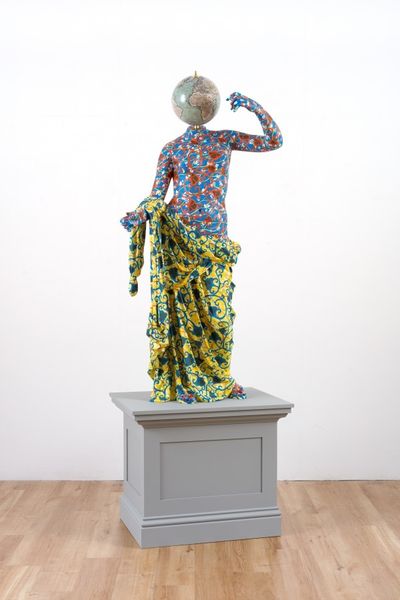
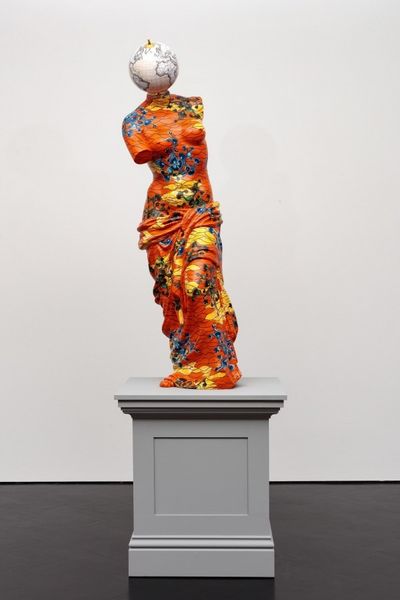
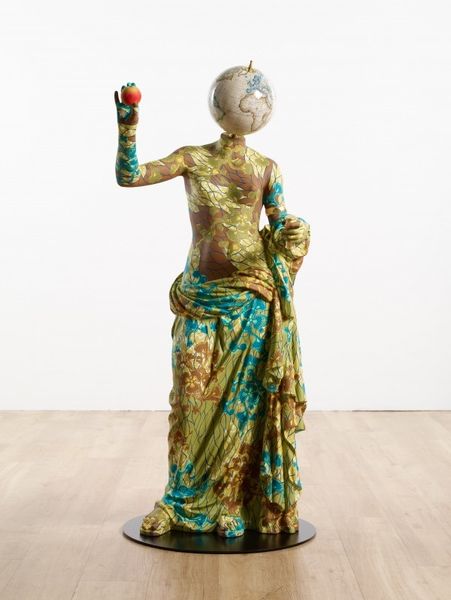
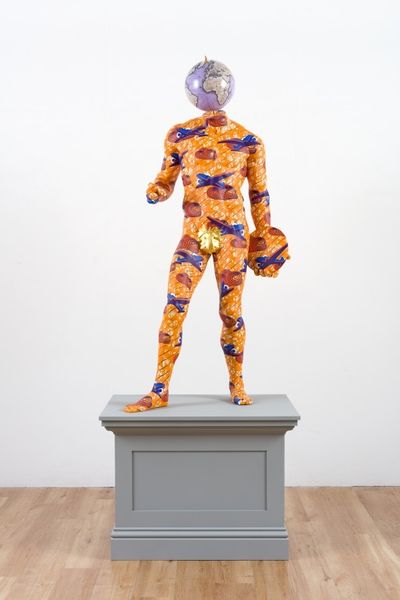
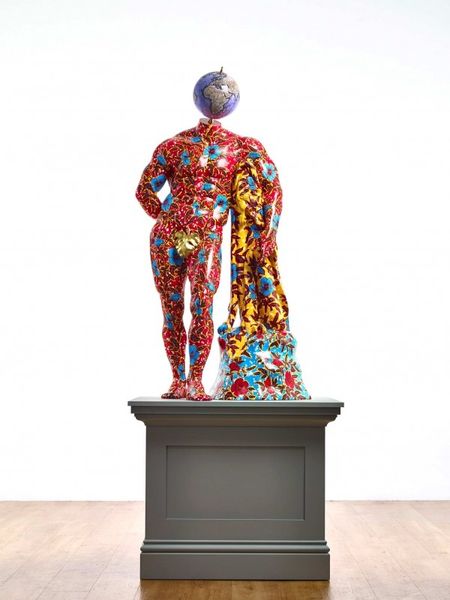
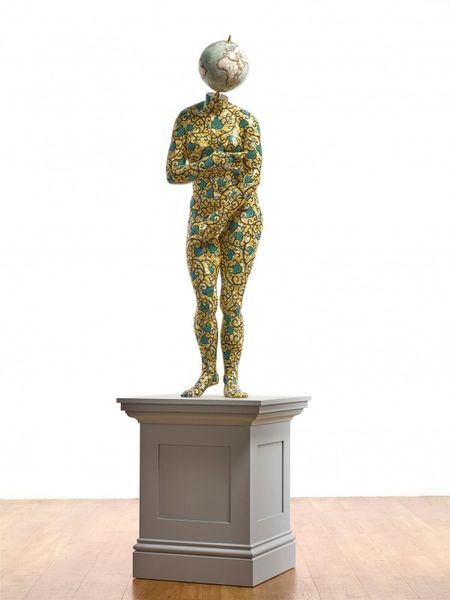
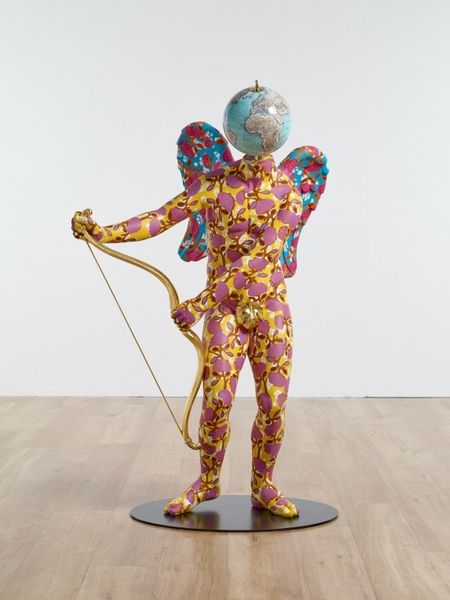
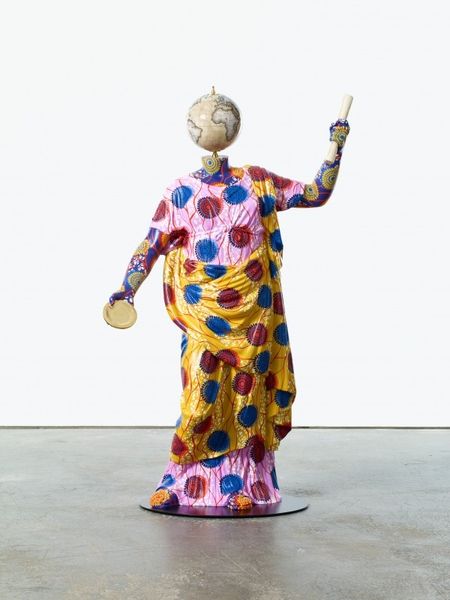
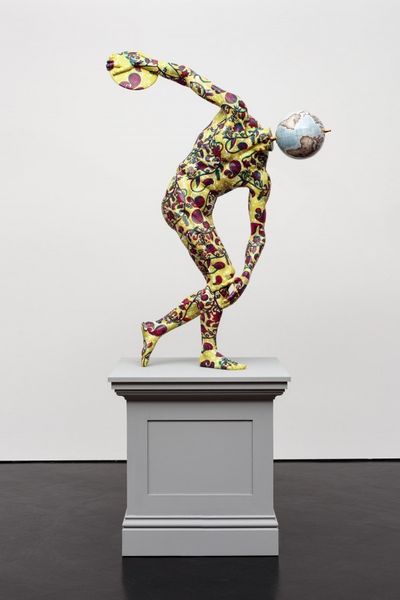
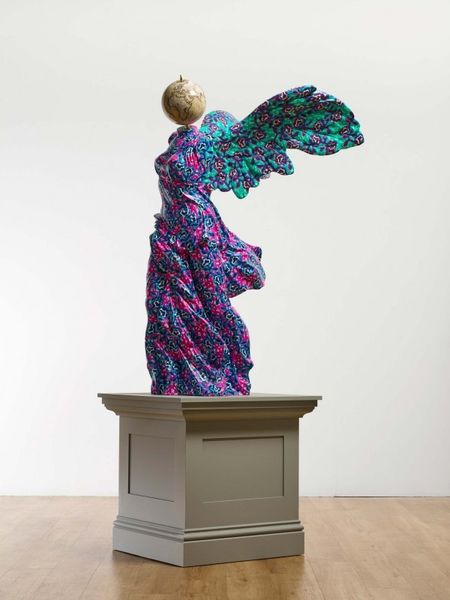
Curator: Here we have Yinka Shonibare's "General of Tivoli," created in 2018 using mixed media. It stands as a striking example of contemporary sculpture. What are your initial thoughts? Editor: Oh, it's wonderfully unsettling! That globe for a head throws everything into question, and the vibrant fabric makes me think of movement, even though it’s a static form. Like a classical statue warped by a dream. Curator: Precisely. The headless figure, dressed in Dutch wax fabric, is a recurring motif in Shonibare's work. It is ripe with art historical references—classical sculpture, the legacy of colonialism, and contemporary postcolonial critique. The fabric itself becomes a signifier. Editor: Absolutely! Those so-called "African" wax prints are actually Dutch-made, appropriated, and sold back to Africa. It’s this gorgeous, dizzying layer cake of cultural exchange. And the globe—it's so matter-of-fact and absurd. Is it about the burden of global leadership? The head being the weight of the world...cliché, but potent here. Curator: One could read it as a statement on the power dynamics inherent in globalization, certainly. But it’s equally pertinent to note that Shonibare often utilizes humor to address weighty themes. His work isn't simply didactic; there's an element of the carnivalesque. Editor: True! It's subversive fun. That flamboyant fabric softens the austerity of the pose, undercuts the grandeur we expect. I wonder if he chose Tivoli deliberately – Tivoli conjures up the romantic landscapes and aristocratic indulgence... it deepens the critique of power. Curator: It does. By juxtaposing signifiers of Western art and culture with African identity and history, Shonibare presents a complex narrative of hybridity and postcolonial identity. Editor: The tension of this piece stays with you. A fragmented, re-assembled vision of the world, like a fever dream of history and cultural inheritance! Curator: I agree. "General of Tivoli" leaves one questioning history, identity, and representation long after one has left its presence.
Comments
No comments
Be the first to comment and join the conversation on the ultimate creative platform.
 Collect
 React
React Comment
More like this