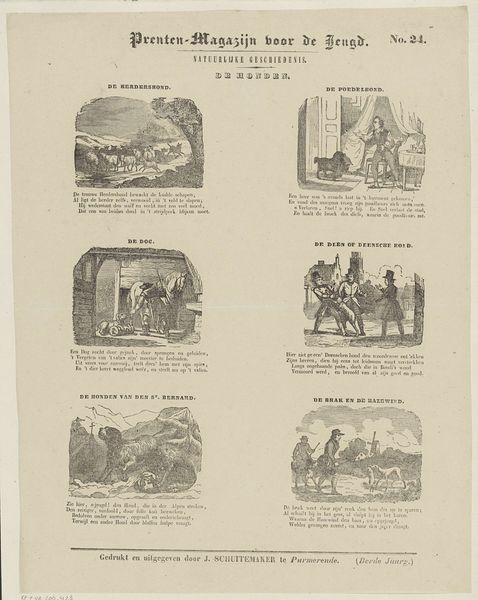
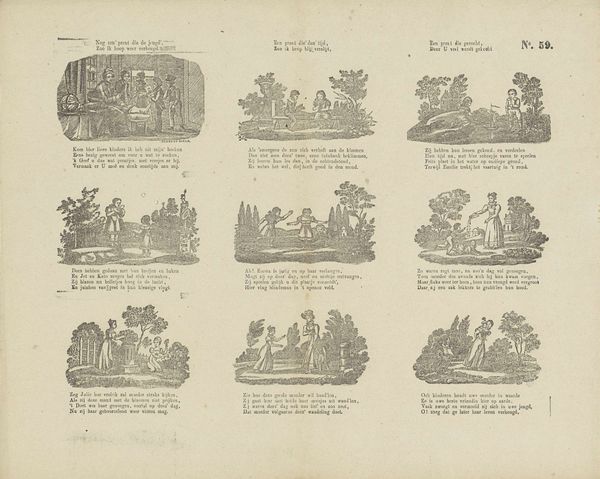
Voorbeelden van edelmoedige, mensch- / lievende en grootmoedige bedrijven c. 1814 - 1820
0:00
0:00

jansroortman
Rijksmuseum
print, engraving
#
neoclacissism
#
narrative-art
# print
#
old engraving style
#
romanticism
#
genre-painting
#
history-painting
#
engraving
Dimensions: height 415 mm, width 330 mm
Copyright: Rijks Museum: Open Domain
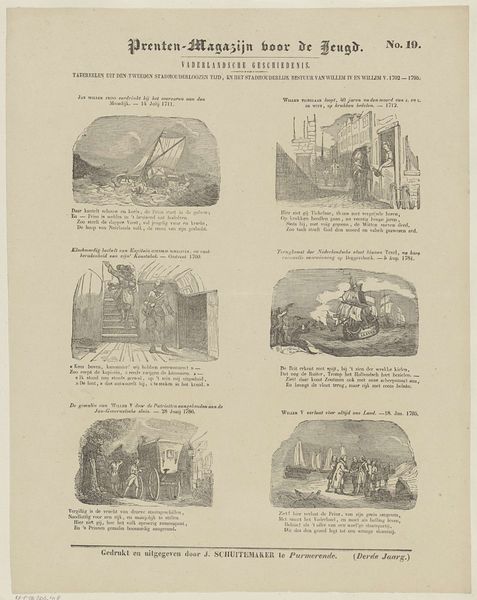
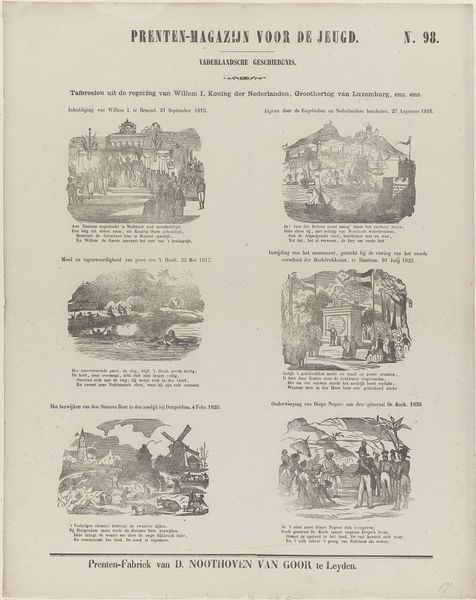
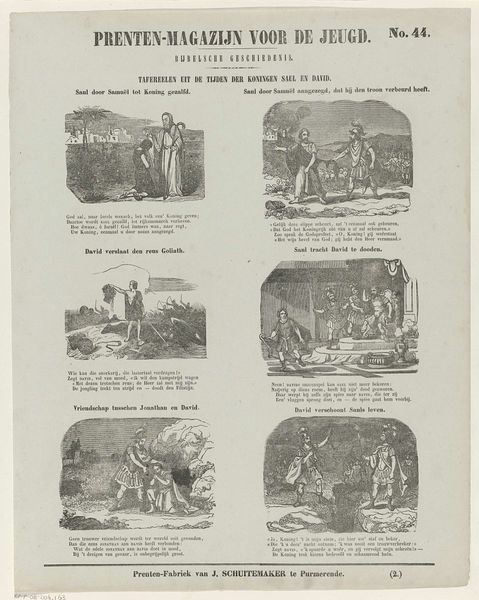
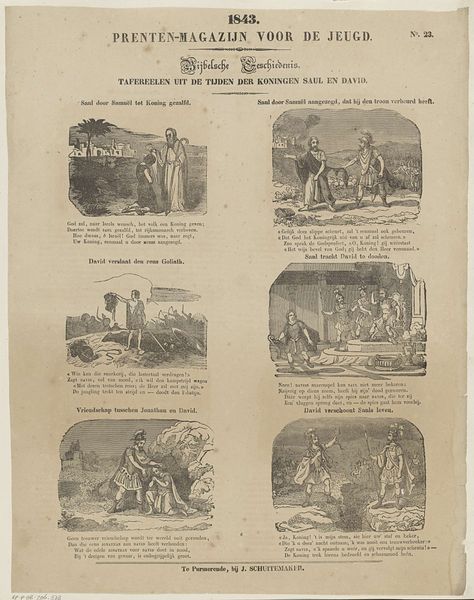
This print, made by Jan Oortman Sr. in the late 1700's, is an example of etching, a technique that democratized image-making in its day. The artist would have covered a copper plate with a waxy ground, then scratched an image into it. After immersing the plate in acid, he would remove the ground and apply ink to the etched lines. This process allowed for the relatively quick reproduction of images on paper, and helped to disseminate information, news, and social commentary. The crisp linework and fine details are due to the intaglio process, where ink is held in the grooves. The scenes here depict acts of generosity and compassion, reflecting the social values of the time. The print’s multiple vignettes and text demonstrate the importance of storytelling and moral instruction. By understanding the methods of production, we can recognize this work as a product of its time, embodying the era’s values and the increasing accessibility of visual media.
Comments
No comments
Be the first to comment and join the conversation on the ultimate creative platform.
 Collect
 React
React Comment
More like this