before 1886
Munt

Listen to curator's interpretation
Curatorial notes
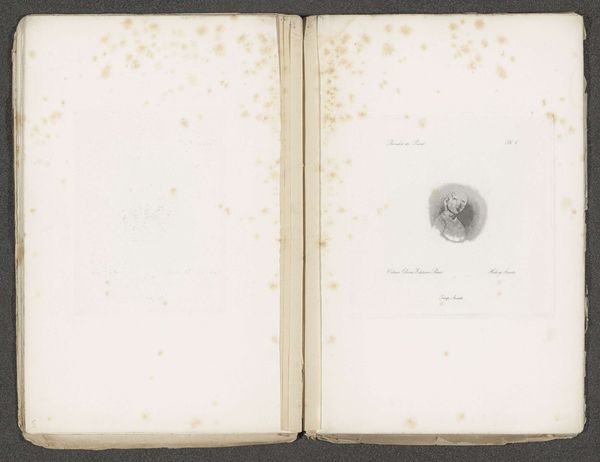
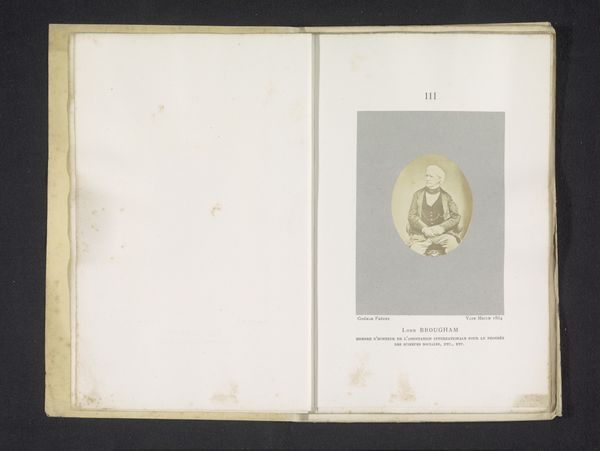
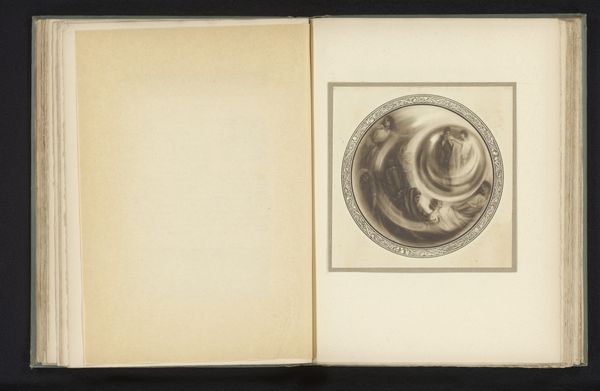
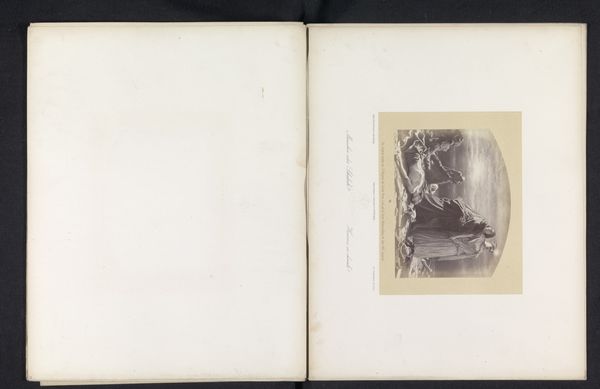
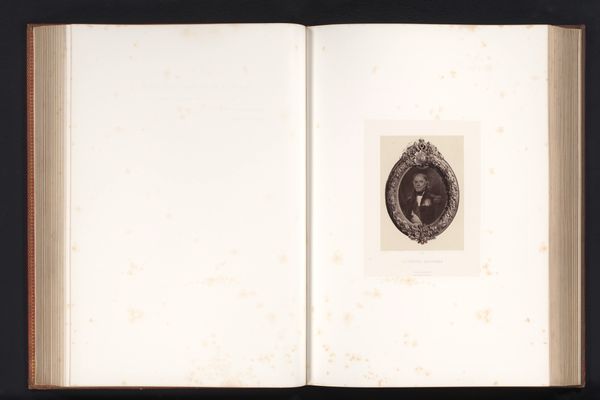
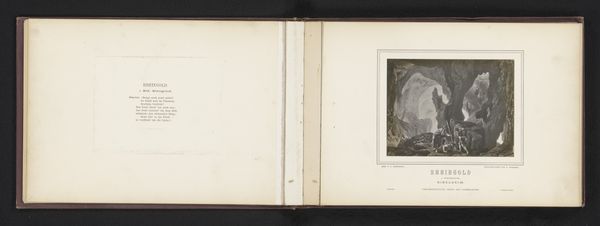
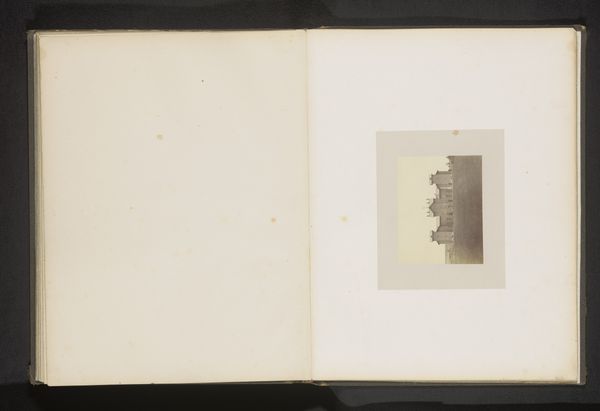
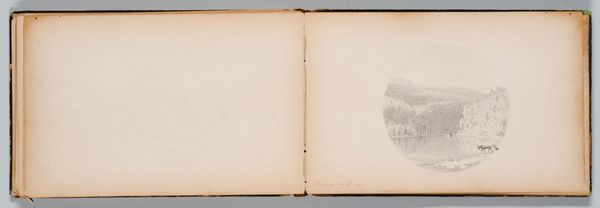
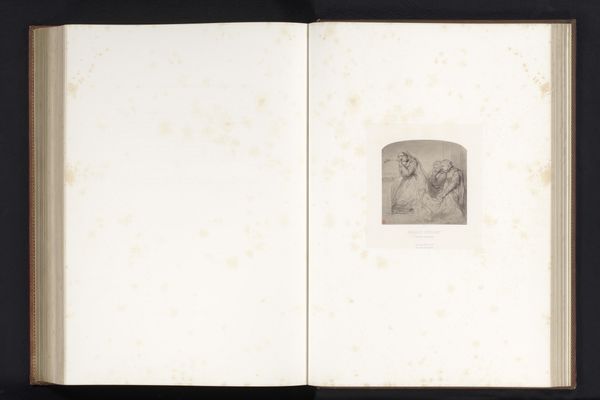
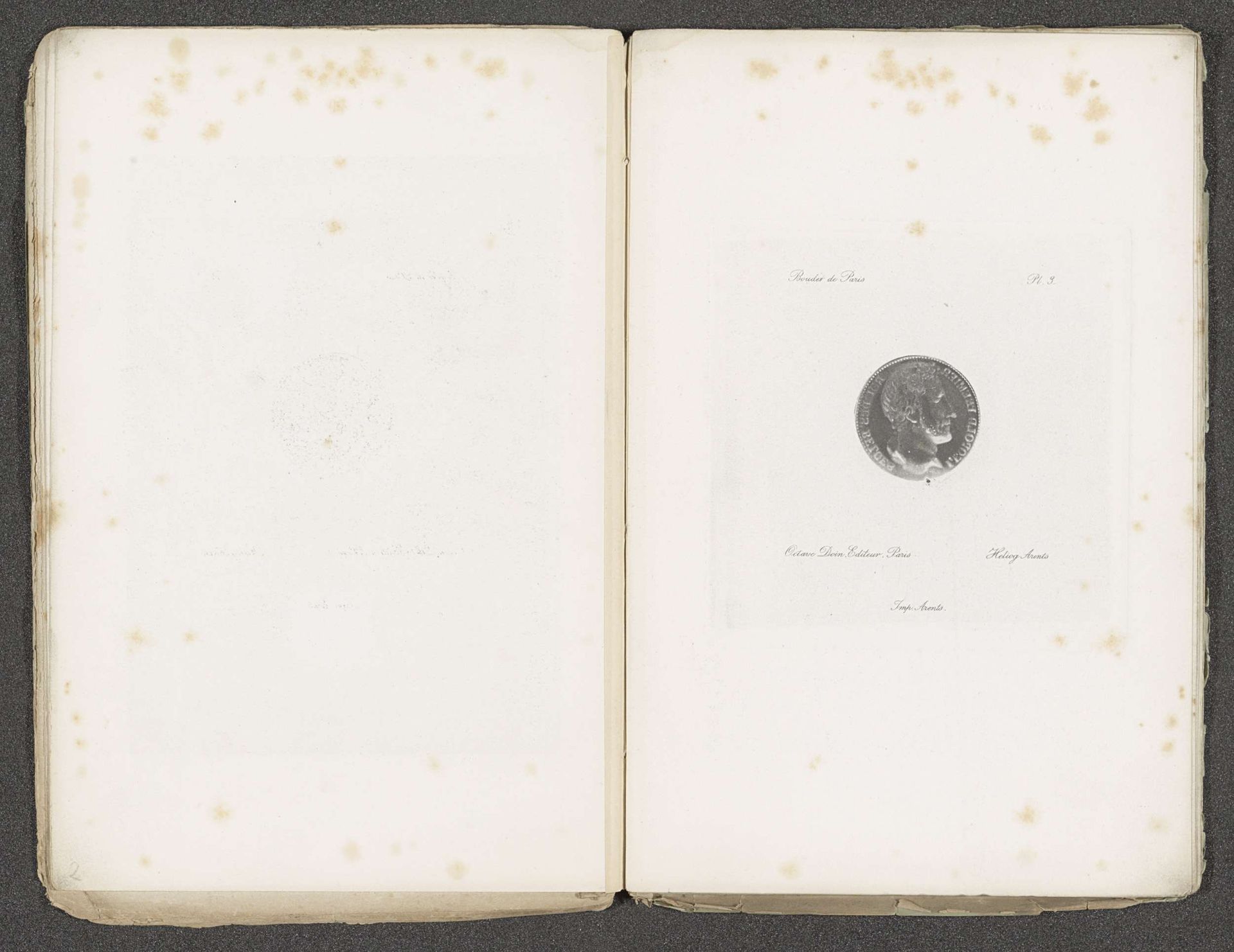
Curator: Before us we have "Munt", a print made before 1886, credited to Maurice Boudet de Paris. It appears to be ink on paper. Editor: My immediate impression is one of austerity. The portrait seems quite small relative to the expanse of paper surrounding it. The limited tonal range reinforces this restrained mood. Curator: Yes, and consider the object itself - an open book. On the right is what appears to be an engraving of a coin, with the profile of a gentleman. Note how precisely the details are rendered, reflecting academic conventions in the 19th century. The paper’s aged and somewhat stained surface provides further material contrast. Editor: Precisely. The decision to frame this image as part of a bound volume speaks volumes, doesn’t it? Perhaps a study of currency and its symbolism? This adds another layer, positioning the figure as not merely a portrait but an emblem of authority, contained within a controlled system. Curator: Furthermore, look closely at the opposing page. There appears to be another fainter design of similar execution style. The two combined offer us symmetry, drawing our eyes to a narrative connection between each facing. Editor: It prompts one to question the intent: to immortalize a specific ruler through currency, or to explore the very nature of power through representative images, thus contributing to a larger political narrative. This pre-photographic age held its authority tightly within these visual confines. Curator: Absolutely. It serves as a valuable artifact, revealing a specific approach to artistry that was integral to academic art of its time. The very constraints become significant components of the piece. Editor: On reflection, I now understand that the formal simplicity enhances rather than detracts from its effect; that the muted quality creates more intellectual resonance in viewing the interplay of power and representation within that historical framework.