About this artwork
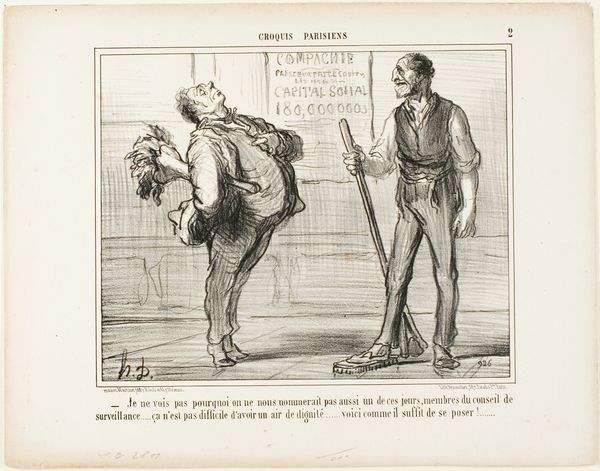
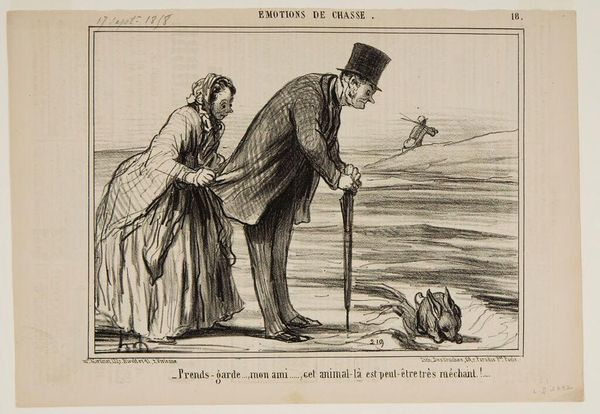
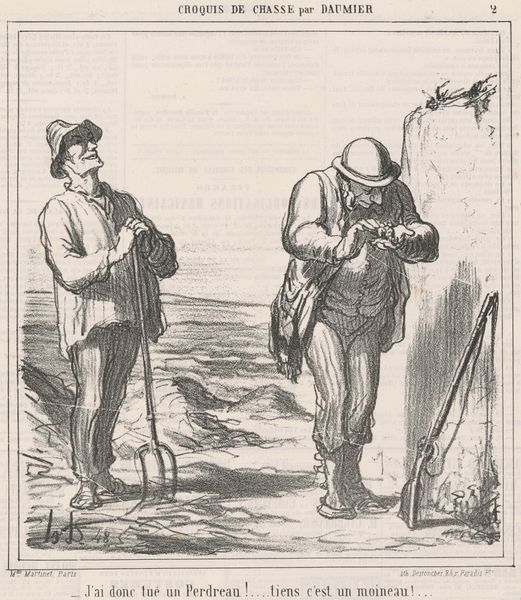
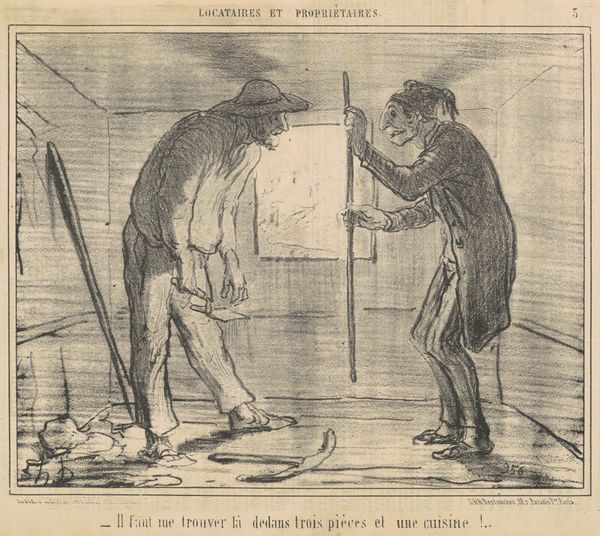
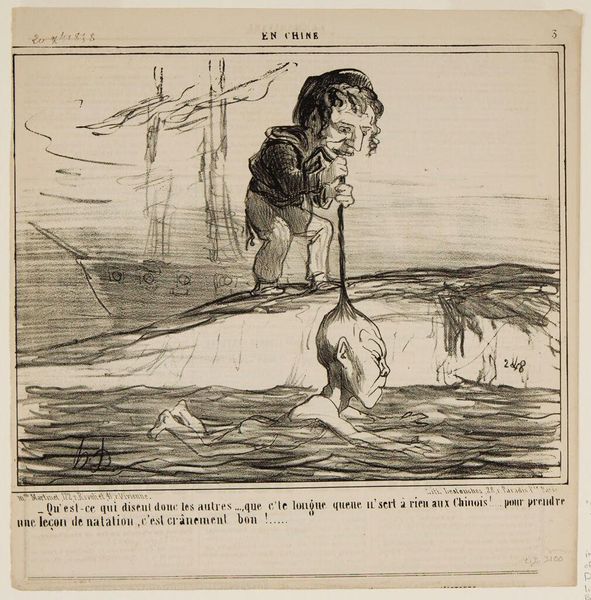
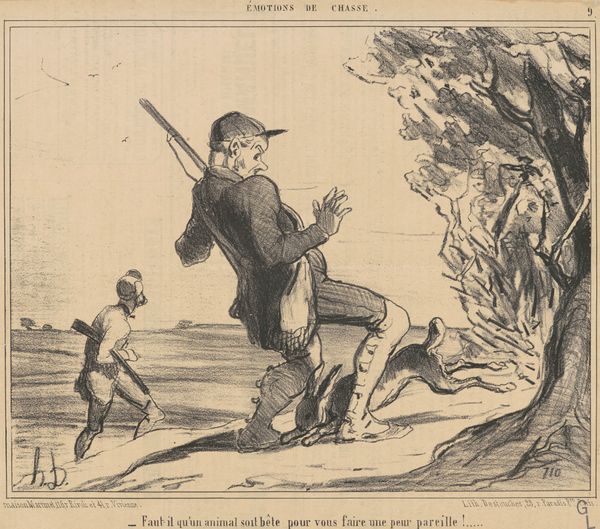
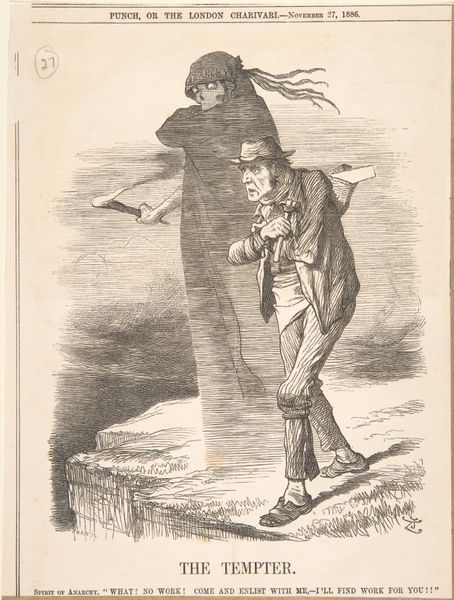
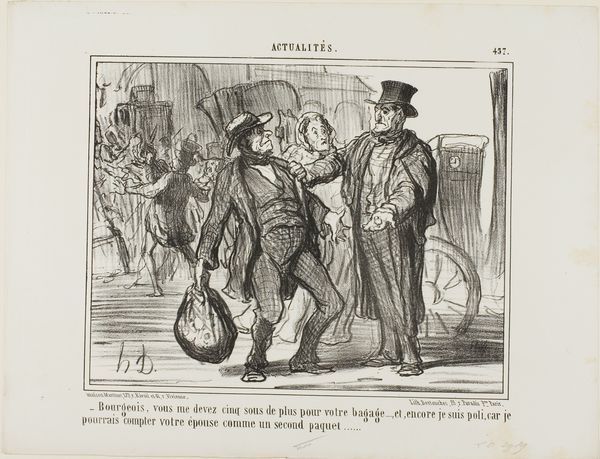
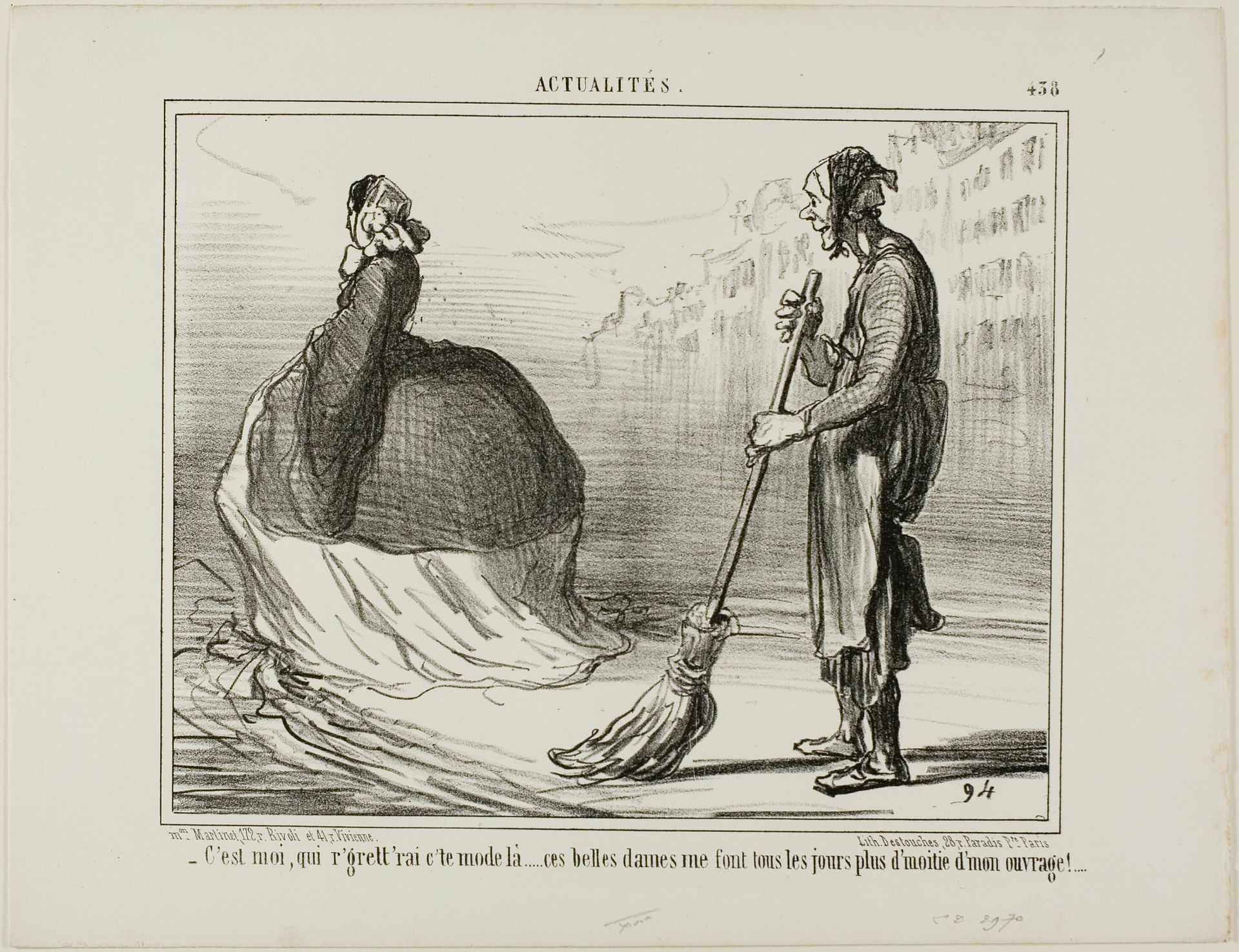
Honoré Daumier created this lithograph in the 19th century, a period of rapid industrialization and social change in France. Lithography, a printmaking technique using a stone or metal plate with a smooth surface, allowed for the mass production of images like this one, making art more accessible but also turning it into a commodity. The humor in this image isn't just a joke; it’s rooted in the labor and class dynamics of the time. We see a street sweeper commenting on the wide skirts of fashionable ladies, suggesting that they are doing half of his job. The contrast between the elegant woman and the laborer highlights the social inequalities inherent in a rapidly changing society. Daumier used the printmaking process to comment on these inequalities, challenging the traditional boundaries of art by engaging with everyday life and social issues.
“- I'd regret if this mode gets to be out of fashion one day... these ladies are doing half of my job!,” plate 438 from Actualités
1857


Artwork details
- Medium
- drawing, lithograph, print, paper
- Dimensions
- 204 × 257 mm (image); 275 × 358 mm (sheet)
- Location
- The Art Institute of Chicago
- Copyright
- Public Domain
Tags
Comments
Share your thoughts
About this artwork
Honoré Daumier created this lithograph in the 19th century, a period of rapid industrialization and social change in France. Lithography, a printmaking technique using a stone or metal plate with a smooth surface, allowed for the mass production of images like this one, making art more accessible but also turning it into a commodity. The humor in this image isn't just a joke; it’s rooted in the labor and class dynamics of the time. We see a street sweeper commenting on the wide skirts of fashionable ladies, suggesting that they are doing half of his job. The contrast between the elegant woman and the laborer highlights the social inequalities inherent in a rapidly changing society. Daumier used the printmaking process to comment on these inequalities, challenging the traditional boundaries of art by engaging with everyday life and social issues.
Comments
Share your thoughts