About this artwork
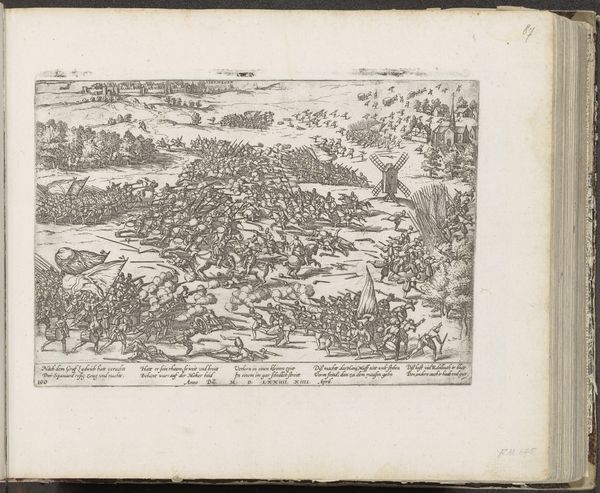
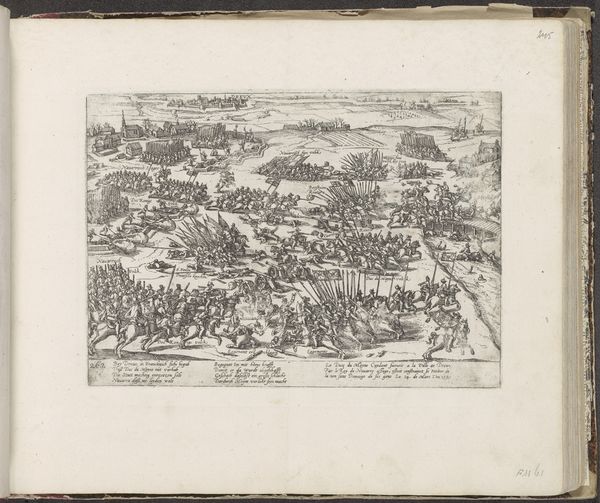
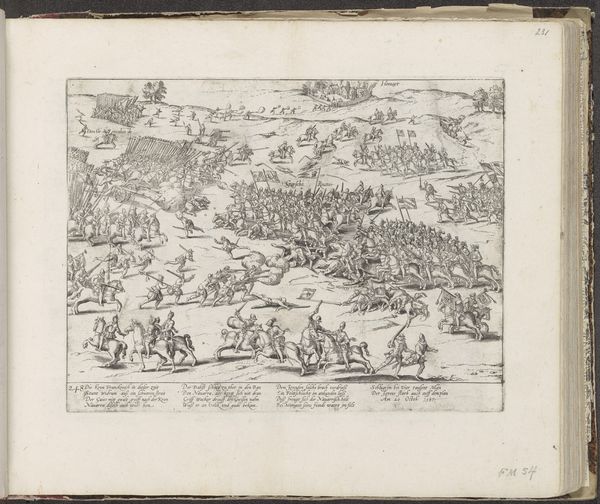
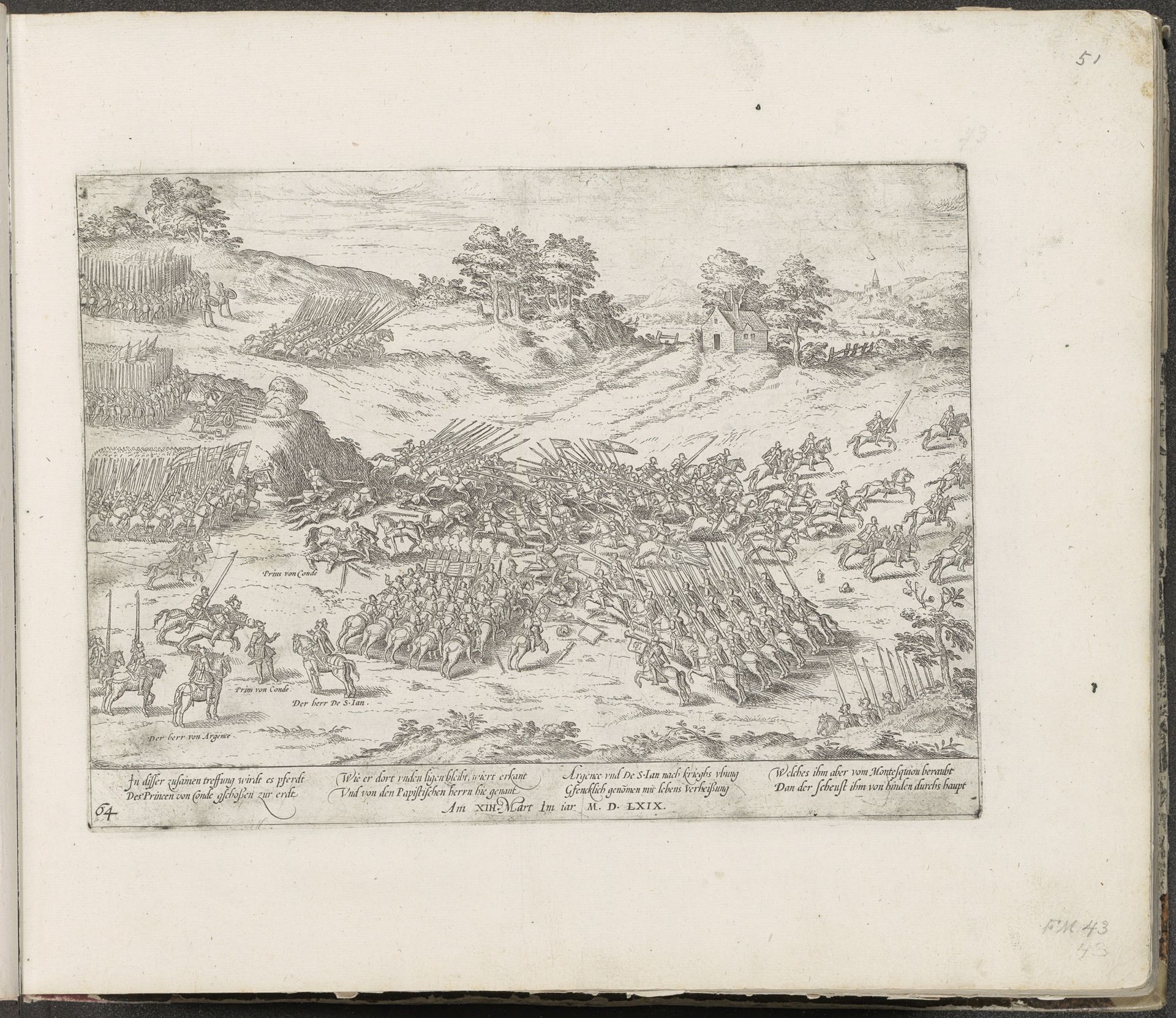
Frans Hogenberg created this print around 1569, depicting the capture and murder of the Prince of Condé. The chaotic battle scene is dominated by lances and pikes, symbols of military might. These weapons, bristling like thorns, evoke not only power but also the brutal reality of conflict. Think back to classical imagery of spears in Roman battle scenes, or even the way saints are depicted holding symbols of their martyrdom. Here, the sheer density of spears anticipates future depictions of mass warfare. The image captures the moment of Condé's downfall; this moment of violence is deeply rooted in collective memory. The emotional impact lies in the raw portrayal of conflict. Note how the confusion may subconsciously convey the futility of war and its endless recurrence through time. Such images persist in our psyche, constantly reshaped by history.
Prins van Condé gevangengenomen en vermoord, 1569
c. 1569 - 1571

Frans Hogenberg
1540 - 1590Location
RijksmuseumArtwork details
- Medium
- print, engraving
- Dimensions
- height 207 mm, width 282 mm
- Location
- Rijksmuseum
- Copyright
- Rijks Museum: Open Domain
Tags
Comments
Share your thoughts
About this artwork
Frans Hogenberg created this print around 1569, depicting the capture and murder of the Prince of Condé. The chaotic battle scene is dominated by lances and pikes, symbols of military might. These weapons, bristling like thorns, evoke not only power but also the brutal reality of conflict. Think back to classical imagery of spears in Roman battle scenes, or even the way saints are depicted holding symbols of their martyrdom. Here, the sheer density of spears anticipates future depictions of mass warfare. The image captures the moment of Condé's downfall; this moment of violence is deeply rooted in collective memory. The emotional impact lies in the raw portrayal of conflict. Note how the confusion may subconsciously convey the futility of war and its endless recurrence through time. Such images persist in our psyche, constantly reshaped by history.
Comments
Share your thoughts