

18th century
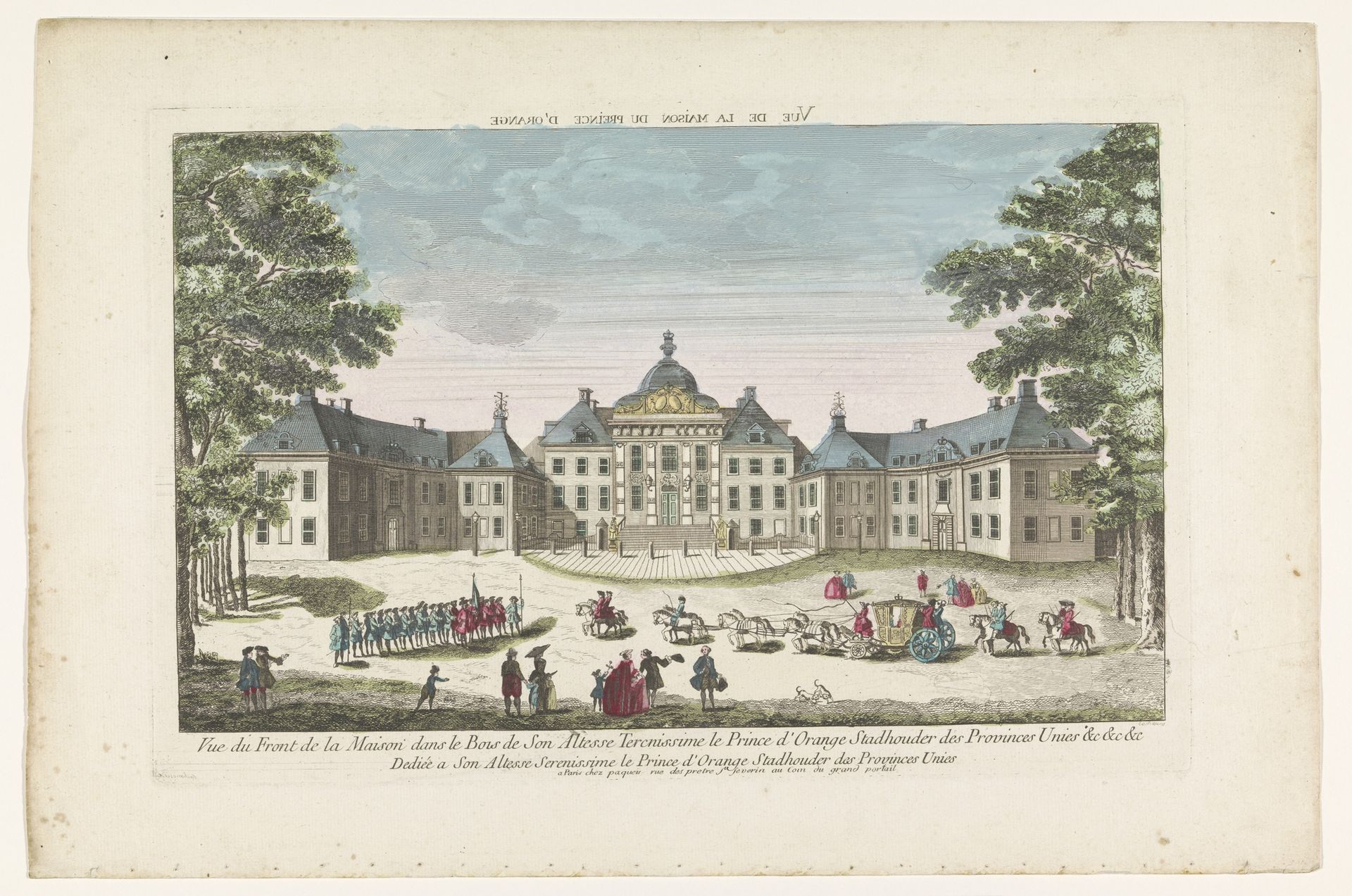
Gezicht op de voorzijde van het Paleis Huis ten Bosch te Den Haag

Listen to curator's interpretation
Curatorial notes
Editor: We're looking at "View of the Front of Huis ten Bosch Palace in The Hague," an 18th-century watercolor print by Paquier. It strikes me as a rather staged scene, like a theatrical backdrop with figures posed just so. What does it tell us about the era and the palace’s role? Curator: This print offers a glimpse into the social and political theatre of the Dutch Republic in the 18th century. These carefully positioned figures – the Prince of Orange’s procession, the guards – it's all about projecting power and legitimacy. Consider where these prints circulated: who saw them, and what message were they designed to convey? Was it accessible for everyday citizens? Editor: So, it’s not just a pretty picture, but a deliberate piece of propaganda? Curator: Perhaps propaganda is too strong a word, but certainly a carefully crafted representation of power. These images helped construct and maintain a particular image of the ruling elite, one that emphasized their grandeur and connection to the state. It's not a photograph, it's an exercise of curating authority through image. Who do you imagine lived in such a palace? How would they want to be seen by other rulers? Editor: I hadn't thought about it that way. It changes my perspective of what it truly depicts. Curator: Exactly. It pushes us to question what visual statements are made. Think about the landscaping too. It frames and highlights the central building in this picture – nature itself becoming a tool to amplify the palace’s presence. Editor: Seeing it as a projection of power gives the artwork so much more meaning than I initially saw in it! Thank you! Curator: My pleasure. Keep asking these questions!