engraving
#
portrait
#
neoclacissism
#
old engraving style
#
15_18th-century
#
academic-art
#
engraving
Dimensions: height 221 mm, width 141 mm
Copyright: Rijks Museum: Open Domain
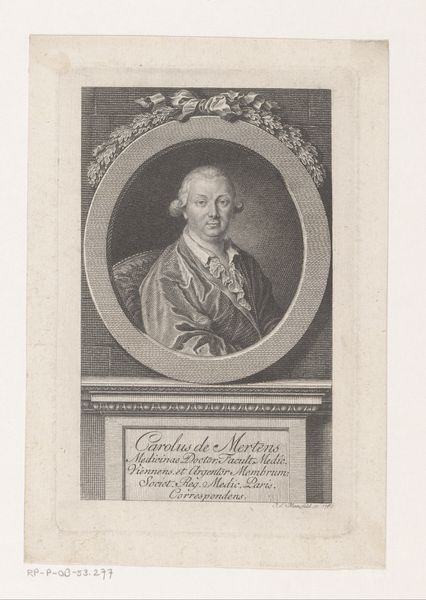
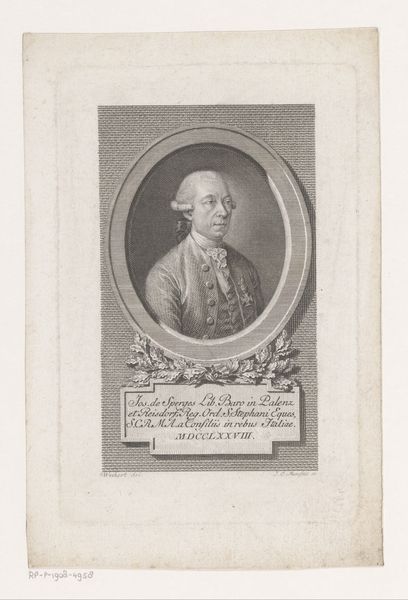
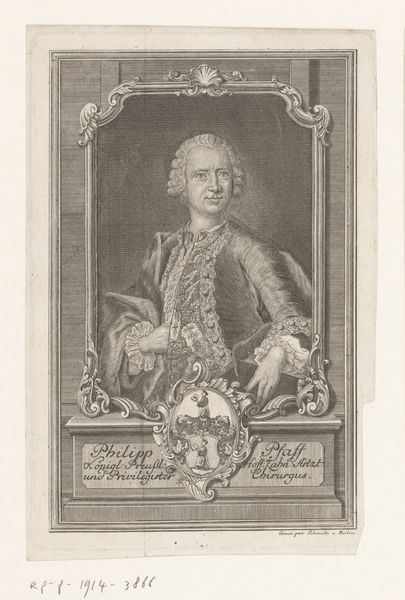
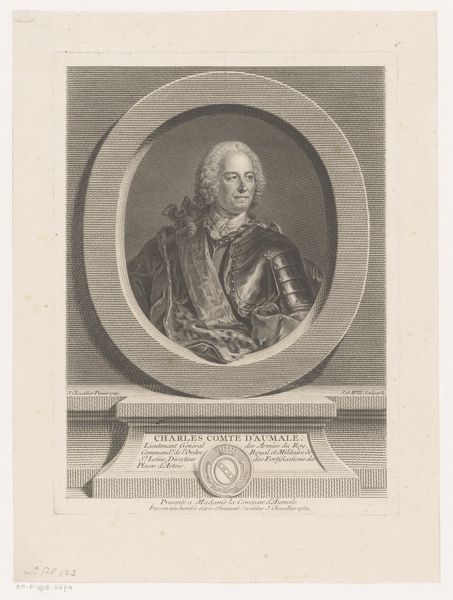
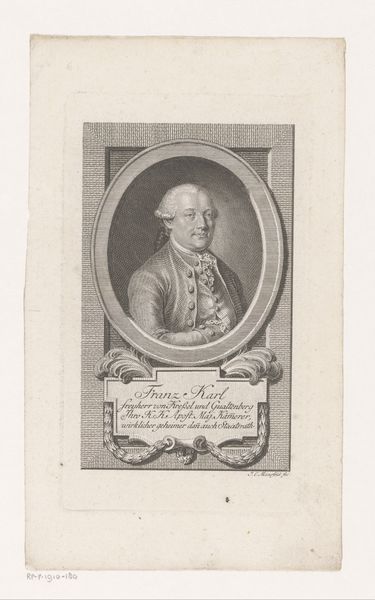
Curator: Let’s consider this engraving, “Portret van Johann Georg Meusel” by Johann Elias Haid, created around 1785. The portrait is quite formal, and the man depicted has a stern look, captured using engraving techniques. I’m struck by its directness, but also a sense of rigid societal roles, perhaps. What’s your take? Editor: It definitely has that formal, old-world feel, doesn’t it? I’m interested in understanding more about why portraiture like this was so prevalent during this period. It seems like it had a strong social function beyond just representation. What was the role of portraiture like this at the time? Curator: Good question! Portraiture in the late 18th century, especially of prominent figures like Meusel, who was a professor of history, served several critical functions. Firstly, it was about constructing and solidifying social status. These images were often commissioned to project an image of authority and intellect. It's worth noting how academic titles are presented, almost like part of his name, solidifying his place in society. Do you see other cues about his status and power? Editor: I do now, particularly with his attire and powdered wig; those were status symbols, right? But who was really seeing these engravings, and what did they think of them? Were these just for other elites? Curator: Excellent observation. These engravings would have been disseminated in multiple ways. While some were likely kept privately by the sitter and his family, others would circulate within intellectual and academic circles. They visually reinforced social hierarchies and were tools of self-promotion but also functioned to solidify academic communities and signal shared values. Think of it as an early form of visual networking! It's amazing to think of art playing such an important role in shaping public image and societal perceptions. Editor: Wow, I had never considered portraiture in this light before. It’s not just about appearances but a statement of power within specific societal circles. I appreciate learning how art and society intersect, and how to think more about the socio-political impact of art. Curator: Precisely! It shows us that art doesn't exist in a vacuum; it's always in conversation with its cultural context.
Comments
No comments
Be the first to comment and join the conversation on the ultimate creative platform.
 Collect
 React
React Comment
More like this