drawing, graphic-art, print, engraving
#
drawing
#
graphic-art
#
baroque
# print
#
geometric
#
history-painting
#
engraving
Copyright: Rijks Museum: Open Domain
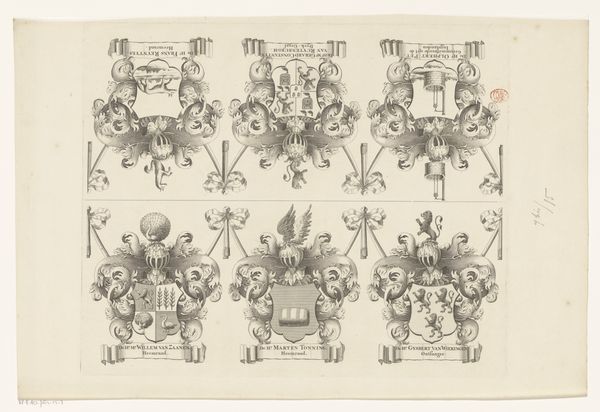
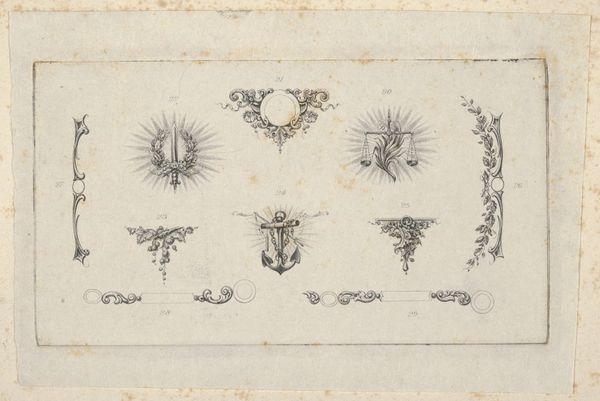
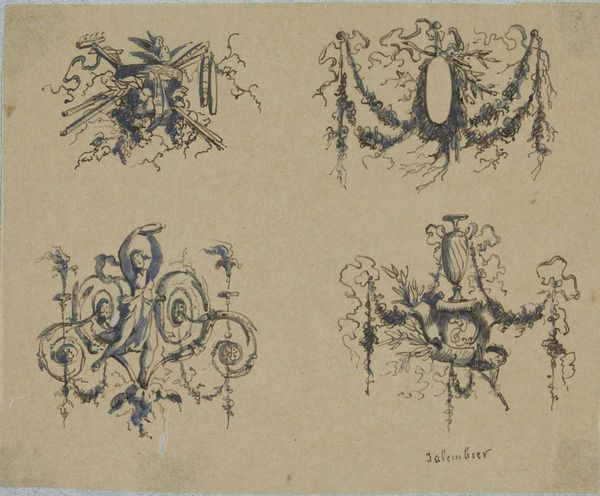
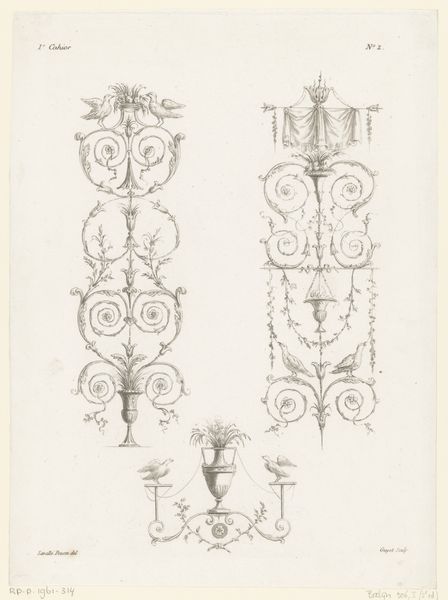
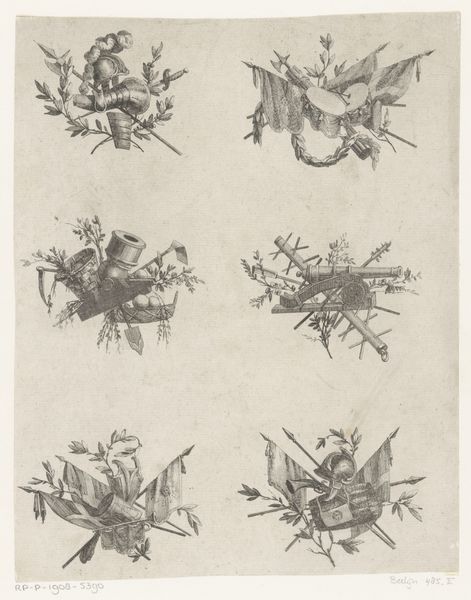
Curator: I'm immediately drawn into this very graphic world—everything is so meticulously rendered. There's a formality, almost severity, that's balanced by a quirky kind of whimsy. It's like peering into someone's elaborate, highly organized daydream. Editor: This engraving is actually a "Wapenrand van een kaart van de Alblasserwaard en de Vijfheerenlanden" dating back to 1716. The term translates roughly as "Border of a map of the Alblasserwaard and Vijfheerenlanden region," employing Baroque aesthetics. The artist, employing printmaking, uses drawings and graphic arts for a singular vision. Curator: So, these heraldic crests... each one seems to be a tiny universe unto itself, with floral elements, and even some chubby cherubs thrown into the mix. Each coat of arms is presented as some sort of achievement...almost architectural! But the drawing makes the whole thing quite funny. Editor: Exactly. Consider how such heraldry functioned in the Dutch Republic. These weren't necessarily signs of nobility, but symbols of civic pride, land ownership, and, of course, commerce. Placing them as the border of a map emphasizes control and dominion of space. Curator: They give me this odd sense of curated authority. You have to know how the thing is working, you have to believe it as well. I imagine these would've made people feel reassured. Secure in their holdings. The map isn't just geographic; it's about power, status, and belonging, all framed by this visual language that was so particular to the time. Editor: And the placement of these emblems emphasizes the tight control exercised by regional bodies like water boards over the Dutch landscape, particularly during the Baroque era when controlling water was essential to agriculture and trade. So, beyond the aesthetic appeal, the "Wapenrand" served a political function, didn't it? Curator: Absolutely. Art always has the ability to subtly shape the worldview. Now, looking at it again, I notice each of these crests seems to float like thoughts over the landscape. Editor: I see how your reflection enlivens our comprehension of its visual and societal effect. It's fascinating how historical documents can reveal how individuals conceived their identity. Curator: It makes me think about the art of map-making now—maybe those things still happen. It's interesting that a decorative edge could contain such an impactful history!
Comments
No comments
Be the first to comment and join the conversation on the ultimate creative platform.
 Collect
 React
React Comment
More like this