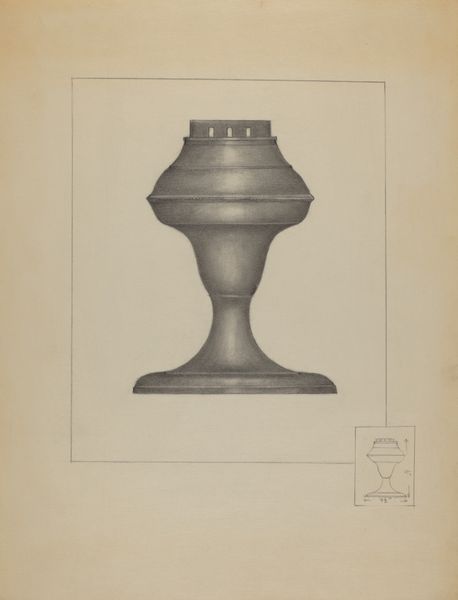
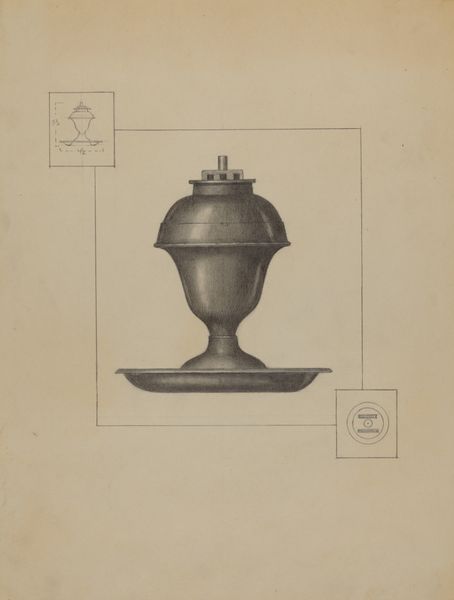
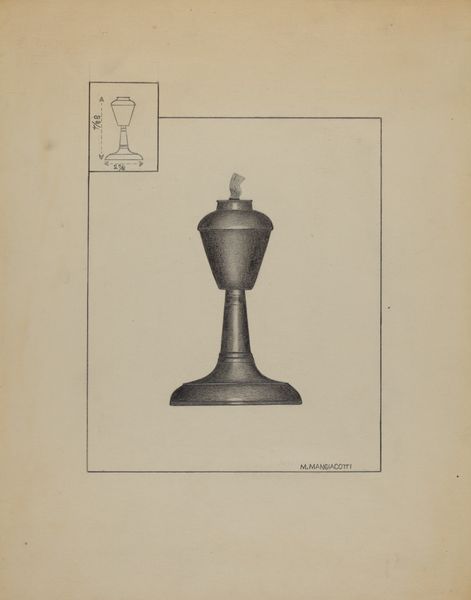
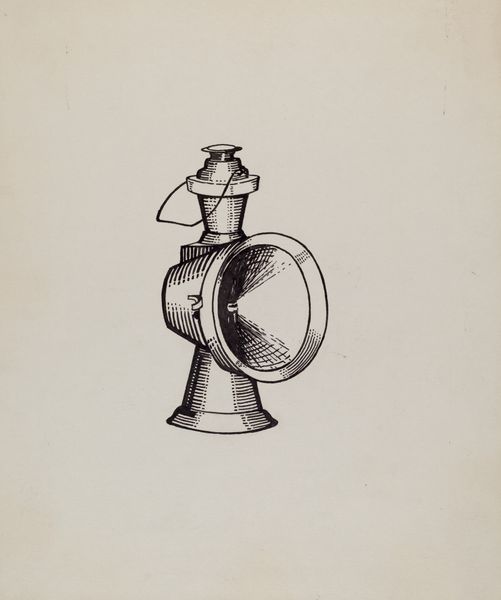
drawing, pencil, graphite
#
drawing
#
pencil
#
graphite
#
academic-art
#
realism
Dimensions: overall: 28.5 x 21.9 cm (11 1/4 x 8 5/8 in.)
Copyright: National Gallery of Art: CC0 1.0
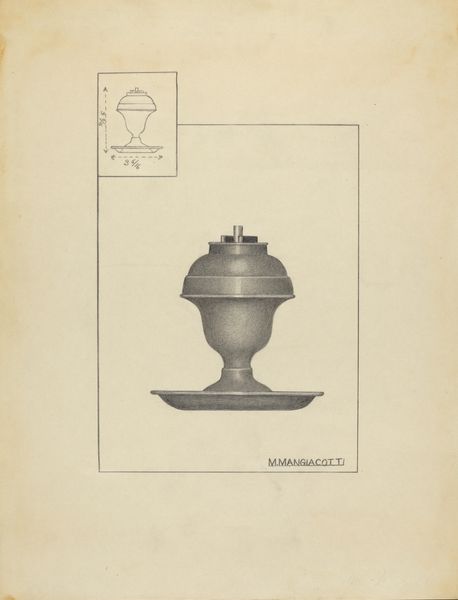
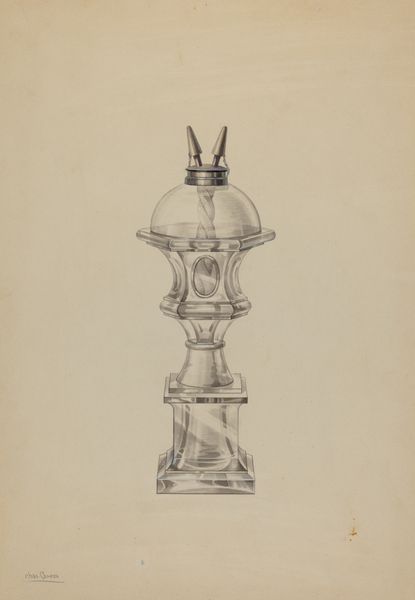
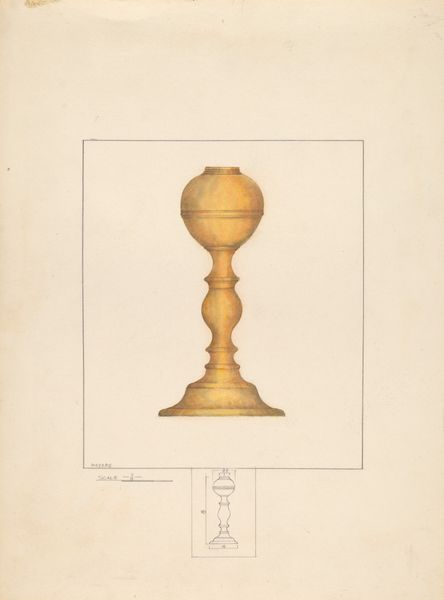
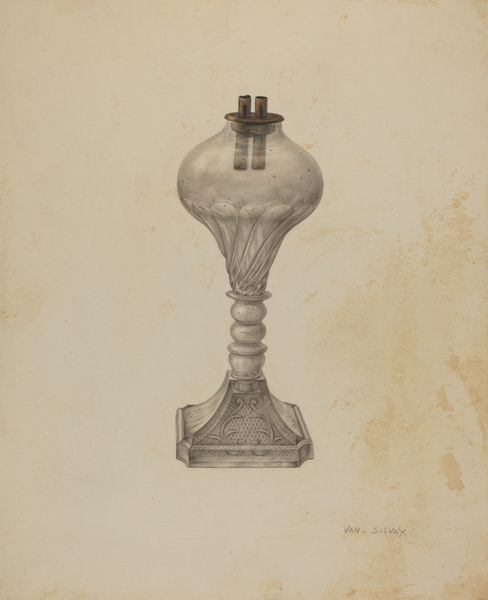
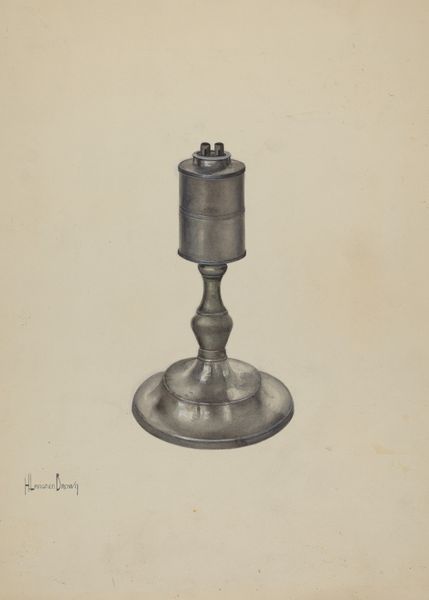
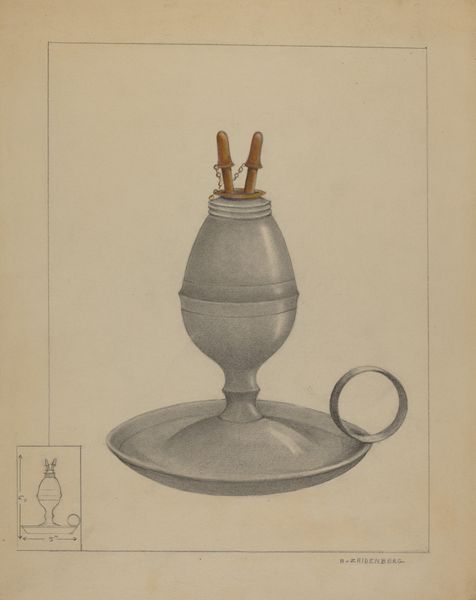
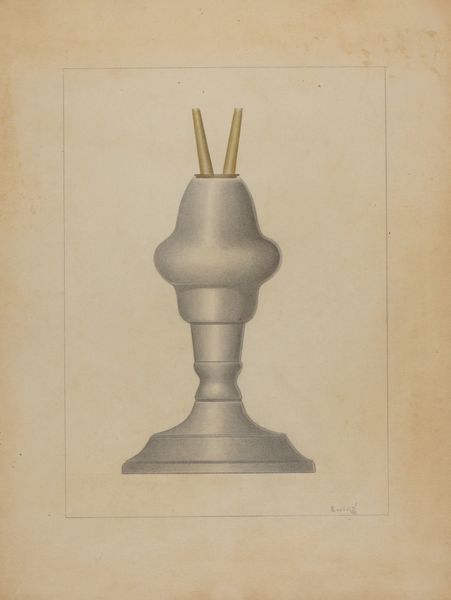
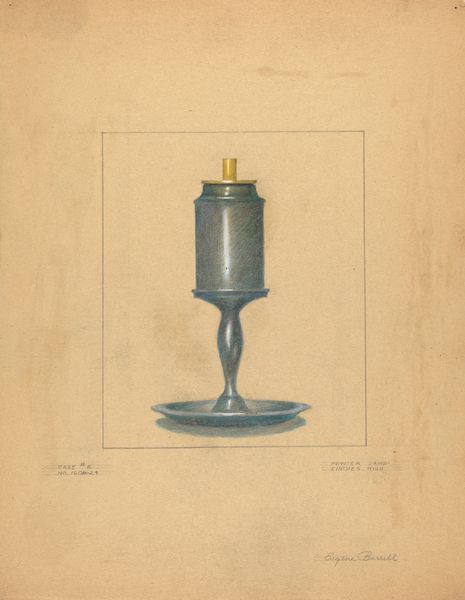
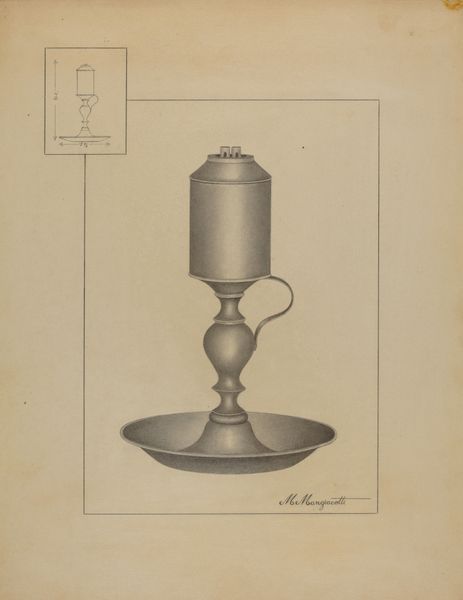
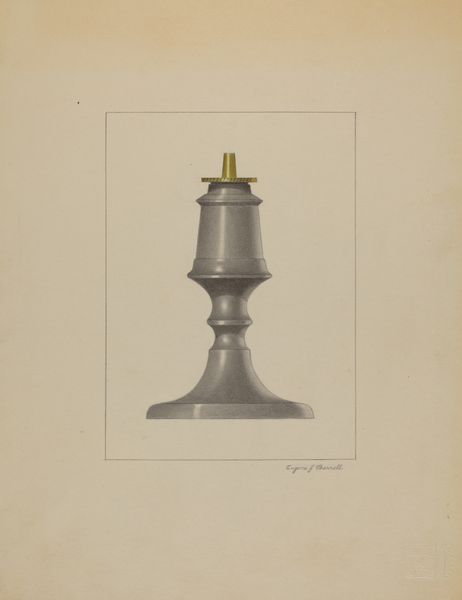
Curator: Let’s turn our attention to this intriguing pencil and graphite drawing from between 1935 and 1942, simply titled "Lamp," by Eugene Barrell. Editor: My first impression is a quiet elegance. The form is simple, almost classical, but the muted tones lend it a subdued, contemplative air. Curator: Precisely. What’s fascinating is the medium itself. Barrell chose graphite and pencil, humble materials often associated with sketching or preliminary studies, yet he achieves a remarkable level of detail and tonal range. We must consider the labor and skill required to render such precision using these tools. Editor: And I see a socio-political dimension. Given the artwork’s period, situated between the Great Depression and World War II, such an understated rendering of a commonplace object – a lamp – speaks to resourcefulness, to making do with what one has. It resists overt glamour in favor of functional beauty. Curator: I agree. There's a quiet resistance to the ostentatious. The light source is absent but implied, making us think about illumination, energy, and what fuels our lives. I wonder if there is any context of labor unions to connect here. Editor: Definitely. Moreover, a lamp, thematically, symbolizes knowledge, guidance, hope. During a time of immense global upheaval, this seemingly simple drawing can be interpreted as a beacon, representing resilience. Curator: The precision of the shading too; it reminds me of craftsmanship associated with the machine-tool industry of the era – something integral to supporting any kind of labor and the war effort itself. The lines themselves speak to the making, and reflect technical drawings from industry. Editor: This really makes you think. It also evokes notions of domesticity and the everyday experience. Who does this light serve? What space does it illuminate? I think exploring who could have owned the lamp provides an anchor to how identities intersect and how art is perceived differently according to a user. Curator: Absolutely, Eugene Barrell has certainly presented us with something that makes us want to explore our daily and artistic production in the 20th century. Editor: I appreciate how this seemingly simple drawing encourages a deep thinking to wider perspectives on labour, conflict, and identity in the past. It underscores the significance in even the most ordinary of things, and I look forward to thinking more about what a future context might mean.
Comments
No comments
Be the first to comment and join the conversation on the ultimate creative platform.
 Collect
 React
React Comment
More like this