
Curatorial notes
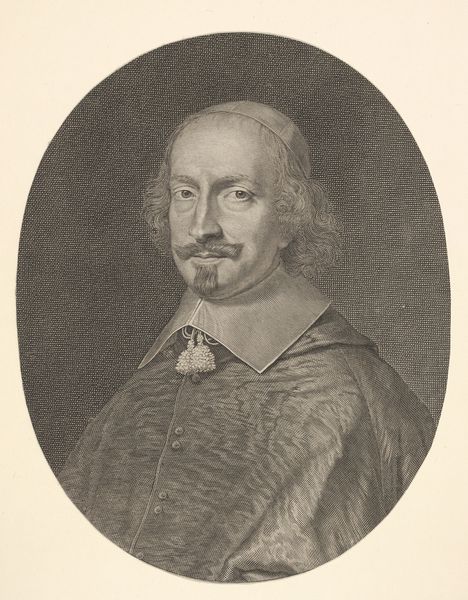
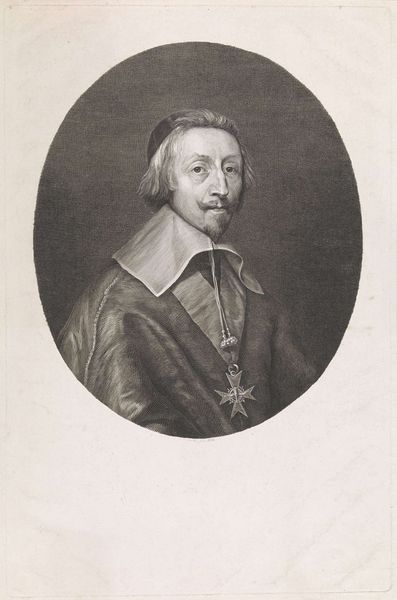
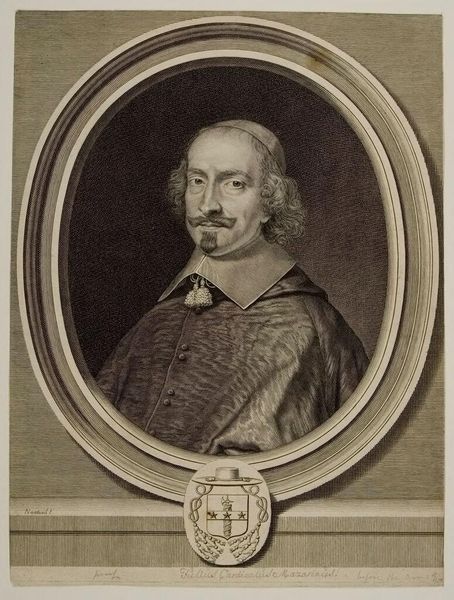
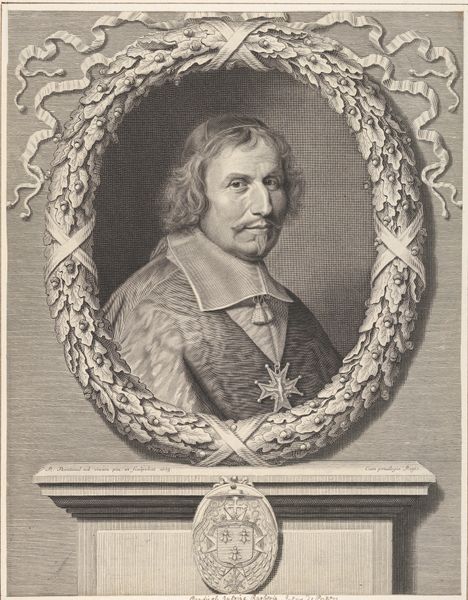
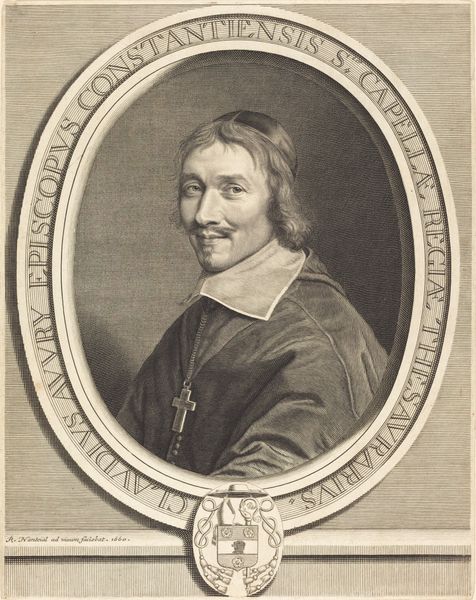
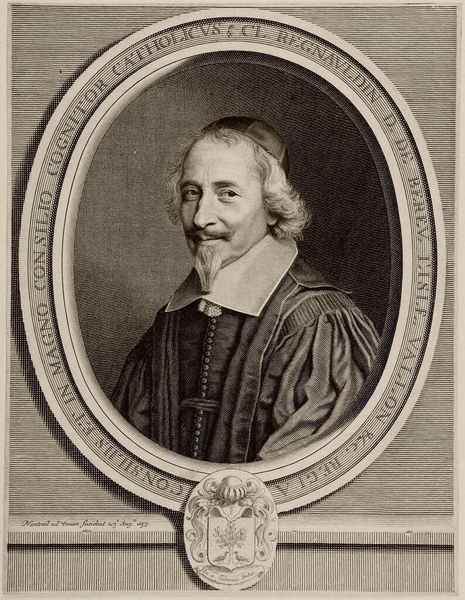
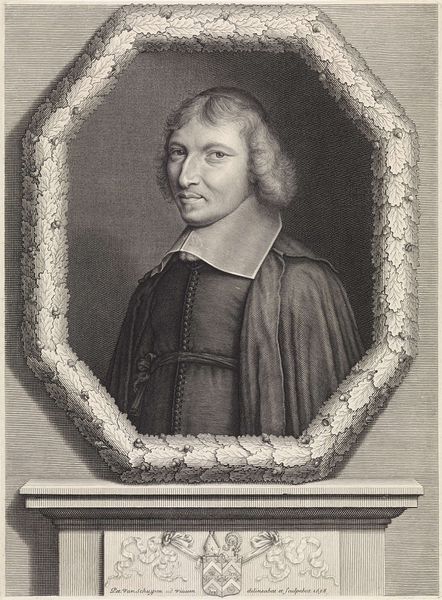
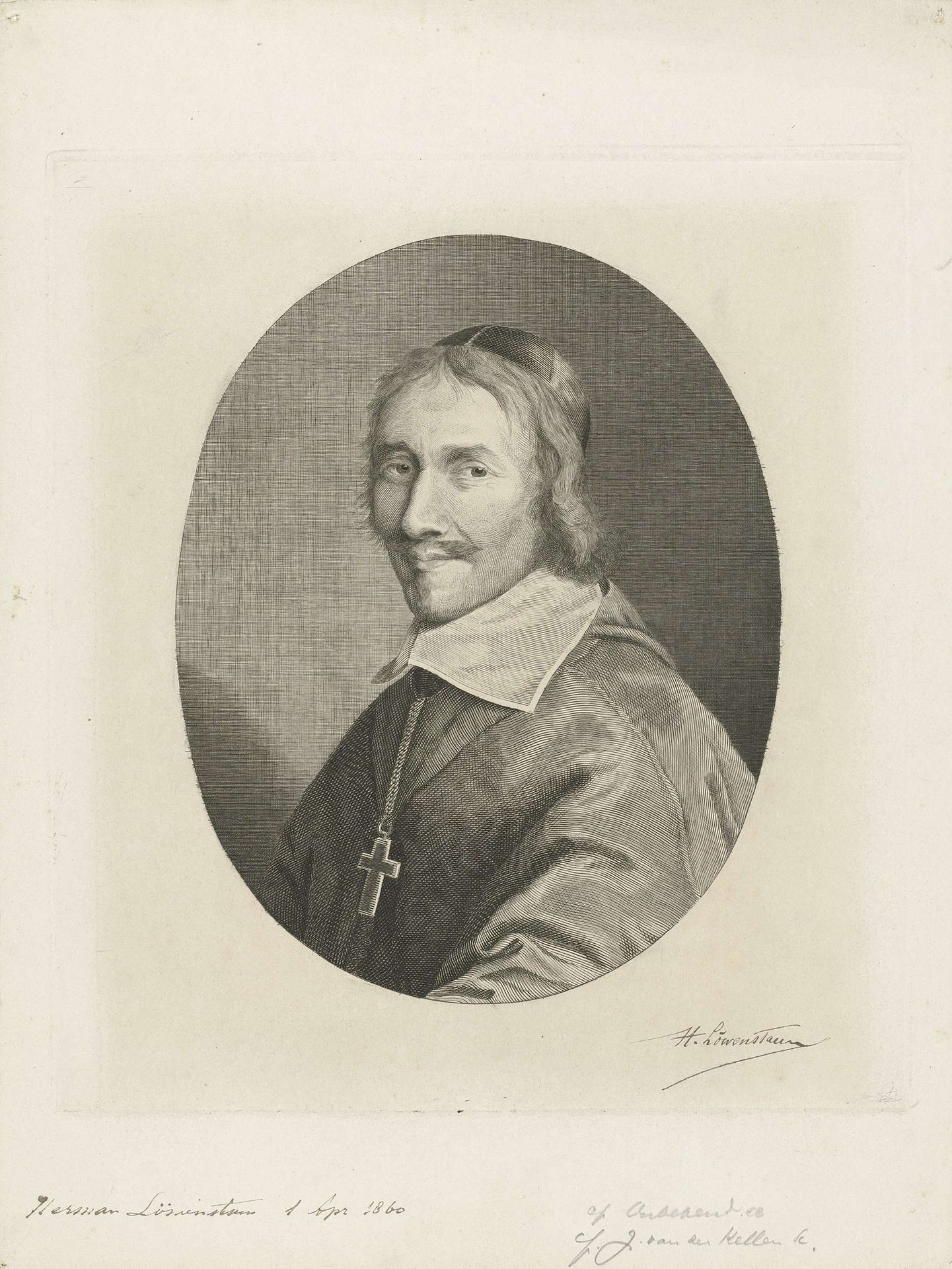
This is Herman Lowenstam's portrait of Cardinal Mazarin, made in 1860. It's a print, meaning that it was made through a mechanical process of impressing an inked matrix onto paper. Look closely and you'll see an incredibly fine mesh of lines, defining the image. This wasn't made by hand in the conventional sense. Instead, it was achieved using an engraving process, and would have been printed in multiples. This reproductive capability has important social implications. It would have allowed the image to be disseminated widely, and purchased at a lower cost than a painting. The image is of a man who was fabulously wealthy, and deeply involved in the politics of his day. The print brings him down to earth, if you will, making him more accessible. So while the portrait depicts an elite, its means of production reflects a more democratic impulse. This is typical of the modern age, when art began its long dance with reproducibility.