About this artwork
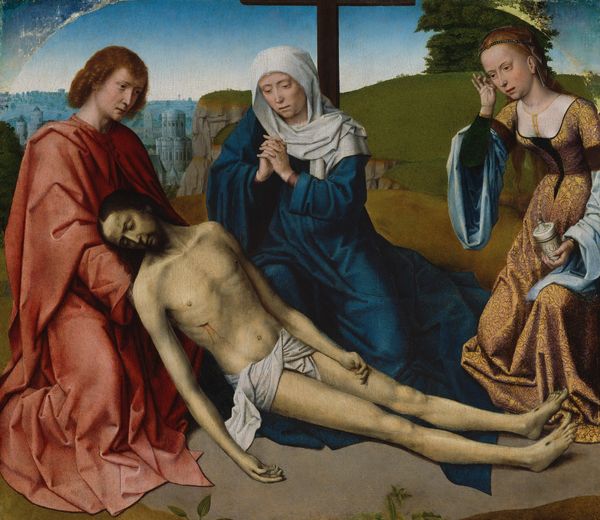
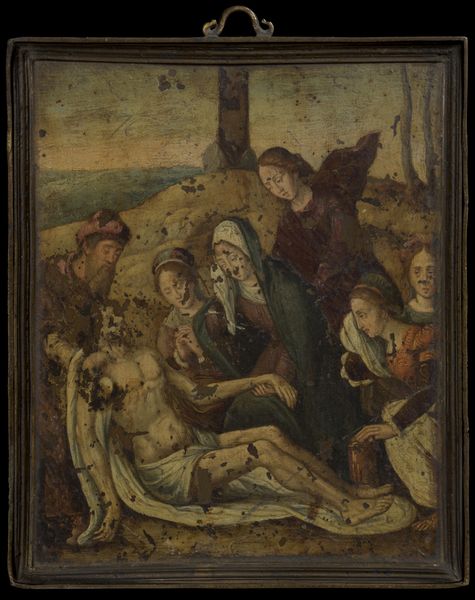
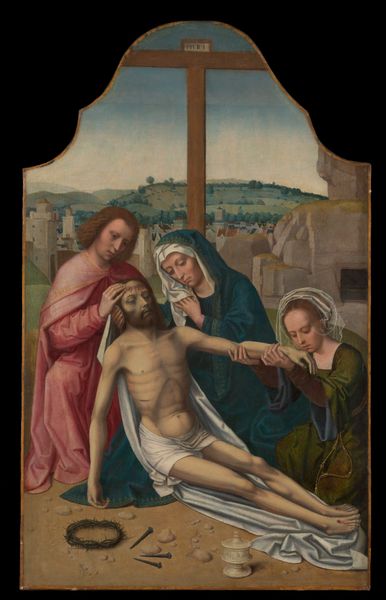
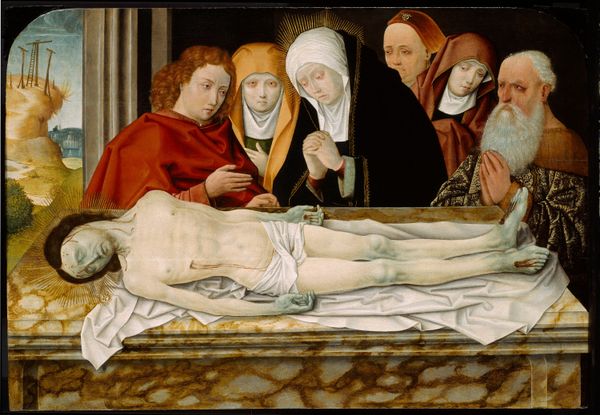
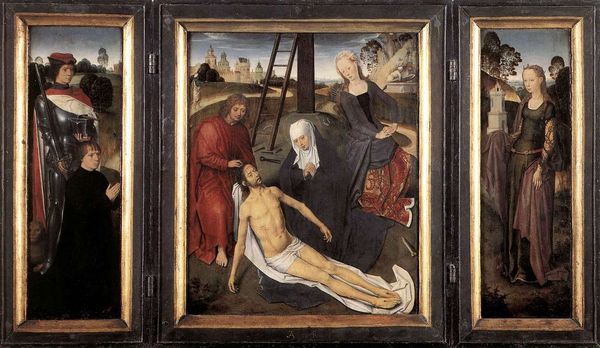
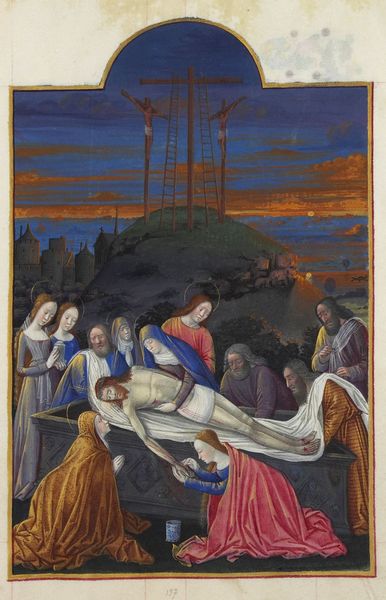
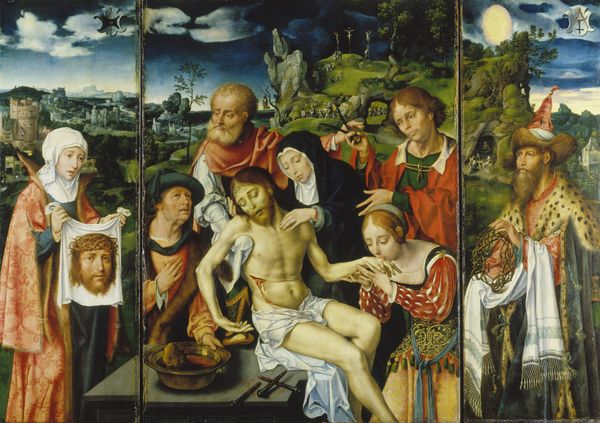
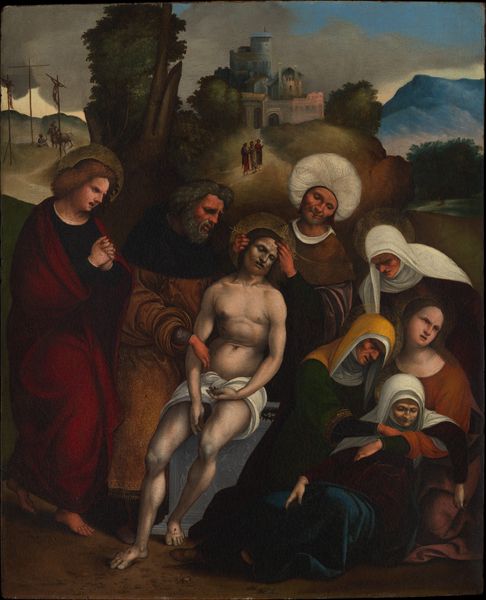
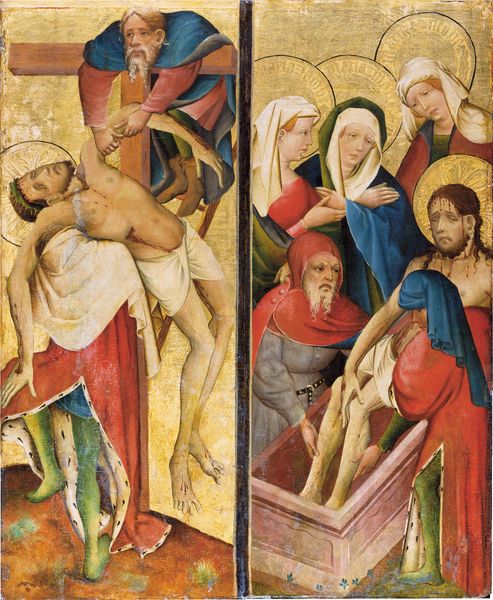
Simon Marmion painted "The Lamentation of Christ" on panel, sometime in the 15th century. Dominating the scene is the lifeless body of Christ, tenderly supported. Here, the motif of lamentation, of mourning over a lost one, echoes through time. Consider the Virgin Mary, her face a mask of sorrow, reminiscent of countless images of mothers grieving. This pose transcends its immediate religious context, tapping into a primal human experience of loss. Think of ancient Egyptian depictions of Isis mourning Osiris, their poses mirror the same profound sorrow. The grief is palpable, an emotional language understood across cultures and eras. The image engages us on a subconscious level, triggering our own memories of loss and empathy. This isn't just a biblical scene; it's a mirror reflecting our shared human condition. The image of Lamentation continues to evolve through centuries, a testament to our need to process collective trauma and grief.
The Lamentation of Christ
1468 - 1478


Artwork details
- Medium
- painting, oil-paint
- Dimensions
- 20 3/8 x 12 7/8 in. (51.8 x 32.7 cm)
- Location
- Metropolitan Museum of Art, New York, NY
- Copyright
- Public Domain
Tags
Comments
Share your thoughts
About this artwork
Simon Marmion painted "The Lamentation of Christ" on panel, sometime in the 15th century. Dominating the scene is the lifeless body of Christ, tenderly supported. Here, the motif of lamentation, of mourning over a lost one, echoes through time. Consider the Virgin Mary, her face a mask of sorrow, reminiscent of countless images of mothers grieving. This pose transcends its immediate religious context, tapping into a primal human experience of loss. Think of ancient Egyptian depictions of Isis mourning Osiris, their poses mirror the same profound sorrow. The grief is palpable, an emotional language understood across cultures and eras. The image engages us on a subconscious level, triggering our own memories of loss and empathy. This isn't just a biblical scene; it's a mirror reflecting our shared human condition. The image of Lamentation continues to evolve through centuries, a testament to our need to process collective trauma and grief.
Comments
Share your thoughts