print, woodcut, wood-engraving
#
portrait
# print
#
figuration
#
woodcut
#
academic-art
#
wood-engraving
Dimensions: 5 1/4 x 6 15/16 in. (13.34 x 17.62 cm) (image)9 1/2 x 12 1/16 in. (24.13 x 30.64 cm) (sheet)
Copyright: No Copyright - United States
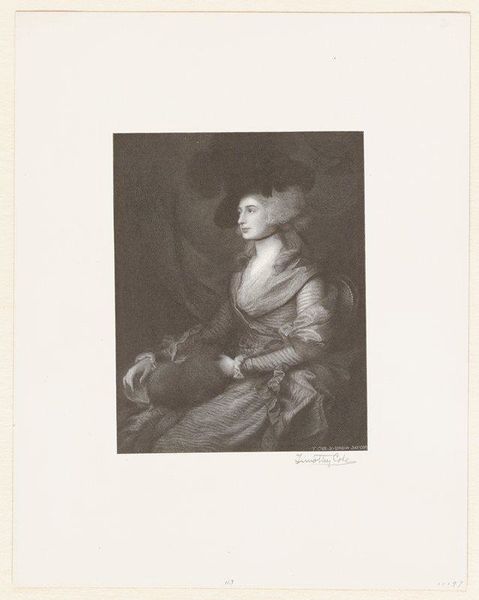
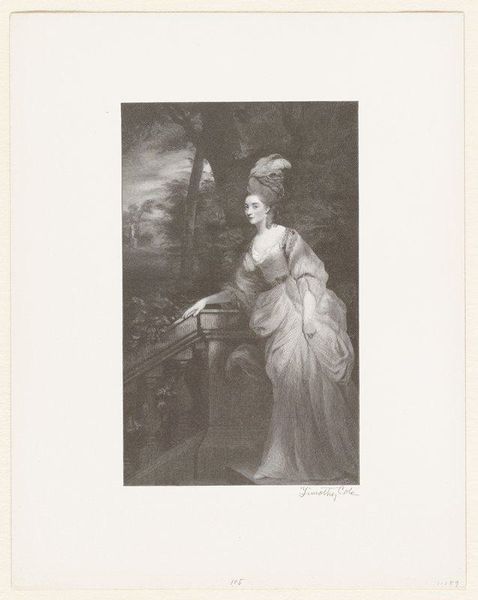
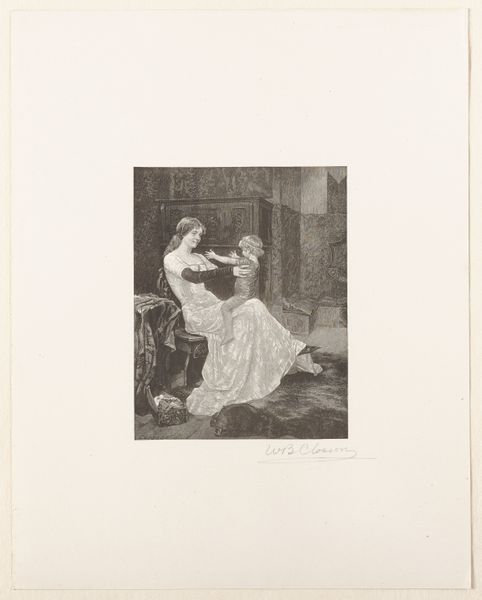
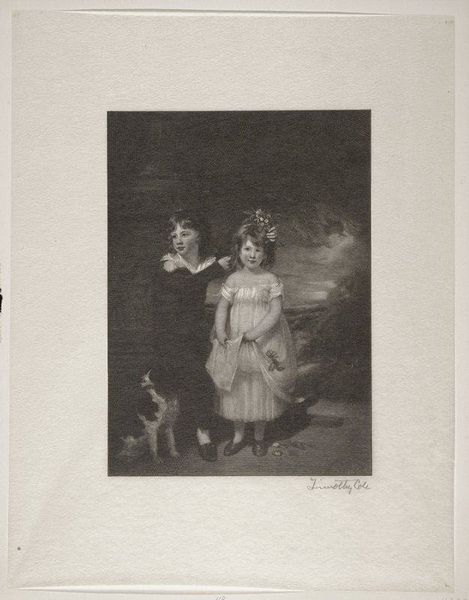
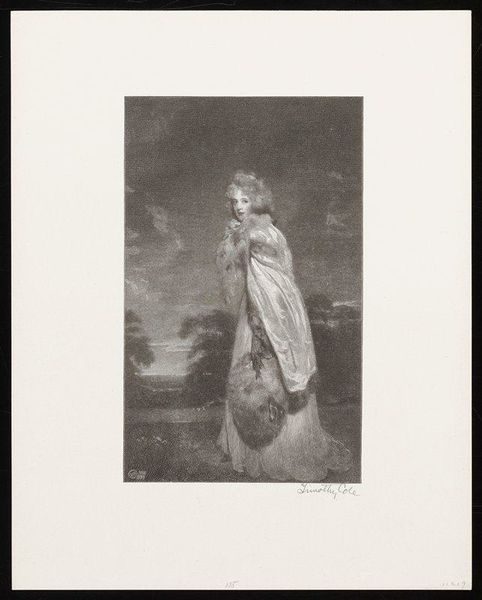
Curator: Here we have Timothy Cole's wood-engraving, "Duchess of Devonshire and Child," created in 1897. What are your initial impressions? Editor: It evokes a sense of theatrical display. The spotlight seems almost too perfect, emphasizing their roles, not necessarily their persons. The baby is posed, arms reaching up—almost like a prop. Curator: Indeed. Cole was renowned for his reproductions of Old Master paintings, making artwork more accessible. In this piece, he translates an original portrait, bringing the aristocratic imagery into public view. How do you see its accessibility today? Editor: On one level, its dissemination through print democratizes representation. Yet, it continues to present a romanticized, highly controlled narrative of motherhood within elite circles. This artwork can act as a social artifact reflecting prevalent, perhaps prescriptive, expectations about maternal identity and nobility. Curator: And this is made manifest through careful construction. Note the Duchess's composed demeanor juxtaposed against the implied energy of the child. It speaks to the power dynamics inherent within the art world, as well as social status, further complicated through Cole’s position as reproducer and translator of meaning. The circulation and preservation of certain images reflects broader cultural biases. Editor: Absolutely. Thinking about its place within collections today: which narratives get told and who controls their visibility becomes crucial. We are always viewing the piece with historical considerations as it impacts society. Curator: Considering its context as a reproduction sheds light on the art market and the role institutions play in perpetuating idealized images. It makes us consider: whose stories are missing? Whose representations have been marginalized or suppressed? Editor: A powerful work both formally and for prompting reflection on its enduring influence. Curator: It invites critical thought on the construction of identity. It reminds us art engages in dialogues with the times that shaped it.
Comments
No comments
Be the first to comment and join the conversation on the ultimate creative platform.
 Collect
 React
React Comment
More like this