c. 1784
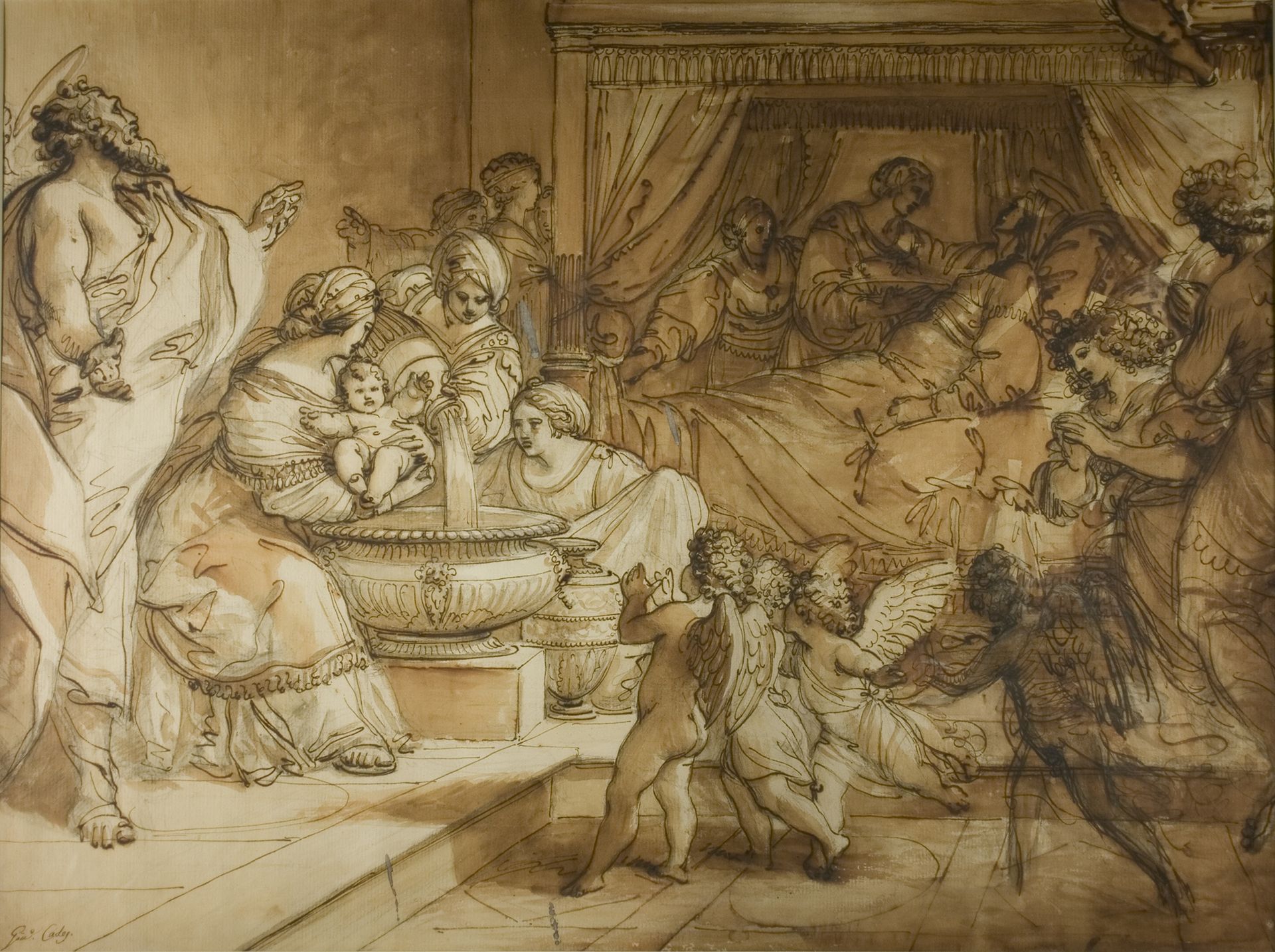
Birth of the Virgin


Listen to curator's interpretation
Curatorial notes
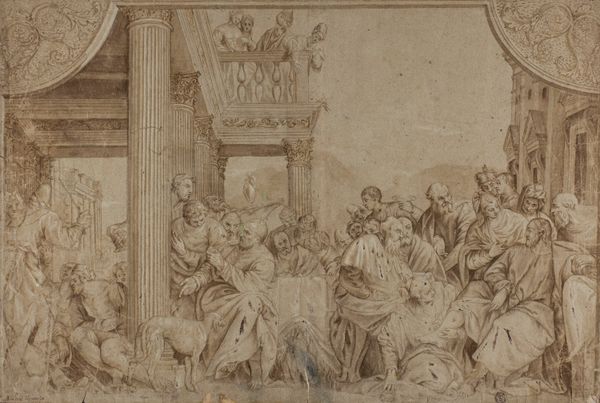
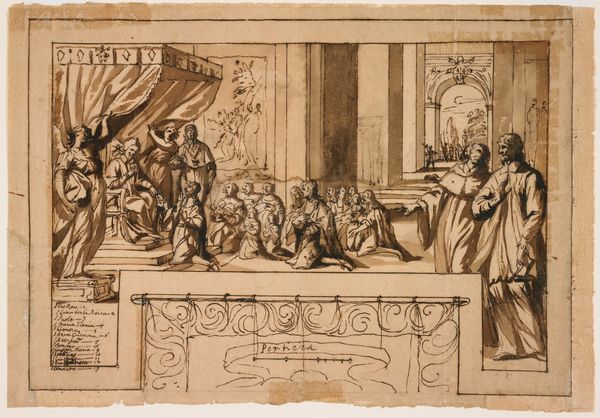
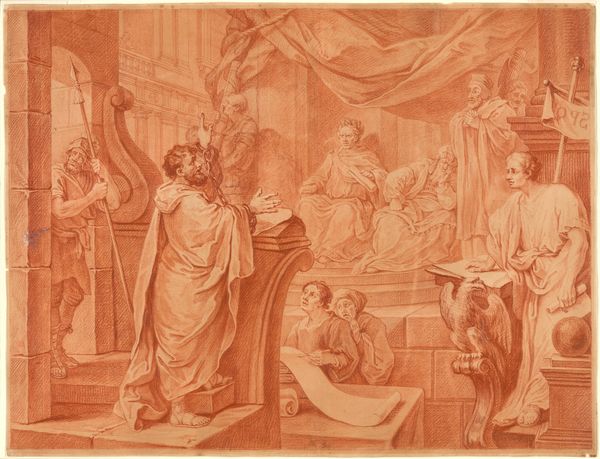
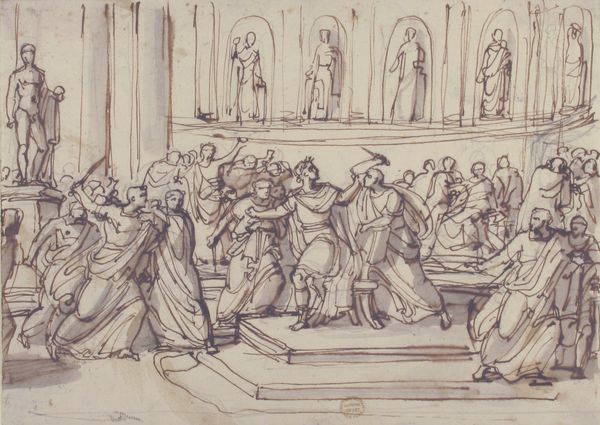
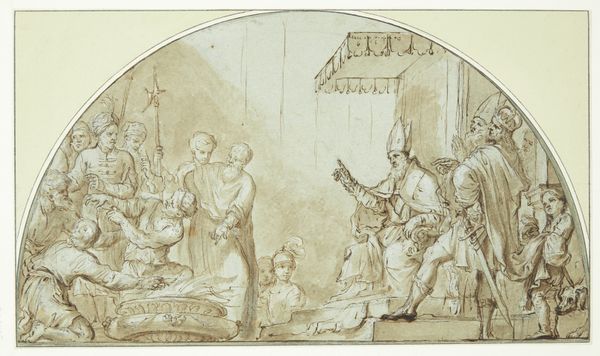
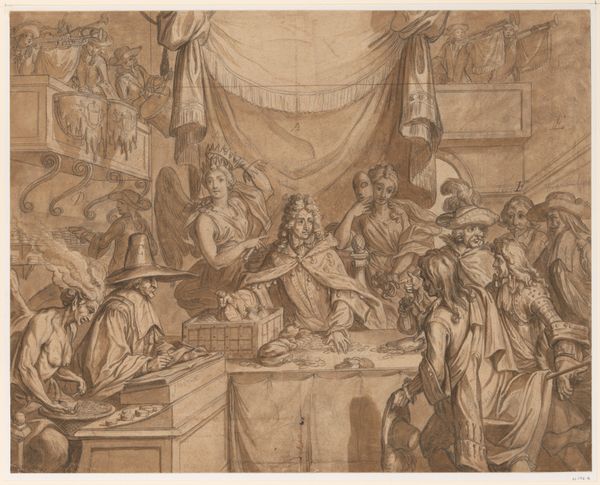
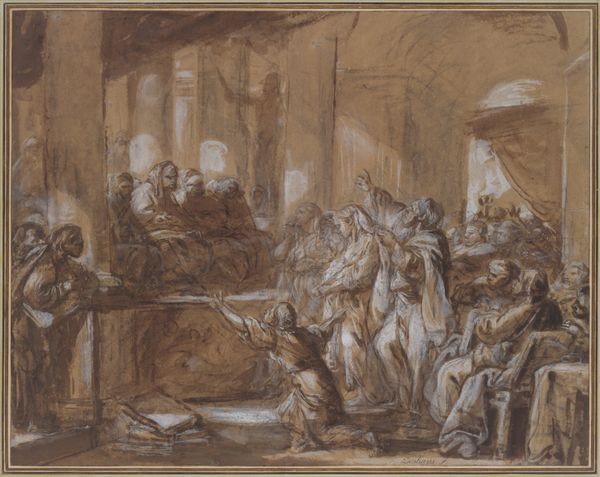
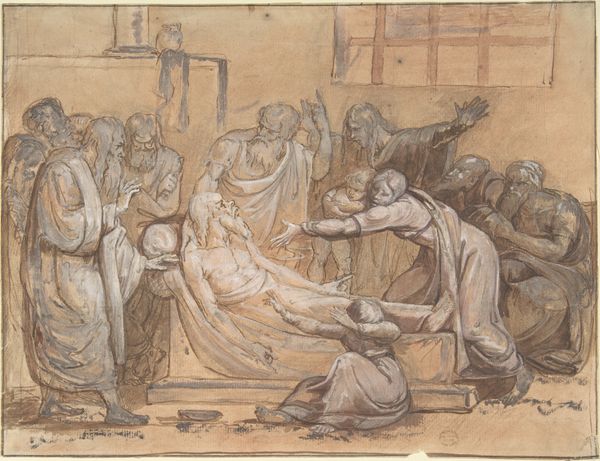
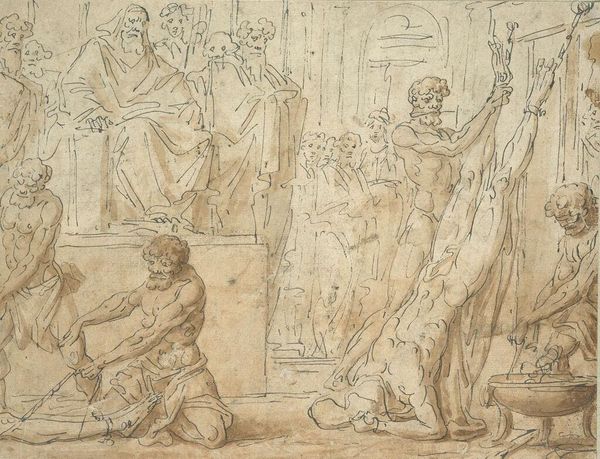
Curator: Here we have Giuseppe Cades' "Birth of the Virgin," a pen, ink, and charcoal drawing on paper, created around 1784. Editor: What strikes me is the sheer busyness of the composition, a swirl of bodies clustered together with architectural forms looming in the background. The brown ink wash unifies the entire drawing under a soft warm tone. Curator: Cades situates this intimate biblical scene within a grand historical framework. Consider the Renaissance influences apparent here. How does this portrayal speak to shifting perspectives on the Virgin Mary, from object of reverence to a figure central to female experiences and intersectional relations, would you say? Editor: The Virgin Mary, situated within a wealthy domestic interior suggests a deep concern for class and power. Note the architecture; every element speaks to careful design and control. It's difficult to look at those choices in material culture without understanding the economic implications. Curator: Absolutely. It’s about unpacking these loaded social and religious symbols in order to challenge pre-held biases in the construction of feminine identities. How do these images, consumed by society, impact expectations? Editor: And let’s not overlook the drawing process itself. Ink and charcoal, applied to paper in a carefully planned design. The finished quality contrasts to the themes depicted here to suggest that the drawing itself also participated in materialist consumption as a desirable item. Curator: Indeed. Cades places these narratives within systems of faith and production. The "Birth of the Virgin" provides fertile ground for reflection on social histories. Editor: Precisely, thinking about the artist’s labor and the economic forces that would shape his process enriches our reading of the art and of history.