About this artwork
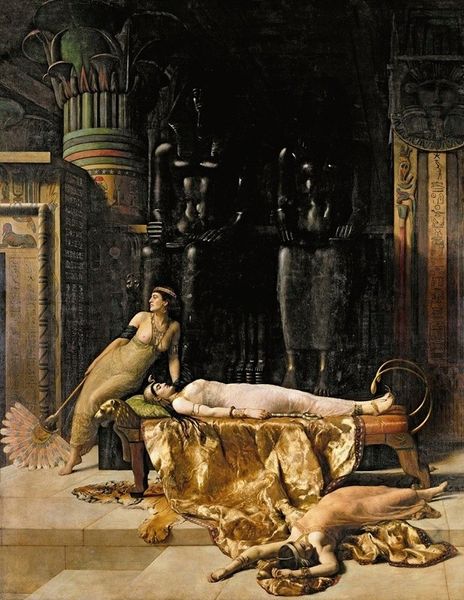
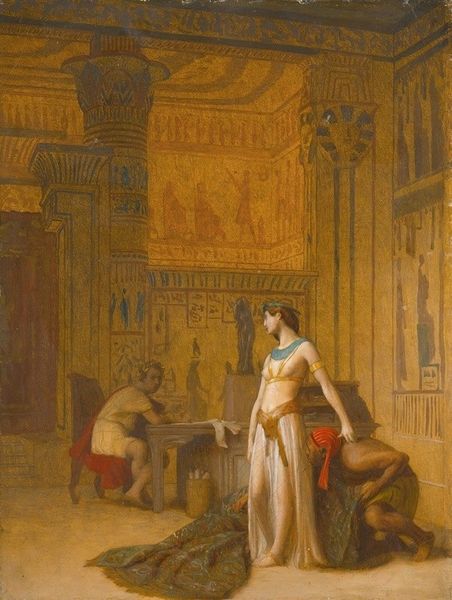
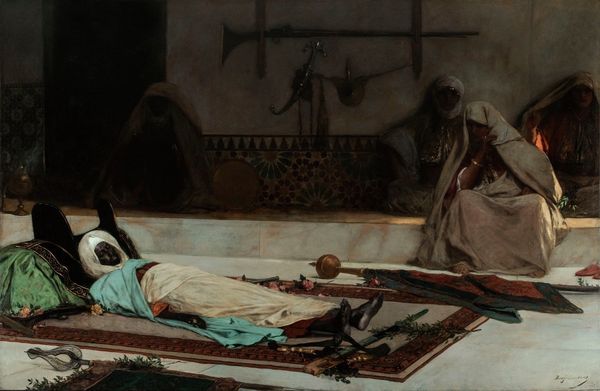
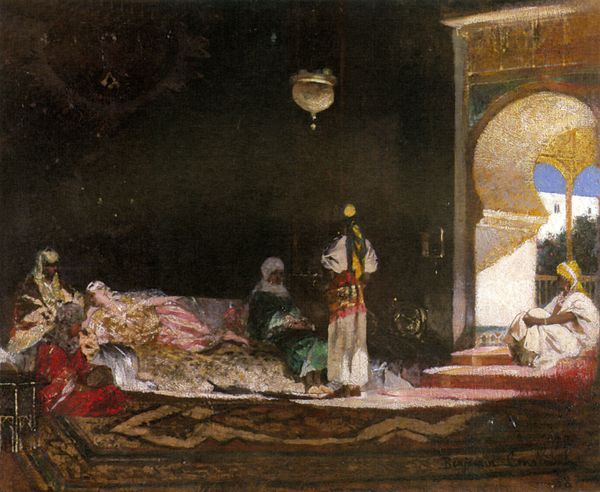
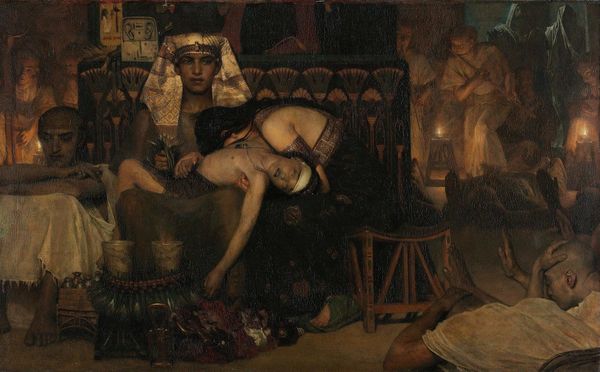
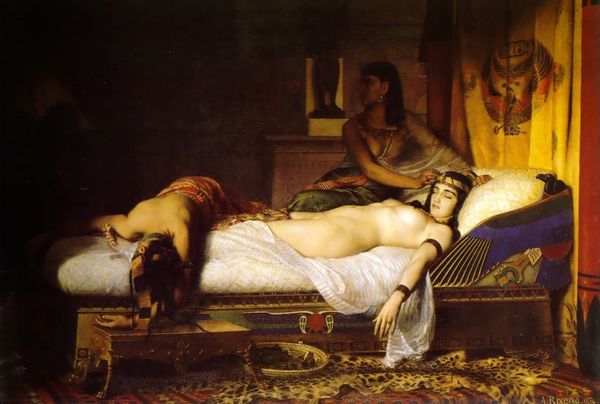
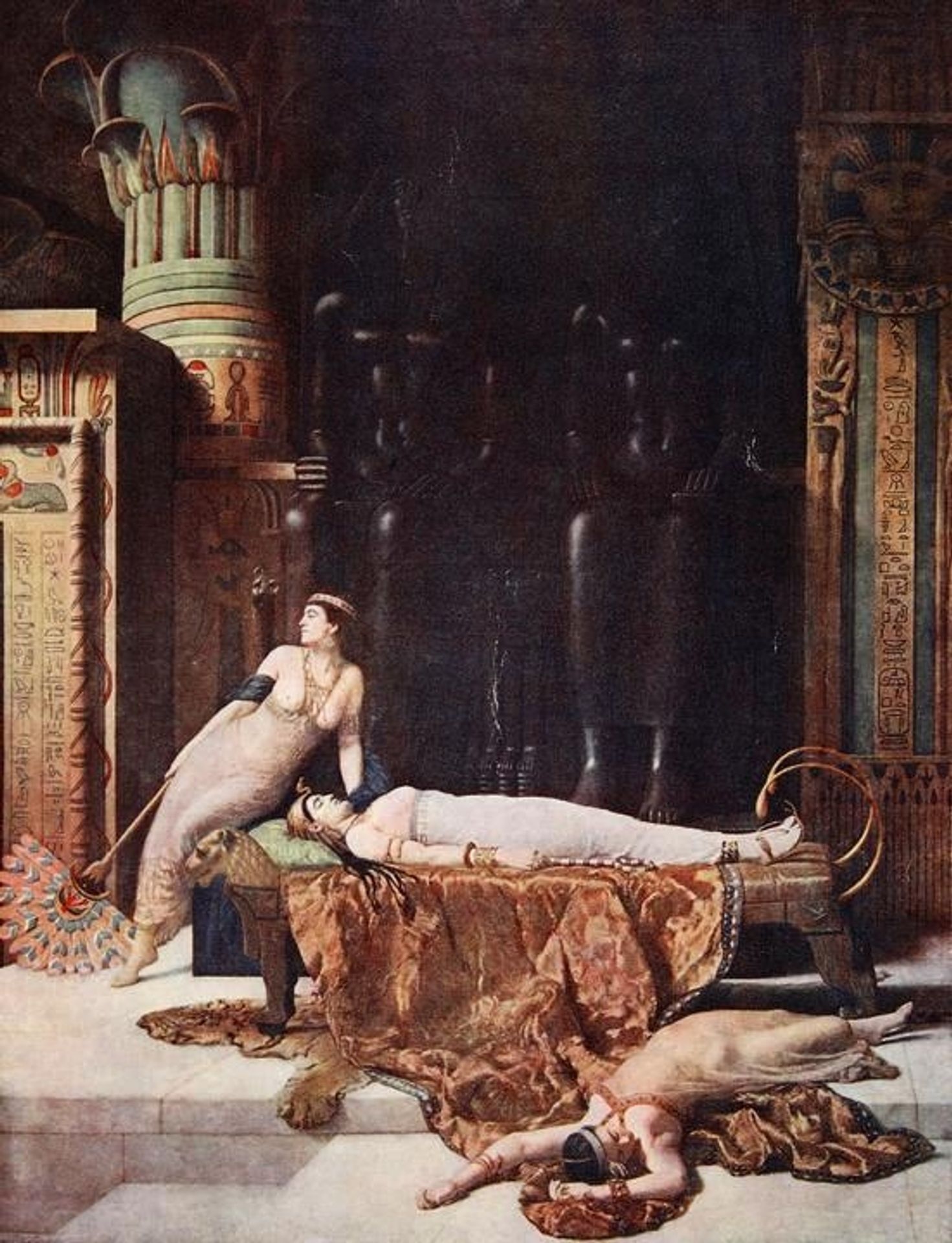
Editor: Here we have John Collier's "The Death of Cleopatra," painted in 1910, with oil paint. It feels so dramatic! What do you make of this rather theatrical interpretation? Curator: It's certainly staged, isn't it? Collier was painting at a time when Egyptomania was gripping Europe, influencing art, design, and popular culture. Consider the power dynamics at play: a British artist depicting an Egyptian queen's demise for a Western audience. How does the painting’s theatricality, as you put it, affect its historical narrative? Editor: I guess it turns Cleopatra into a spectacle, rather than a complex historical figure? The emphasis seems to be on her beauty and death, rather than her political acumen. Curator: Exactly. Collier, as a product of his time, likely subscribed to prevailing attitudes about the "exotic" East. Notice how the setting is lavishly detailed, almost like a film set? It reinforces a Western perception of Egyptian opulence. Do you think that kind of emphasis contributes to or detracts from the actual historical understanding of the subject? Editor: It definitely feels like it prioritizes aesthetics over historical accuracy, feeding into existing stereotypes. I almost wonder if that makes this an Orientalist piece more than a true historical work. Curator: It occupies a fascinating and problematic space between the two, wouldn’t you say? Collier uses Cleopatra's death as a canvas to explore themes of power, beauty, and exoticism, ultimately shaping the narrative for his contemporary viewers. Editor: I see. So understanding its cultural context helps decode the layers of meaning and assumptions embedded within the work. It's more than just a painting of a historical event; it's a reflection of Western attitudes towards the East. Thanks for unpacking all of that! Curator: Absolutely. It is an important reminder that art, history, and power are deeply intertwined. Examining art in the context of history brings important insight!

Artwork details
- Copyright
- Public domain
Comments
Share your thoughts
About this artwork
Editor: Here we have John Collier's "The Death of Cleopatra," painted in 1910, with oil paint. It feels so dramatic! What do you make of this rather theatrical interpretation? Curator: It's certainly staged, isn't it? Collier was painting at a time when Egyptomania was gripping Europe, influencing art, design, and popular culture. Consider the power dynamics at play: a British artist depicting an Egyptian queen's demise for a Western audience. How does the painting’s theatricality, as you put it, affect its historical narrative? Editor: I guess it turns Cleopatra into a spectacle, rather than a complex historical figure? The emphasis seems to be on her beauty and death, rather than her political acumen. Curator: Exactly. Collier, as a product of his time, likely subscribed to prevailing attitudes about the "exotic" East. Notice how the setting is lavishly detailed, almost like a film set? It reinforces a Western perception of Egyptian opulence. Do you think that kind of emphasis contributes to or detracts from the actual historical understanding of the subject? Editor: It definitely feels like it prioritizes aesthetics over historical accuracy, feeding into existing stereotypes. I almost wonder if that makes this an Orientalist piece more than a true historical work. Curator: It occupies a fascinating and problematic space between the two, wouldn’t you say? Collier uses Cleopatra's death as a canvas to explore themes of power, beauty, and exoticism, ultimately shaping the narrative for his contemporary viewers. Editor: I see. So understanding its cultural context helps decode the layers of meaning and assumptions embedded within the work. It's more than just a painting of a historical event; it's a reflection of Western attitudes towards the East. Thanks for unpacking all of that! Curator: Absolutely. It is an important reminder that art, history, and power are deeply intertwined. Examining art in the context of history brings important insight!
Comments
Share your thoughts