carving, silver, metal, sculpture
#
carving
#
silver
#
metal
#
sculpture
#
decorative-art
Dimensions: Length: 2 3/4 in. (7 cm)
Copyright: Public Domain
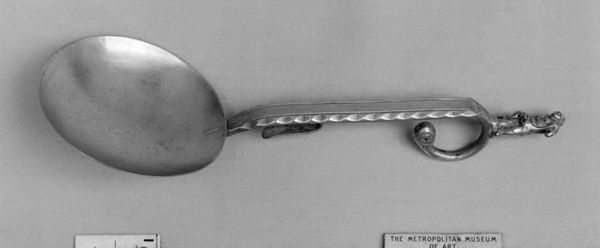
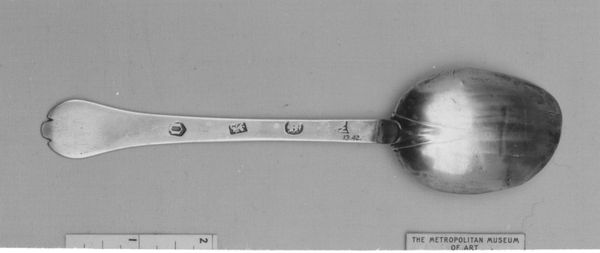
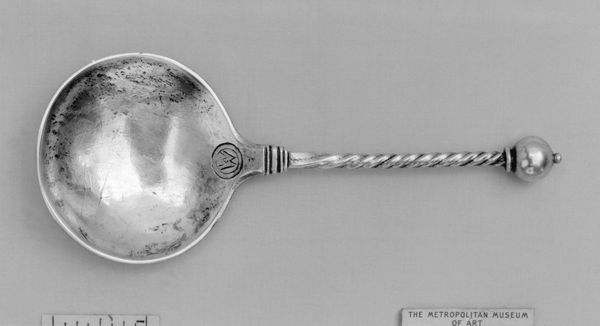
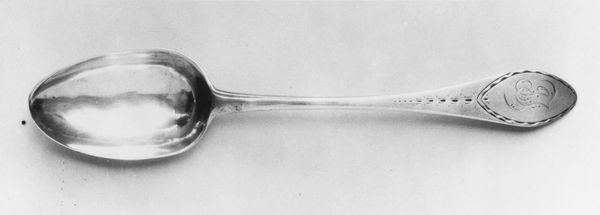
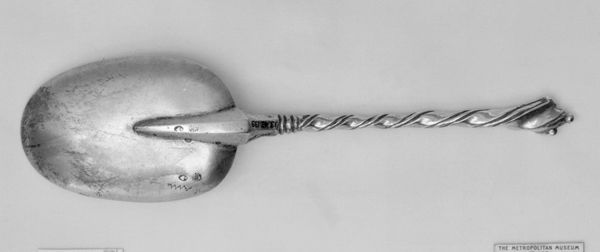
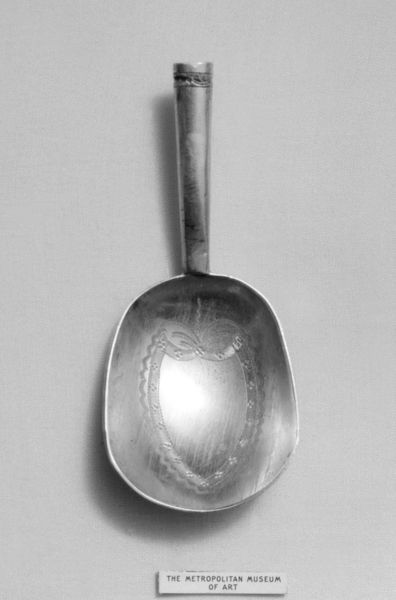
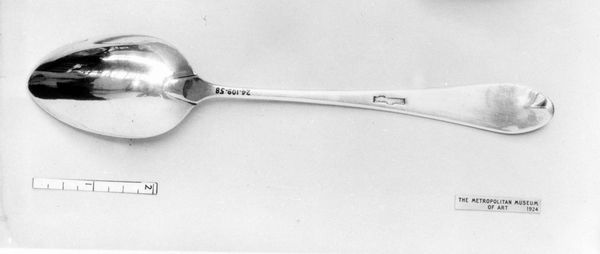
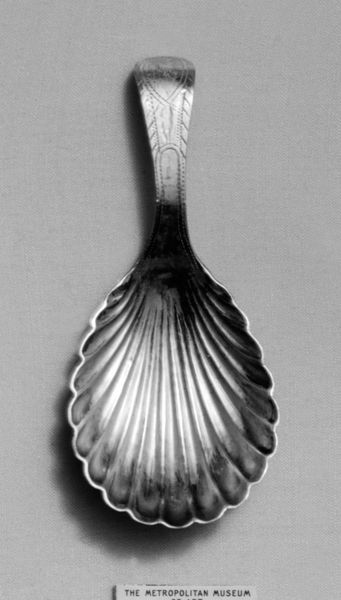
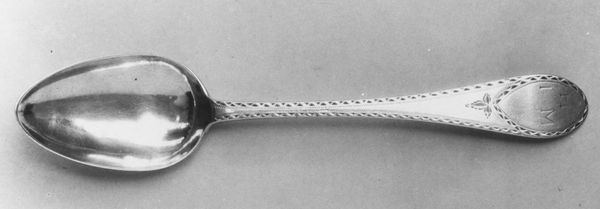
Curator: Ah, there's something rather poetic about finding stillness in a humble object. Isn’t there? Editor: I must say, my first thought is it looks cold. The way the light hits the silver—it feels almost sterile, despite the organic leaf shape. Curator: It does have a certain cool elegance. This piece, a caddy spoon created by Cocks & Betteridge between 1800 and 1801, perfectly illustrates the decorative arts of its era. Now, a caddy spoon, as the name suggests, was used for measuring and dispensing tea from a tea caddy. Tea was precious! Editor: A tiny, glittering shovel for a highly valued commodity. Given its function and material, where would it have been used? Do we know how the rituals around tea shaped society back then? Curator: Primarily among the wealthier classes, definitely. Tea drinking in the 18th and 19th centuries was loaded with social meaning. The ritual became a site for displaying wealth and taste, not only with ornate silver services like this, but also with the types of tea selected and the ways it was served. This piece specifically blends functionality with the high artistry desired at the time, which says volumes about cultural aspirations during that period. The design, a delicate leaf sculpted in silver with meticulous detail, demonstrates an appreciation of the natural world shaped to serve domestic routines. The way light glints across the engraved veins and curled stem. I mean, come on! It elevates the everyday to the extraordinary! Editor: But, is that elevation for everyone, or just those who already possess "extraordinary" privilege? It's hard to separate that kind of refined beauty from the power dynamics of the era—the legacy of colonialism fueling the demand for goods like tea, and silver no less. Curator: Absolutely. Object, space, commodity. It reminds us to always be conscious of context and the world which enables, or even relies on, its design. Editor: It's a sobering thought, yet valuable to remember as we admire this beautiful little object. Curator: I’m glad we journeyed through this object together!
Comments
No comments
Be the first to comment and join the conversation on the ultimate creative platform.
 Collect
 React
React Comment
More like this