

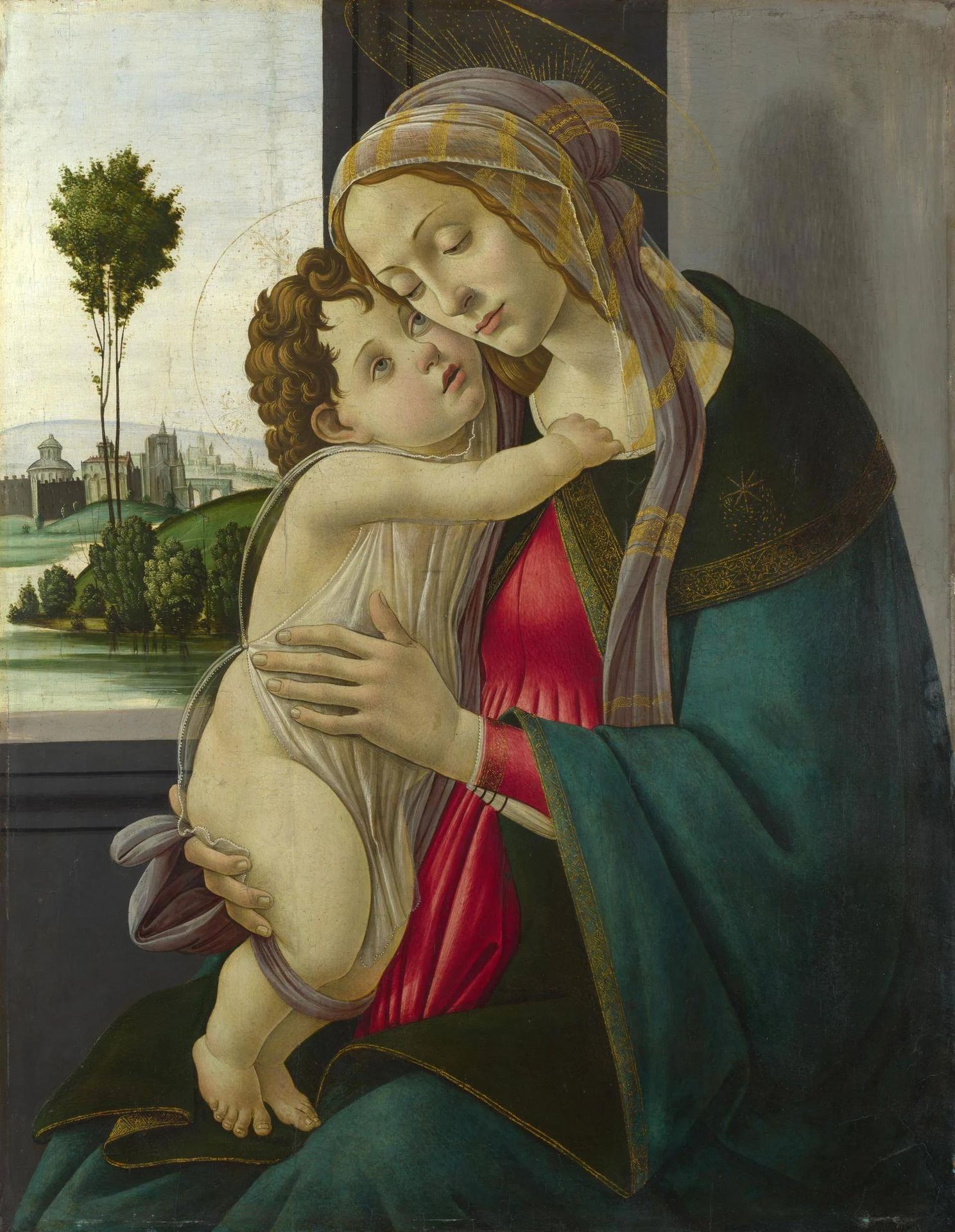
The Virgin and Child


Listen to curator's interpretation
Curatorial notes
Sandro Botticelli made this panel painting of the Virgin and Child using tempera and gold. Tempera is a traditional painting medium in which pigments are mixed with a binder, usually egg yolk. Botticelli was born in Florence in 1445, so the raw materials he used to create the work came from workshops specializing in pigments and prepared wooden panels. He would have built up the image by carefully layering different colors and tones. See the folds in Mary's robes, their edges highlighted with gold leaf, and the landscape behind them. Each of these effects depended on the skilled manipulation of materials. In Botticelli's time, the process of creating a painting was closely tied to labor. Assistants would have been involved in preparing materials, grinding pigments, and applying layers of paint. This division of labor reflected the structure of workshops, where skilled craftsmen worked alongside apprentices to produce works of art. It's important to remember that the beauty and refinement of this painting depended on the skilled hands of many individuals, challenging our ideas about fine art.