About this artwork
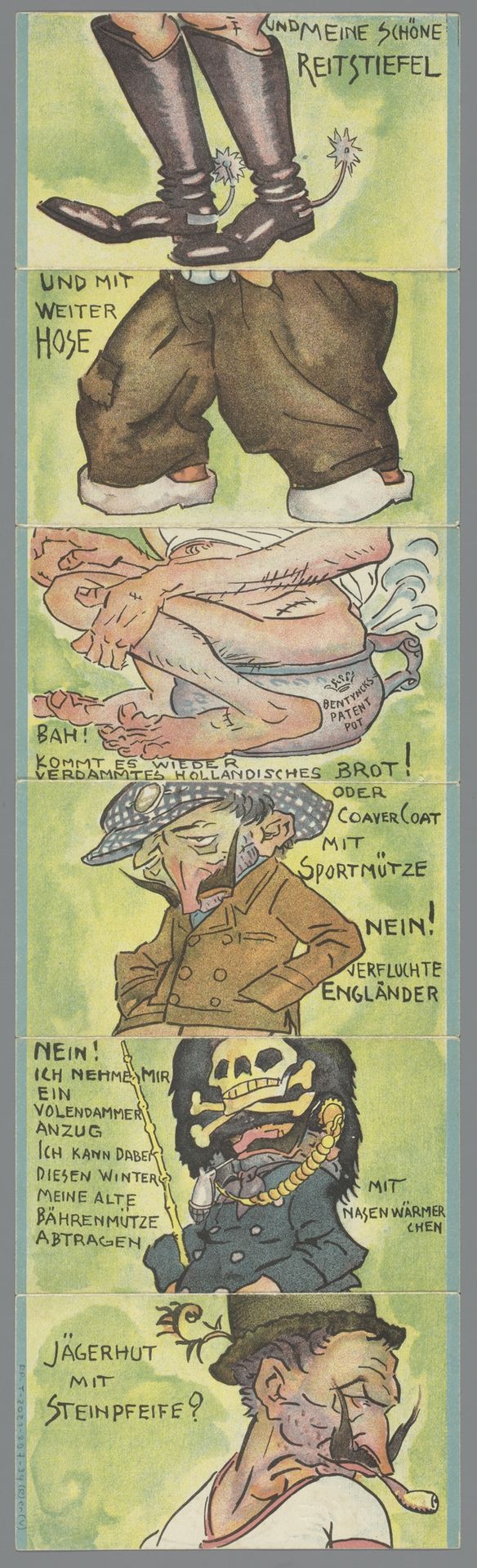
Leo Gestel created this watercolor and ink drawing titled "Verschillende kledingstukken voor Keizer Wilhelm II" whose title translates to "Different Garments for Emperor Wilhelm II." Made during the early 20th century, this satirical piece reflects the anti-German sentiment prevalent in the Netherlands during and after the First World War. Gestel uses caricature to strip away the Emperor's prestige, depicting him in a series of unflattering outfits and situations, revealing an underlying commentary on power and authority. The imagery is harsh; there’s a vulgarity, and a brutality in the depictions that speak to the raw emotions of a nation impacted by war. Gestel isn’t just poking fun; he’s making a statement about national identity and the rejection of imperial aggression. This work isn't just a series of silly outfits; it's a statement on the psychological weight of war and the human desire to deflate the powerful.
Verschillende kledingstukken voor Keizer Wilhelm II
1916

Leo Gestel
1881 - 1941Location
RijksmuseumArtwork details
- Medium
- coloured-pencil, watercolor
- Dimensions
- height 421 mm, width 122 mm
- Location
- Rijksmuseum
- Copyright
- Rijks Museum: Open Domain
Tags
Comments
Share your thoughts
About this artwork
Leo Gestel created this watercolor and ink drawing titled "Verschillende kledingstukken voor Keizer Wilhelm II" whose title translates to "Different Garments for Emperor Wilhelm II." Made during the early 20th century, this satirical piece reflects the anti-German sentiment prevalent in the Netherlands during and after the First World War. Gestel uses caricature to strip away the Emperor's prestige, depicting him in a series of unflattering outfits and situations, revealing an underlying commentary on power and authority. The imagery is harsh; there’s a vulgarity, and a brutality in the depictions that speak to the raw emotions of a nation impacted by war. Gestel isn’t just poking fun; he’s making a statement about national identity and the rejection of imperial aggression. This work isn't just a series of silly outfits; it's a statement on the psychological weight of war and the human desire to deflate the powerful.
Comments
Share your thoughts