About this artwork
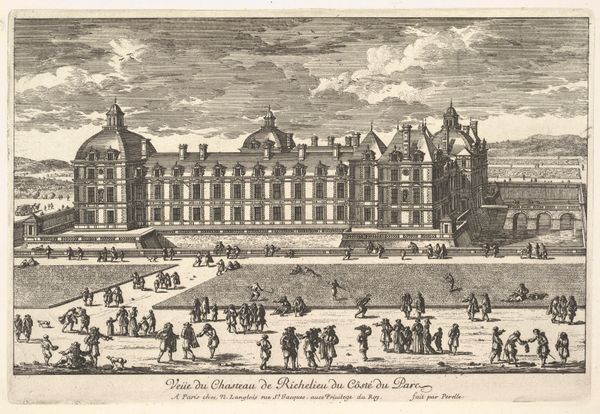
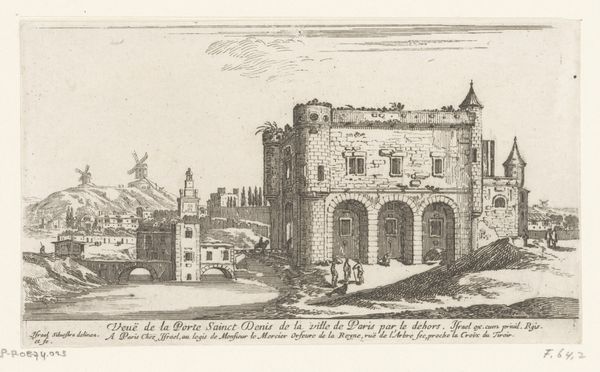
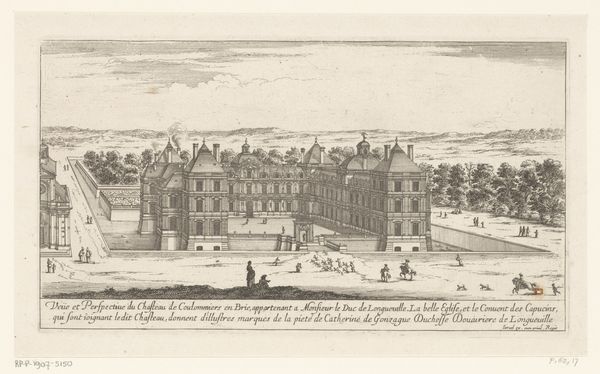
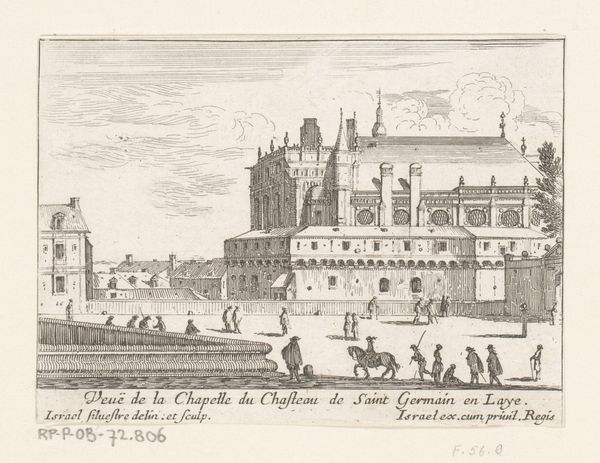
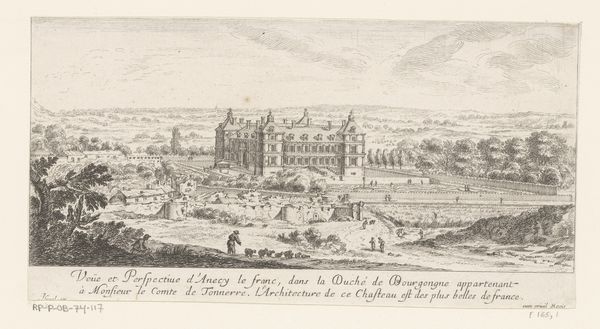
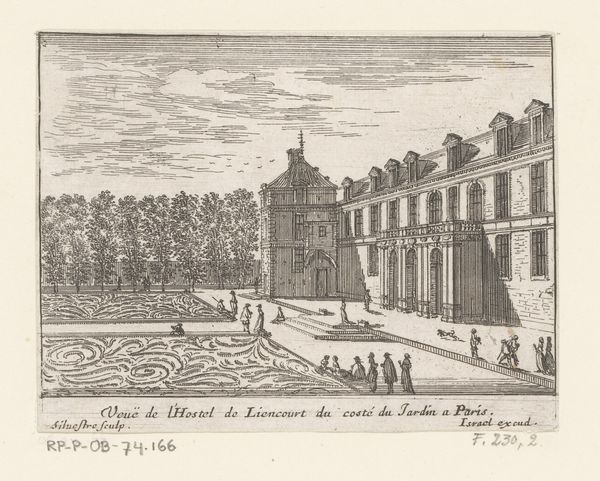
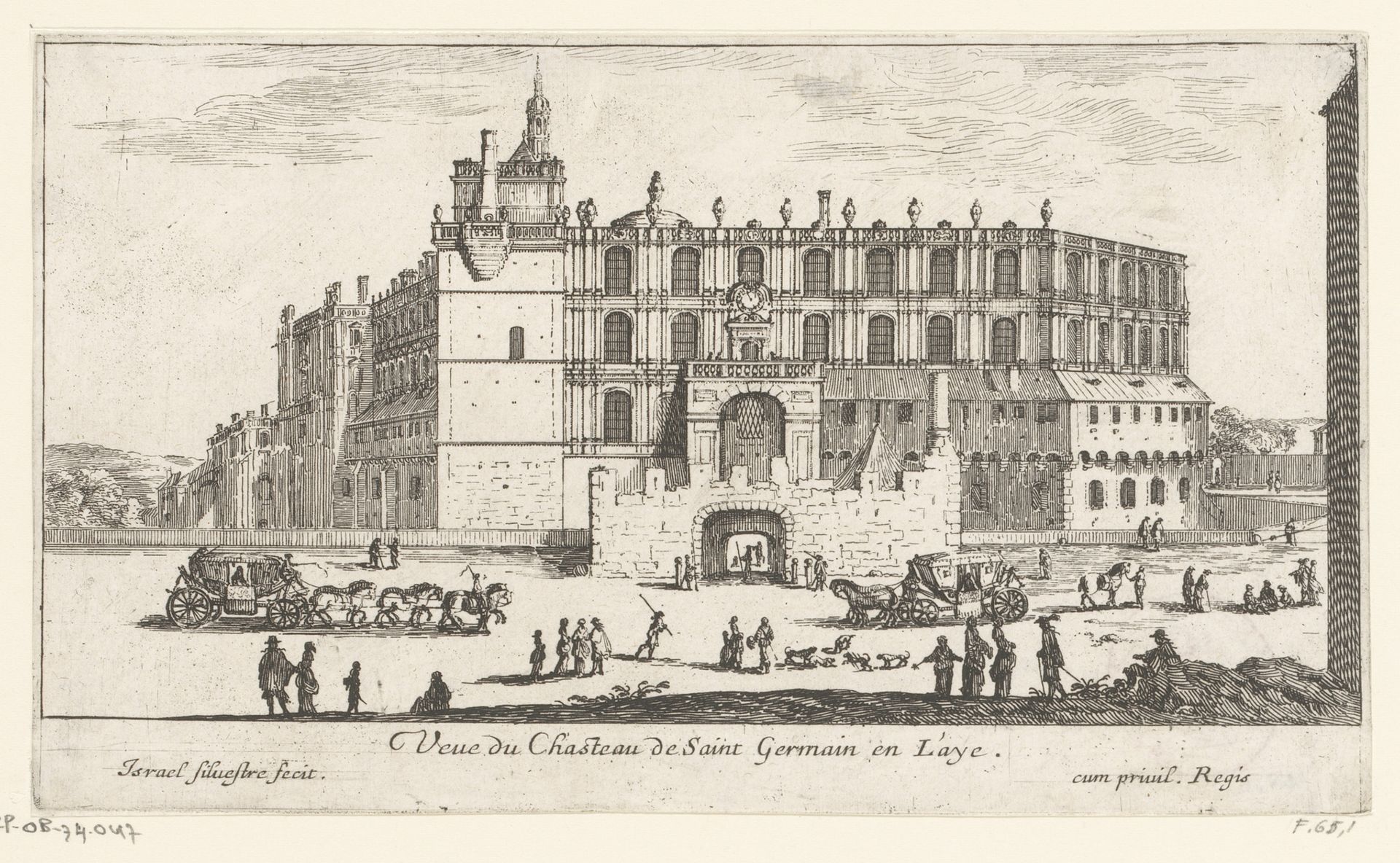
This print of the Château de Saint-Germain-en-Laye was made by Israel Silvestre, sometime in the 17th century. It’s an etching, a printmaking process that relies on the corrosive power of acid. Silvestre would have coated a copper plate with a waxy ground, then scratched his design into the surface, exposing the metal. Immersing the plate in acid would bite away the lines, leaving an image in intaglio – that is, incised into the plate. Finally, he would have inked the plate and run it through a press, transferring the image to paper. This was a highly efficient way to produce images, essential to circulating information at a time before photography. The very qualities of the lines, so clear and precise, speak to the print's purpose as a kind of visual reportage. Yet, the artistry lies in Silvestre’s skillful control of the etching process, allowing him to capture the grandeur of the chateau and the liveliness of the figures in the foreground.
Gezicht op het kasteel van Saint-Germain-en-Laye
c. 1657

Israel Silvestre
1621 - 1691Location
RijksmuseumArtwork details
- Medium
- drawing, print, metal, etching, engraving
- Dimensions
- height 115 mm, width 198 mm
- Location
- Rijksmuseum
- Copyright
- Rijks Museum: Open Domain
Tags
architectural sketch
drawing
aged paper
baroque
metal
pen sketch
etching
old engraving style
landscape
cityscape
engraving
Comments
Be the first to share your thoughts about this work.
About this artwork
This print of the Château de Saint-Germain-en-Laye was made by Israel Silvestre, sometime in the 17th century. It’s an etching, a printmaking process that relies on the corrosive power of acid. Silvestre would have coated a copper plate with a waxy ground, then scratched his design into the surface, exposing the metal. Immersing the plate in acid would bite away the lines, leaving an image in intaglio – that is, incised into the plate. Finally, he would have inked the plate and run it through a press, transferring the image to paper. This was a highly efficient way to produce images, essential to circulating information at a time before photography. The very qualities of the lines, so clear and precise, speak to the print's purpose as a kind of visual reportage. Yet, the artistry lies in Silvestre’s skillful control of the etching process, allowing him to capture the grandeur of the chateau and the liveliness of the figures in the foreground.
Comments
Be the first to share your thoughts about this work.