About this artwork
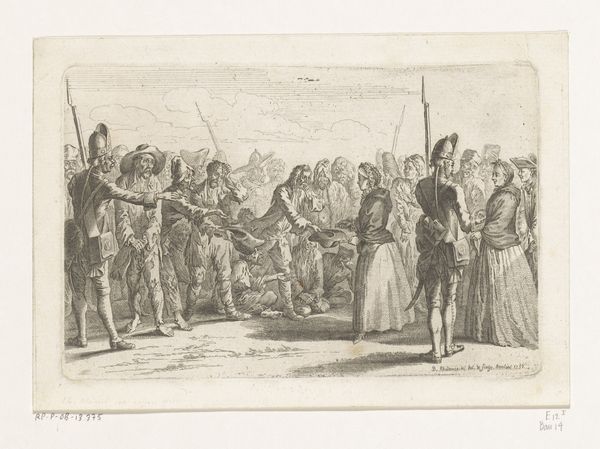
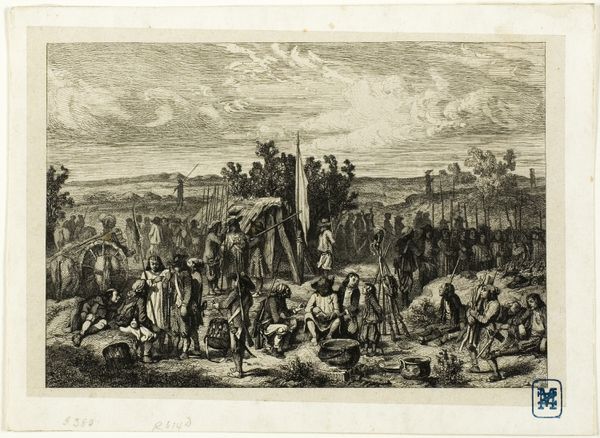
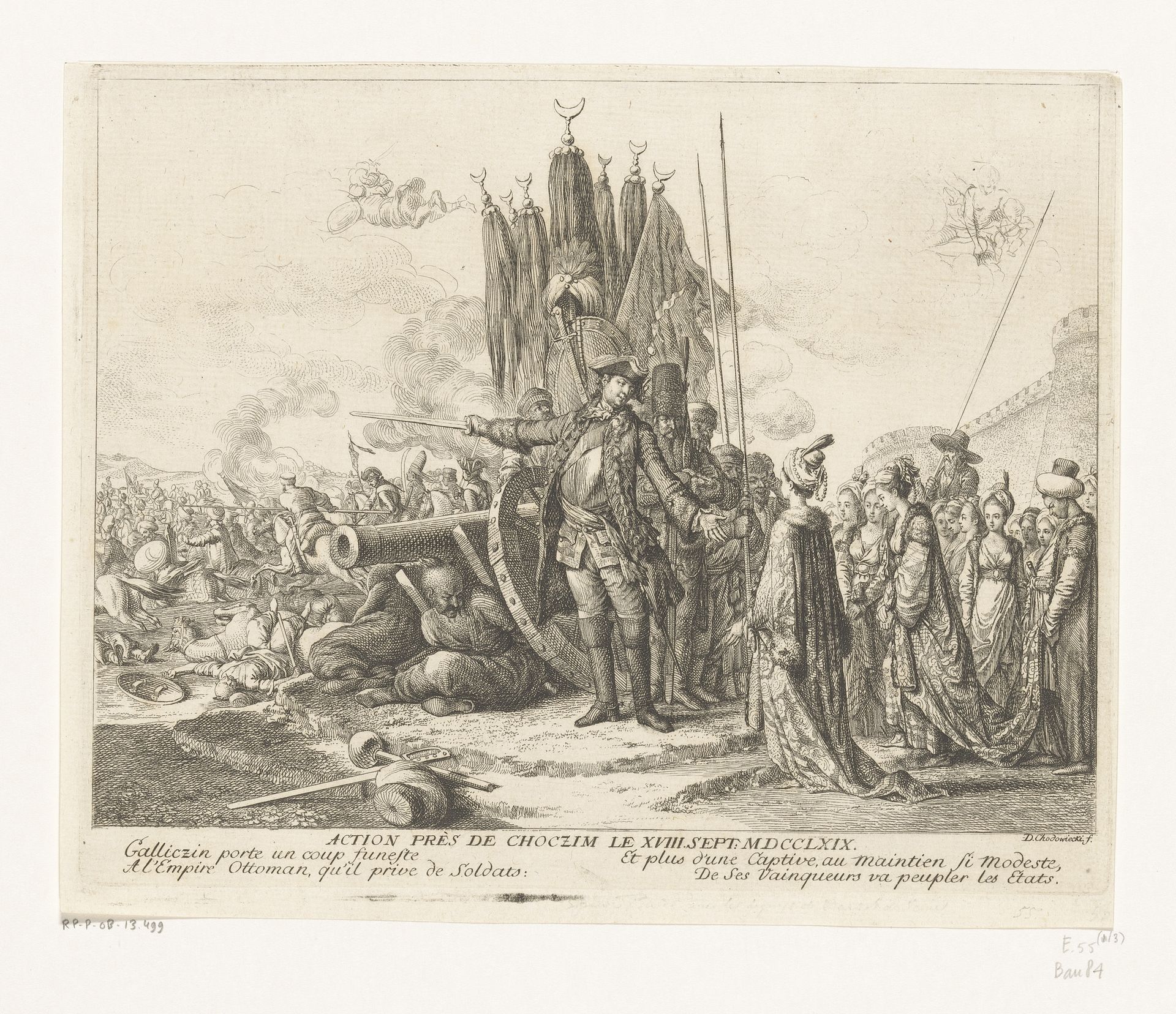
Daniel Nikolaus Chodowiecki etched "Prins Golitsyn met gevangengenomen Turkse vrouwen voor de vesting van Chotyn, 1769." The crescent moon symbol atop the Turkish flags, a potent emblem of Ottoman power, dominates the scene. But observe: this crescent, while a symbol of lunar cycles and growth, echoes motifs stretching back to ancient Mesopotamia. The lunar deity Sin was often represented by the crescent moon, a symbol adopted by various cultures to signify divinity, time, and cyclical renewal. Here, in Chodowiecki's depiction, the crescent's presence is laden with irony. What once represented power now symbolizes defeat. It reminds us of the cyclical nature of empires, where symbols of strength can transform into emblems of vulnerability. Just as the human psyche represses and unearths memories, the cultural psyche continuously revives and reinterprets symbols. In its ever-changing journey through time, the crescent resurfaces, laden with diverse emotional and cultural significances.
Prins Golitsyn met gevangengenomen Turkse vrouwen voor de vesting van Chotyn, 1769
1769

Daniel Nikolaus Chodowiecki
1726 - 1801Location
RijksmuseumArtwork details
- Dimensions
- height 183 mm, width 229 mm
- Location
- Rijksmuseum
- Copyright
- Rijks Museum: Open Domain
Comments
Share your thoughts
About this artwork
Daniel Nikolaus Chodowiecki etched "Prins Golitsyn met gevangengenomen Turkse vrouwen voor de vesting van Chotyn, 1769." The crescent moon symbol atop the Turkish flags, a potent emblem of Ottoman power, dominates the scene. But observe: this crescent, while a symbol of lunar cycles and growth, echoes motifs stretching back to ancient Mesopotamia. The lunar deity Sin was often represented by the crescent moon, a symbol adopted by various cultures to signify divinity, time, and cyclical renewal. Here, in Chodowiecki's depiction, the crescent's presence is laden with irony. What once represented power now symbolizes defeat. It reminds us of the cyclical nature of empires, where symbols of strength can transform into emblems of vulnerability. Just as the human psyche represses and unearths memories, the cultural psyche continuously revives and reinterprets symbols. In its ever-changing journey through time, the crescent resurfaces, laden with diverse emotional and cultural significances.
Comments
Share your thoughts