Dimensions: height 92 mm, width 140 mm
Copyright: Rijks Museum: Open Domain
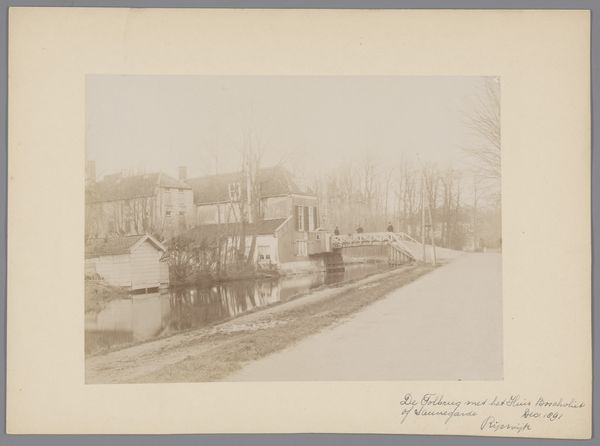
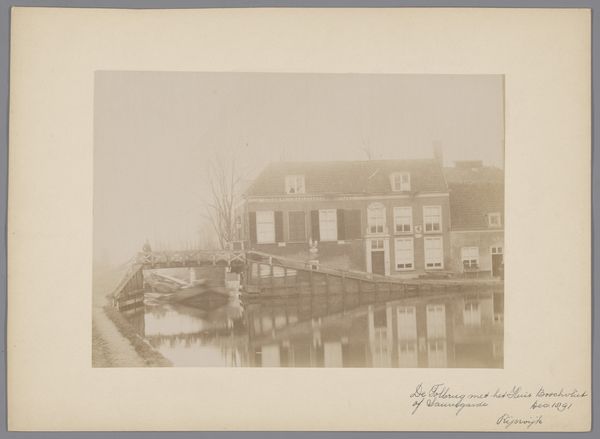
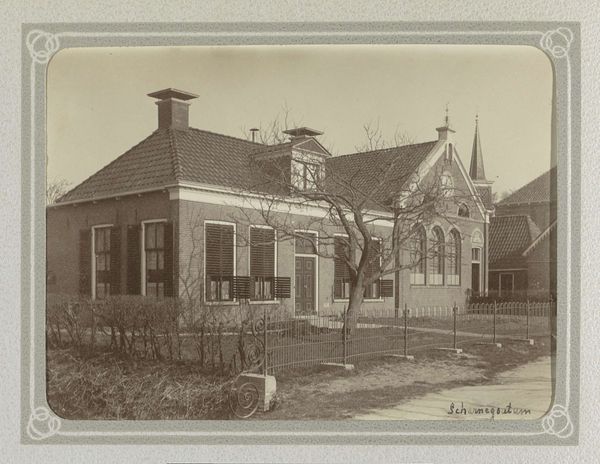
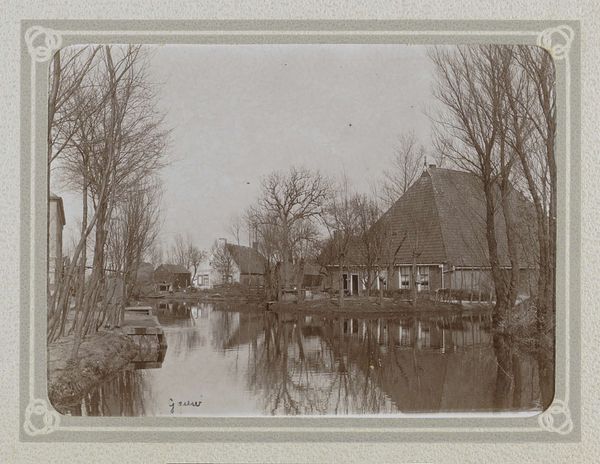
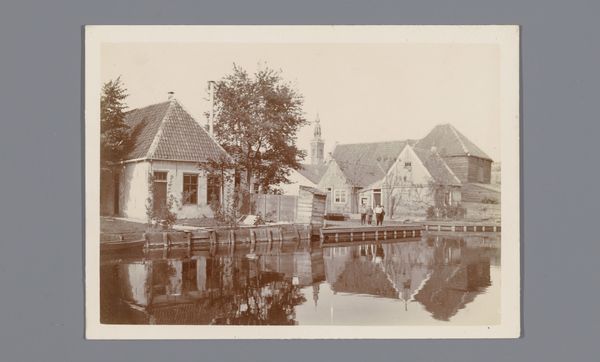
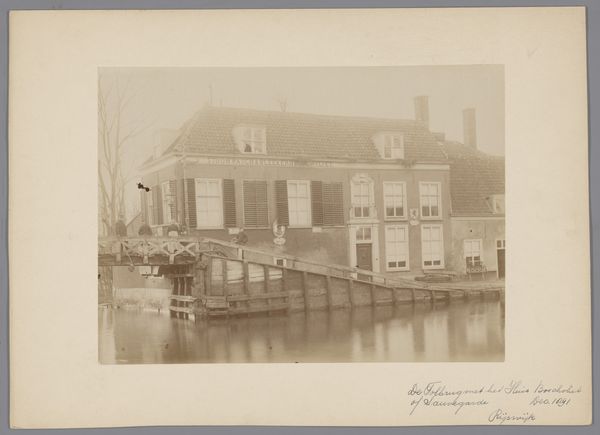
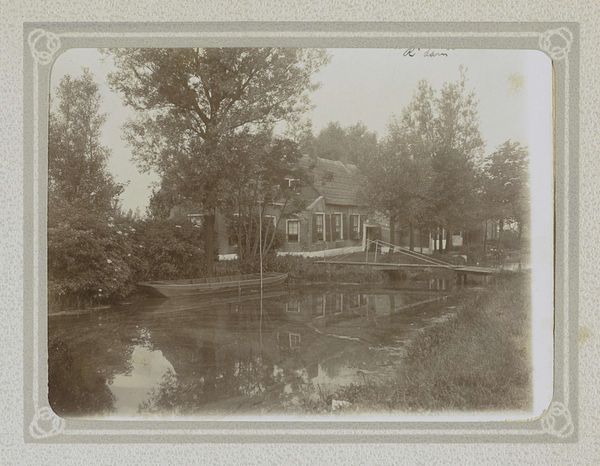
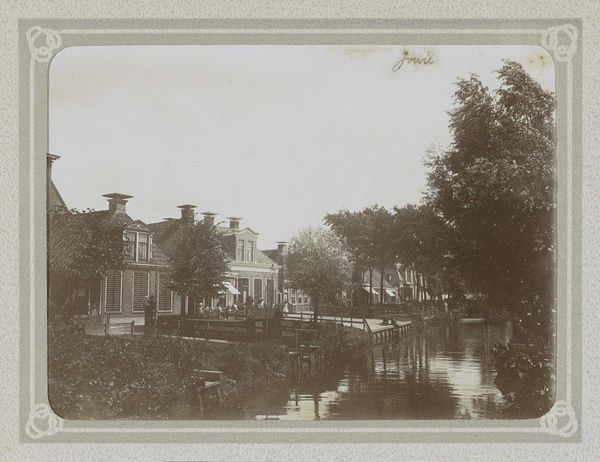
Editor: So this is "Hoofdvaart en Binnenweg, Nieuw-Vennep," dating from between 1890 and 1920, by J. de Jonge. It looks like a watercolor or colored pencil landscape of a small town canal in the Netherlands. It’s quiet and unassuming; almost melancholic. What do you see in this piece that I might be missing? Curator: The melancholy you pick up on is really interesting. I see this work as part of a larger narrative about landscape and identity. During this period, there was a push to define Dutch identity, especially in relation to the land. Considering its creation, you see a deliberate creation of a sense of "place," and we can dig into how this constructed view may have bolstered specific political and social structures. Editor: A constructed view? Curator: Yes, think about what is being emphasized here: order, calmness, tradition. Who is this ideal "Dutch person" who belongs in this landscape? Who might be excluded or marginalized by such an image? Editor: I see what you mean. It definitely presents a very specific version of reality, likely overlooking the complex social dynamics of the time. Curator: Exactly. It prompts questions about power and representation: who has the authority to define the image of a nation, and whose stories get told – or erased – in the process? Considering the colonial context of the period adds another layer to this. Editor: That’s a really insightful perspective. I’ll never look at landscapes the same way again! Curator: Nor should you! I think these kinds of landscapes help us question the way identity is created, sustained, and ultimately can be used to control narratives in service of political and cultural agendas.
Comments
No comments
Be the first to comment and join the conversation on the ultimate creative platform.
 Collect
 React
React Comment
More like this