

1890 - 1896
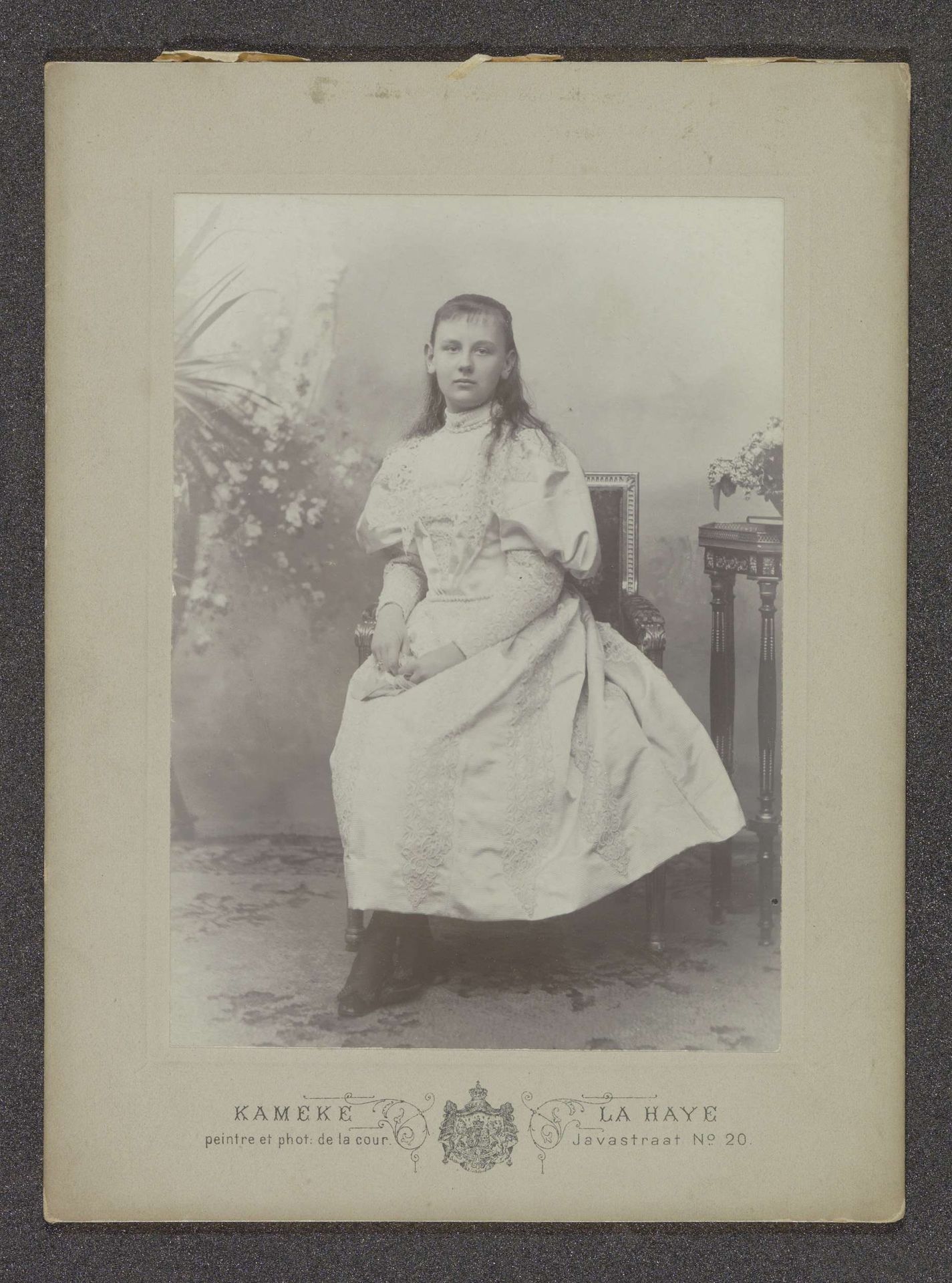
Portret van jeugdige koningin Wilhelmina

Kameke
@kamekeLocation
RijksmuseumListen to curator's interpretation
Curatorial notes
Curator: Here we have "Portret van jeugdige koningin Wilhelmina," or "Portrait of Young Queen Wilhelmina." Created between 1890 and 1896, this gelatin silver print is held here at the Rijksmuseum and was produced by the photographic studio of Kameke. Editor: There's a somber air about this. A quiet gravity. Wilhelmina looks younger than her regality would suggest—almost wistful, like a girl playing dress-up but weighed down by the cloth. Curator: This image, capturing her in adolescence, reveals interesting continuities. Wilhelmina, even at this age, understood the power of the photographic image. Consider the traditional poses within royal portraiture that stretch back centuries, updated here for the new medium. What symbols do you detect? Editor: Oh, plenty! Her formal dress with its frothy sleeves almost feels like a disguise, separating the girl from the crown. But there is innocence too, no defiant glare. The softness makes her feel surprisingly human, like one of those Victorian photographs where everyone looks vaguely haunted. The ornate chair becomes her simple throne. Curator: Absolutely. And it signals both continuity with tradition but a conscious reinvention of royal power within a changing world. The backdrop—the flowers, the small table—adds to that construction. Kameke was known as “peintre et phot. de la cour,” that is painter and photographer to the court; these objects likely held resonance for its patrons. The staging would have invited certain meanings. Editor: It does make you wonder what Wilhelmina thought of it all, the image-making, the expectations. I find myself trying to look behind that face, imagining the conversations or, more likely, the endless instruction, and I think it feels incredibly alienating. So controlled, like being watched all the time, no time to grow up. Curator: I think that tension is captured here—the construction of royalty, the performance of duty, but the trace of the young woman still becoming herself. Consider, too, the rise of national photography coinciding with these images and how photography made Wilhelmina accessible in new ways to her people, and how a young queen in photos can humanize royal bloodlines, rendering monarchy visible. Editor: Fascinating. It really does offer such a clear window, doesn’t it? Beyond just a portrait, a peek into both the persona and person, like looking into a gilded cage.