c. 1470 - 1480
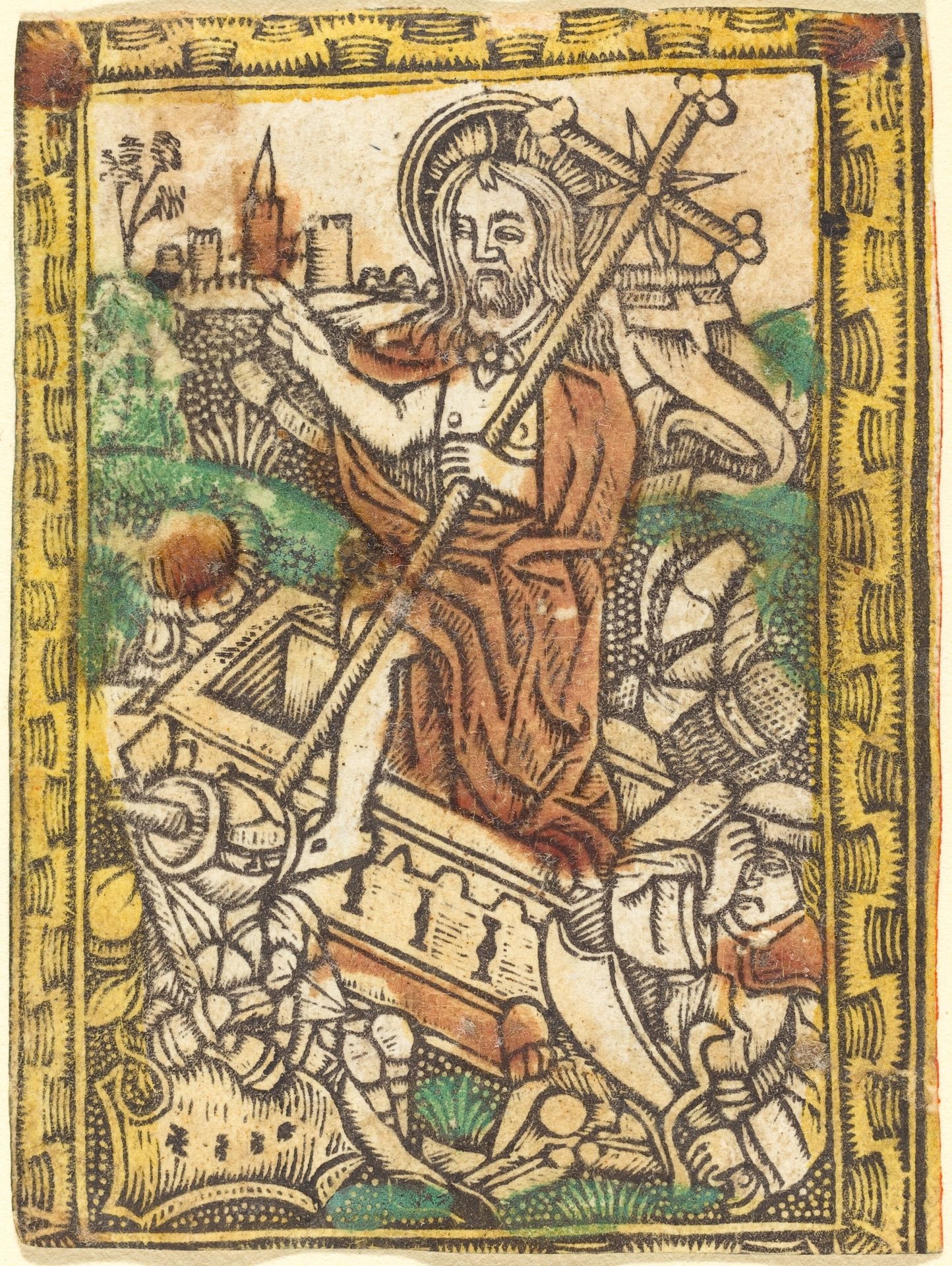
The Resurrection


Listen to curator's interpretation
Curatorial notes
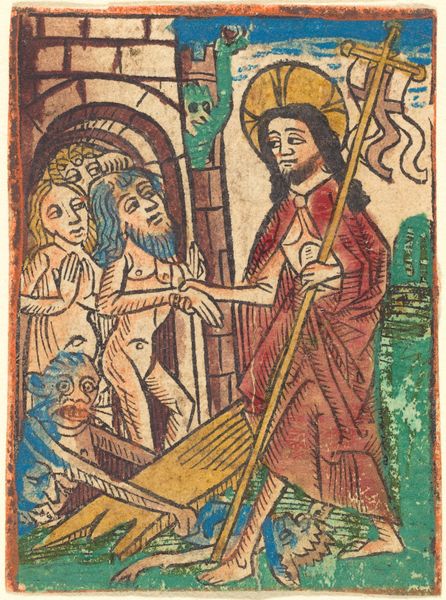
Curator: The radiant figure emerging from a tomb certainly catches the eye. What's your first impression? Editor: Definitely striking. There's a stark contrast between the serene figure and the chaos around him. The slightly clumsy woodcut lines lend a sense of raw power to the scene. It feels…direct, almost blunt. Curator: This is "The Resurrection", a woodcut dating back to the late 15th century. Created by an anonymous artist, it employs simple means to convey a monumental event. Woodcuts like these would have circulated widely during that era. Editor: The choice of imagery is powerful, if conventional: Christ carrying the banner, the disarrayed soldiers… it speaks of a triumph over mortality, yes, but also the overthrow of earthly power. I notice the odd combination of the fresh grass growing up out of what is otherwise such a dark scene. It certainly lightens the mood to convey hope to the audience. Curator: And this wasn't simply an artistic choice, but also had broader religious implications in a society undergoing massive socio-economic shifts during the late medieval and early renaissance period. Editor: This symbol is interesting from a psychological point of view. The cross-topped banner Christ bears serves to suggest Christ's own acceptance of suffering. Curator: Precisely. The availability of prints like these contributed to evolving social, cultural, and even religious identities. Editor: Looking at this image, the story comes through so directly. You're seeing and feeling something that touches a deeply held belief for many. I’m struck again by the strange mood shift from horror to hope. Curator: Indeed, it serves as a fascinating lens through which we can view the era's sensibilities, the visual strategies it employed, and its means of relating historical events. I never grow tired of seeing how visual tools spread to every member of society and touched on popular feeling.