
Curatorial notes
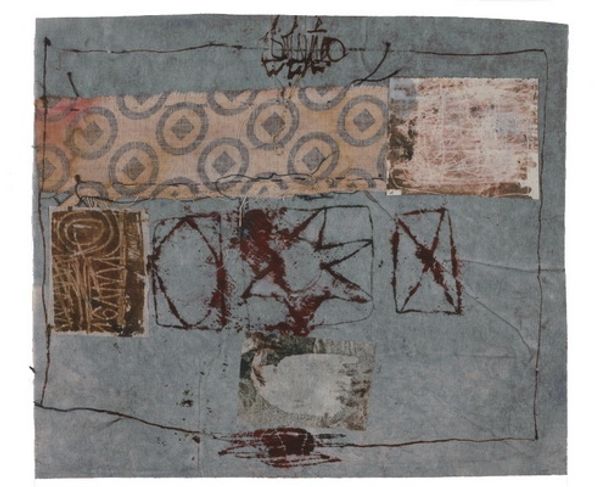
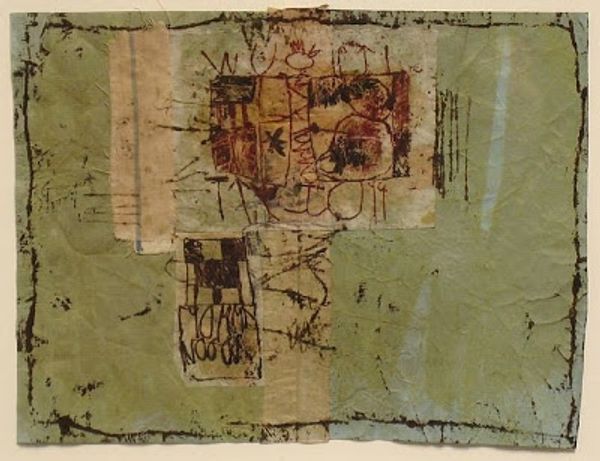
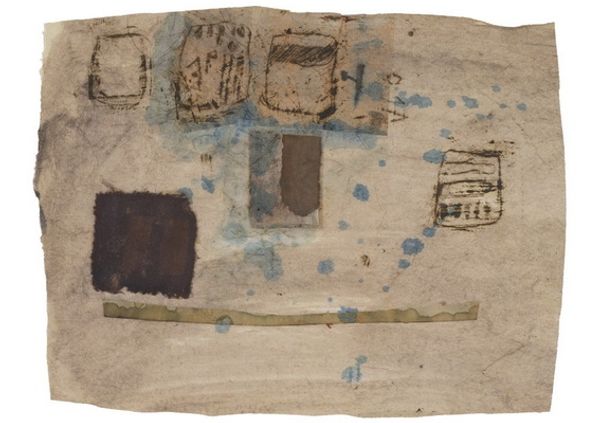
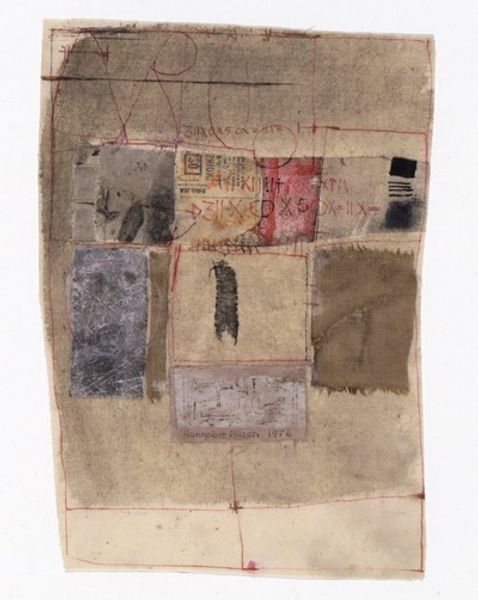
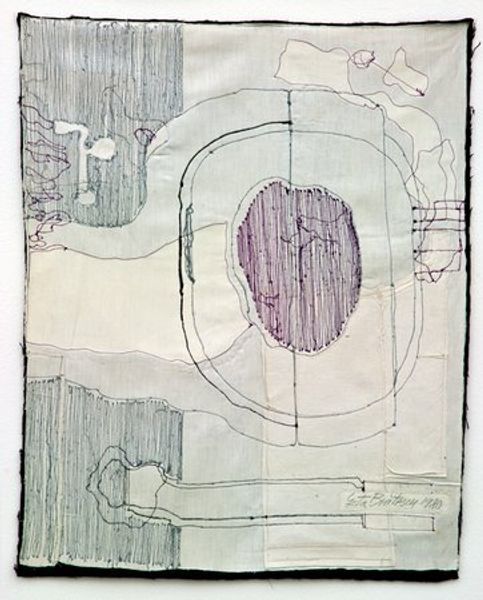
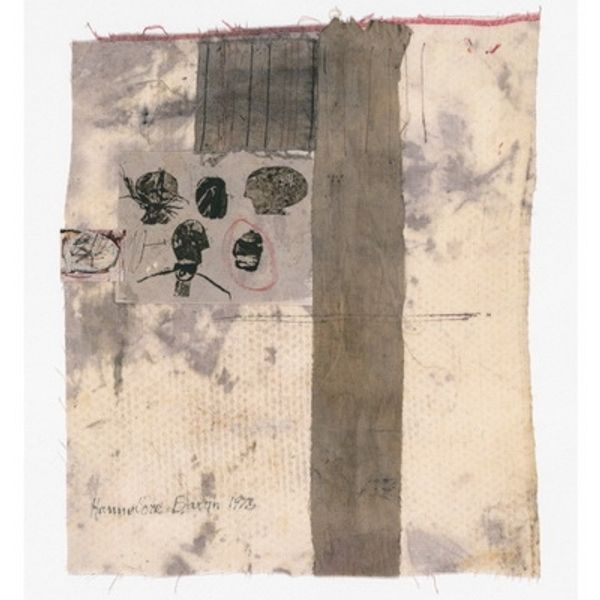
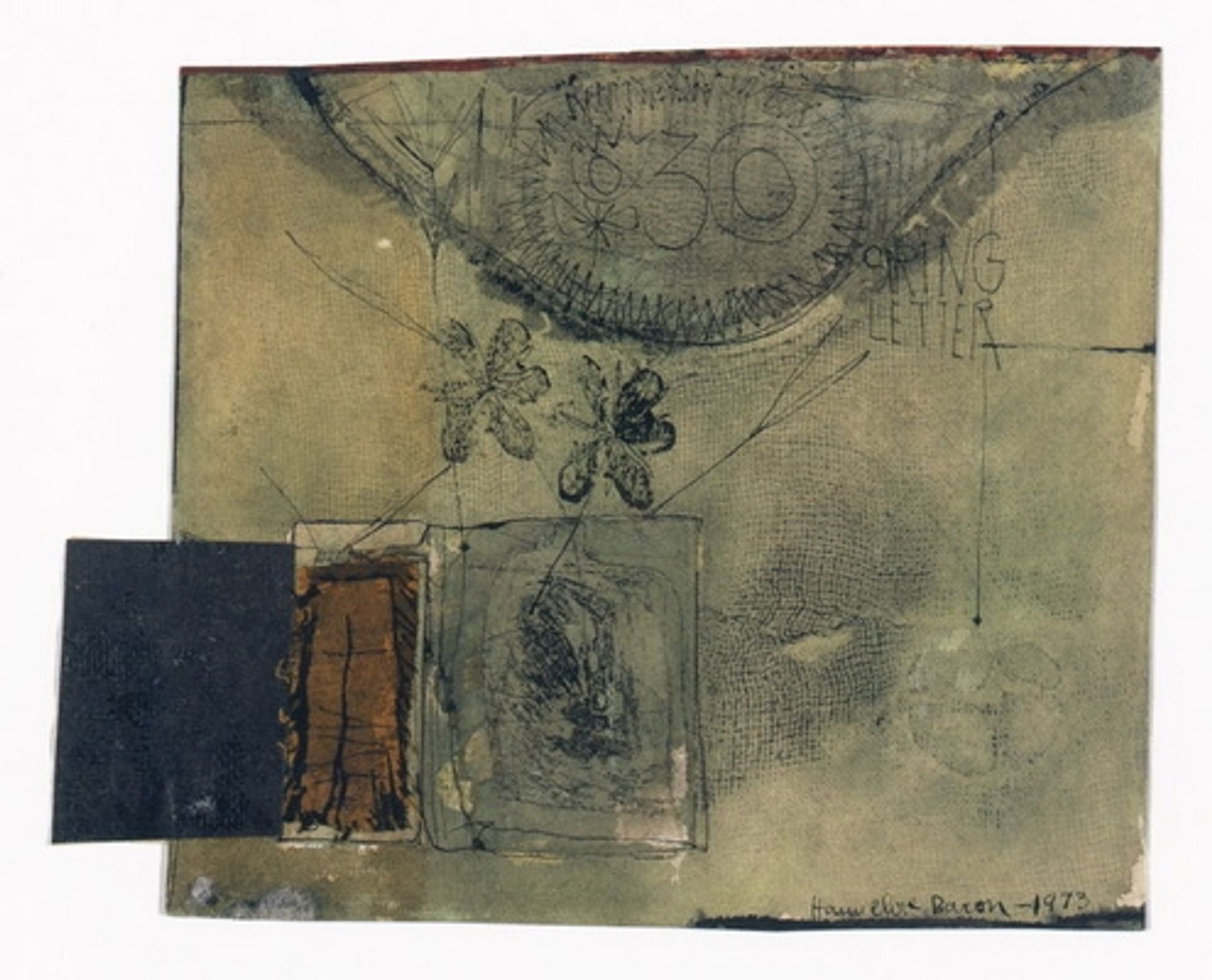
Editor: Here we have Hannelore Baron’s “Spring Letter” from 1973, a mixed-media collage on paper. The layering and muted colors give it such a fragile, almost melancholic feel. What strikes you most about its visual composition? Curator: The composition is indeed intriguing. Consider the spatial relationships: a dark, solid square juxtaposed with semi-transparent, linear forms. Observe how Baron utilizes line, creating implied shapes and a sense of depth despite the flatness of the collage. The superimposition creates both harmony and tension, wouldn't you agree? Editor: Definitely, the tension is key. It’s like she’s built up a world, but one that's delicate and about to fall apart. I’m also interested in her line, how scratchy and imperfect it looks! Curator: Precisely! The line quality disrupts any illusion of perfection. Notice how she contrasts organic and geometric forms? It's through such structural elements that Baron conveys meaning, beyond any literal representation. Editor: So you're seeing the arrangement itself as the primary message, rather than any particular narrative? Curator: Indeed. Let us not forget the material itself: found paper, ink, glue... their very presence as humble, repurposed elements is significant. How do these textural choices impact the overall experience, in your opinion? Editor: The textures make it feel so intimate. Thinking about how each element contributes to the mood is reshaping how I initially interpreted the artwork! Curator: And I found our conversation revealing. Deconstructing the structural elements has shed light on an alternative, more nuanced, approach to the artwork and collage making itself.