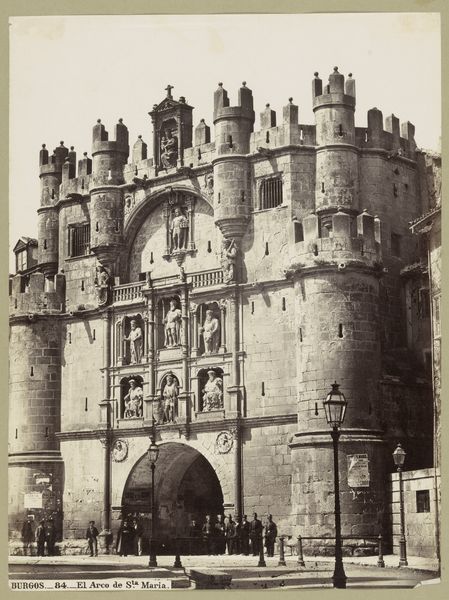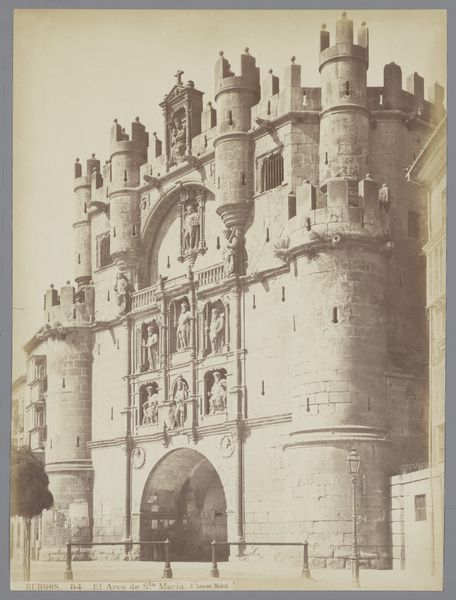
c. 1850 - 1863
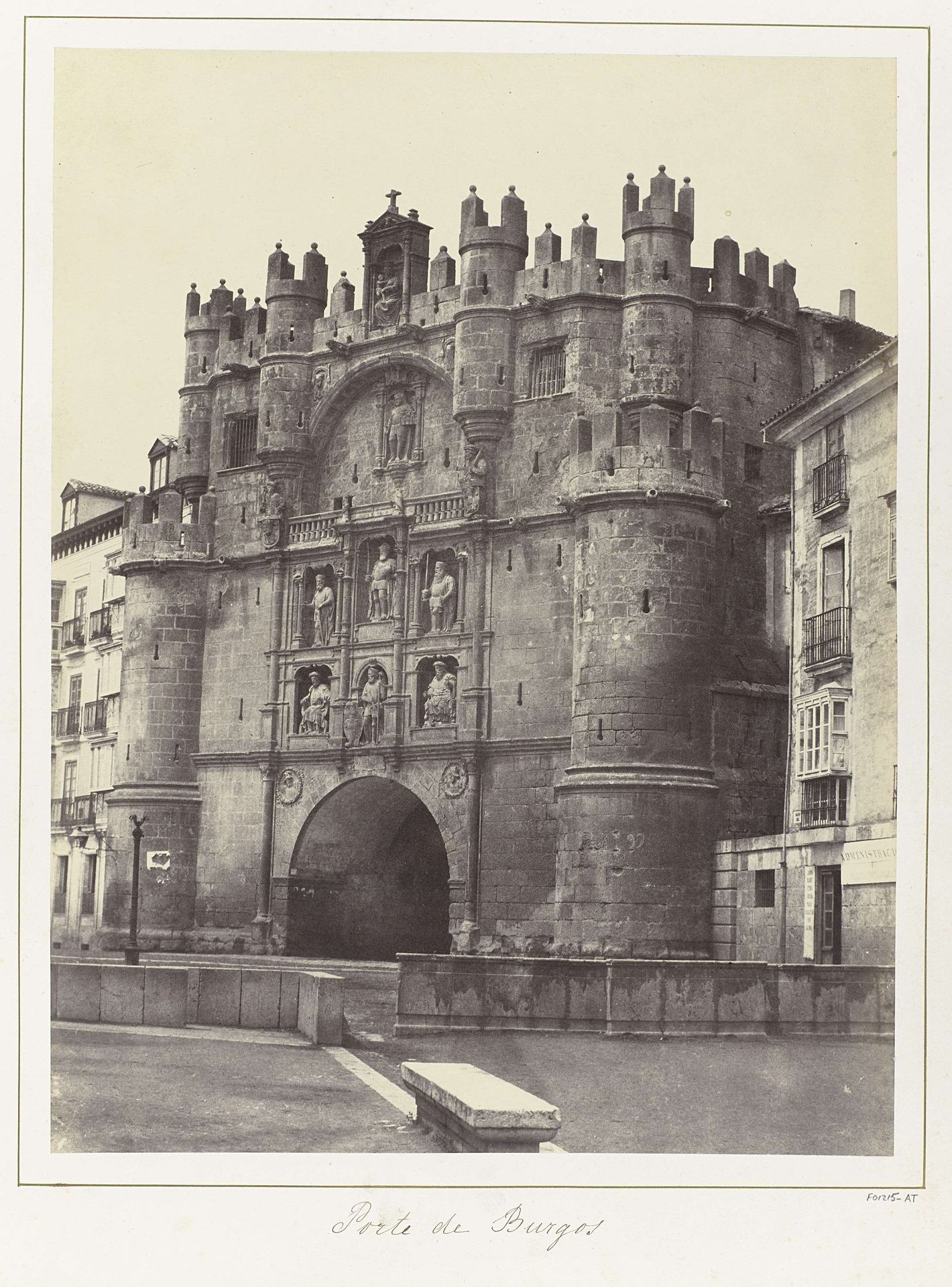
Arco de Santa María in Burgos

Listen to curator's interpretation
Curatorial notes
Editor: Here we have Charles Clifford's "Arco de Santa María in Burgos," a gelatin-silver print from around 1850-1863. I'm immediately struck by how solid and imposing it seems. Like a medieval fortress unexpectedly appearing in a nineteenth-century photograph. What do you see when you look at this? Curator: Oh, this one sings to me of time. Isn’t it curious how photography, meant to capture a fleeting moment, here traps centuries within a single frame? The gate itself is this defiant declaration of power, but it's also whispering tales. Imagine all the stories that stone has absorbed. It is almost a sentinel. Editor: It does feel almost frozen in time, yeah! What's the story behind the figures on the arch? Are they just decoration? Curator: "Just decoration?" My dear, nothing is *ever* just decoration. Each figure is a carefully chosen symbol, whispering a specific message, representing key figures important to the city's history. But to me, it's not just about historical accuracy. I love how the photograph almost layers time. There's a sense of depth. It’s also fascinating to think of Clifford setting up his equipment on the street, creating a document with permanence! Editor: You're right, the layers are beautiful. So, Clifford wasn't just documenting, but creating an impression, like a painter? Curator: Exactly! He used the stark contrast of the print to imbue the scene with a particular mood – one of enduring strength and quiet grandeur, which is exactly what a painter aims to do with their brushstrokes. It really blurs the line, doesn't it? He freezes a place but brings out something much more lasting about that place. Editor: I never thought of photography that way. Seeing this in a new light now. Curator: That's the beauty of looking closely, isn’t it? Seeing something familiar with fresh eyes! There are just universes waiting inside these frames.