2008
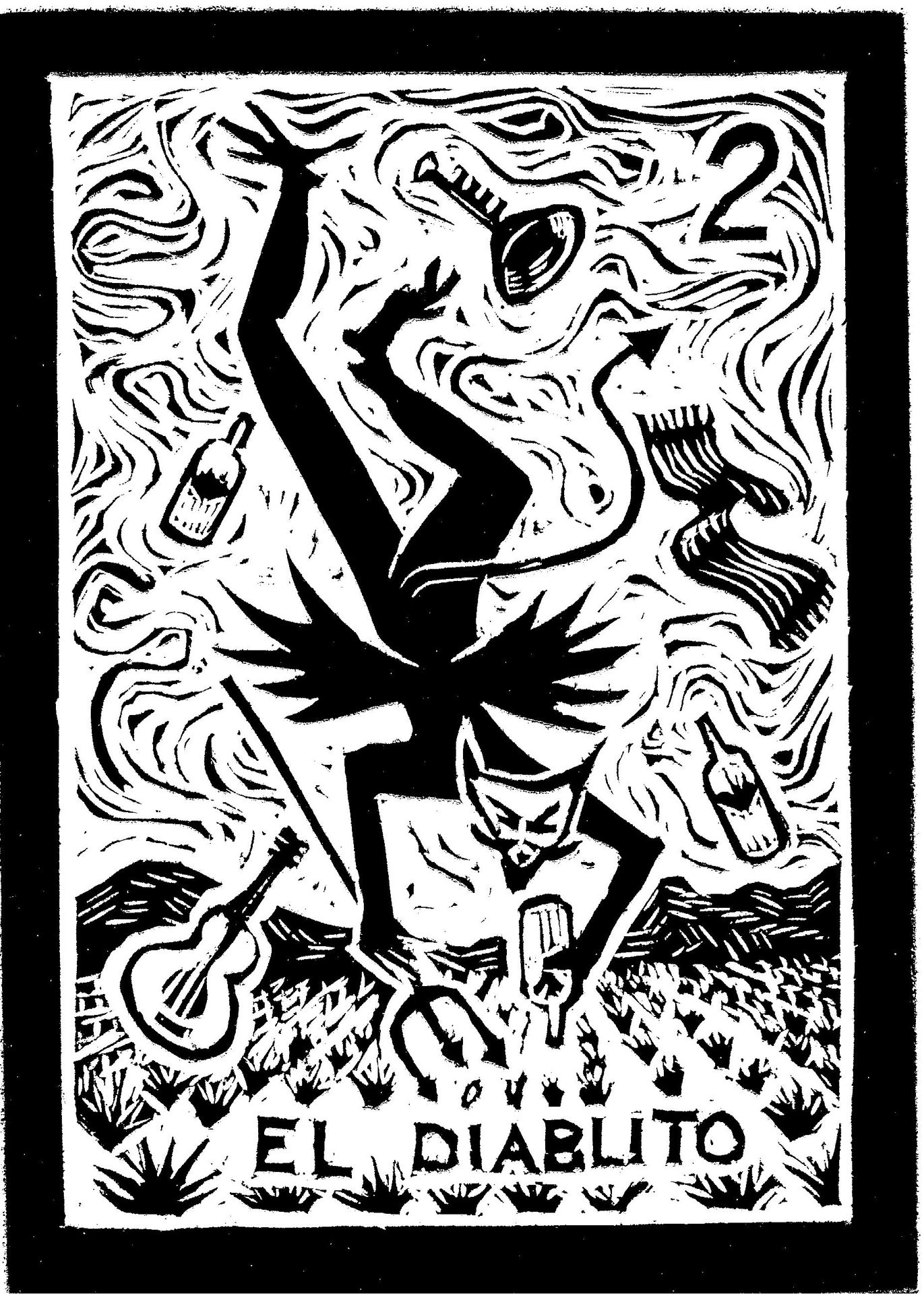
#02: El Diablito (The Little Devil)

Listen to curator's interpretation
Curatorial notes
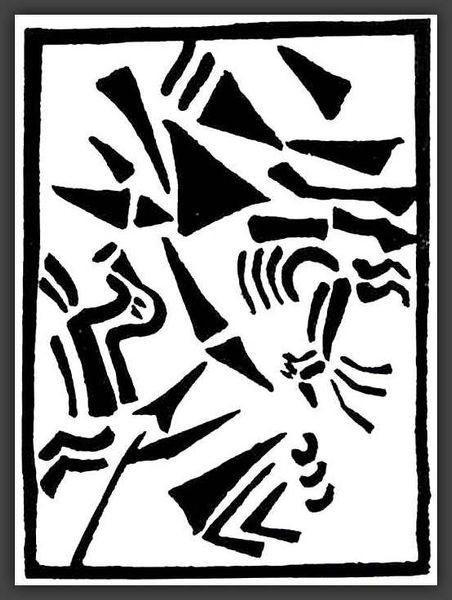
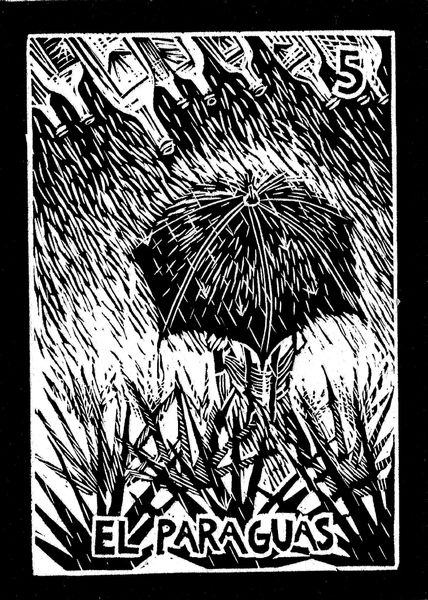
Curator: Looking at Marina Pallares' "El Diablito," made in 2008, the stark black and white immediately grabs you. It’s graphic, immediate, like a page torn from a folklore collection. What are your initial thoughts? Editor: There's a definite energy, chaotic even. All those swirling lines… it feels unstable, almost as if the scene is shaking itself apart. And the devil figure, upside down, that's a strange composition. Curator: Well, let's delve into that. The inverted figure challenges traditional iconography, doesn't it? Pallares uses this symbolism, I think, to invert power dynamics, to question who really controls narratives of good and evil within a society deeply rooted in both indigenous and colonial beliefs. It’s intersectional. Editor: I'm interested in how this print was made, I'm wondering about the material production here. It appears to be a woodcut, right? All those gouges meticulously carved to produce this high-contrast image… the labour itself must be substantial. It adds to the feeling of authenticity; like this is a story carved directly from the source, with minimal manipulation. Curator: Precisely, the black art movement and folk art influences create a potent visual language. Think about the history of printmaking as a medium for disseminating subversive ideas and cultural narratives. Editor: It also appears to feature instruments, liquor, and what appear to be tools for cultivation, suggesting the Devil's connection to earthly pleasures and social constructs. I can almost hear a narco corrido. The material elements here seem symbolic of desire. Curator: Indeed. Pallares isn’t merely illustrating a simple folk tale. She’s using the diablito figure as a lens through which to examine themes of identity, marginalization, and resistance within Mexican cultural landscapes. Editor: Right. It seems she's working from the bottom up. How does a marginalized person use readily available, low-cost material culture and processes to represent and engage with this very dark aspect of culture? It flips elitist narratives. Curator: Absolutely. The woodcut as a means of production democratizes the art. Its accessibility echoes the accessibility, perhaps, of the very social ills and celebrations it depicts. Editor: This piece does offer a glimpse at the social cost, even the raw, material reality, involved in constructing morality tales. Curator: It makes you consider the very meaning of those constructed beliefs, and their lasting effect on cultural landscapes and identities.