1610 - 1672
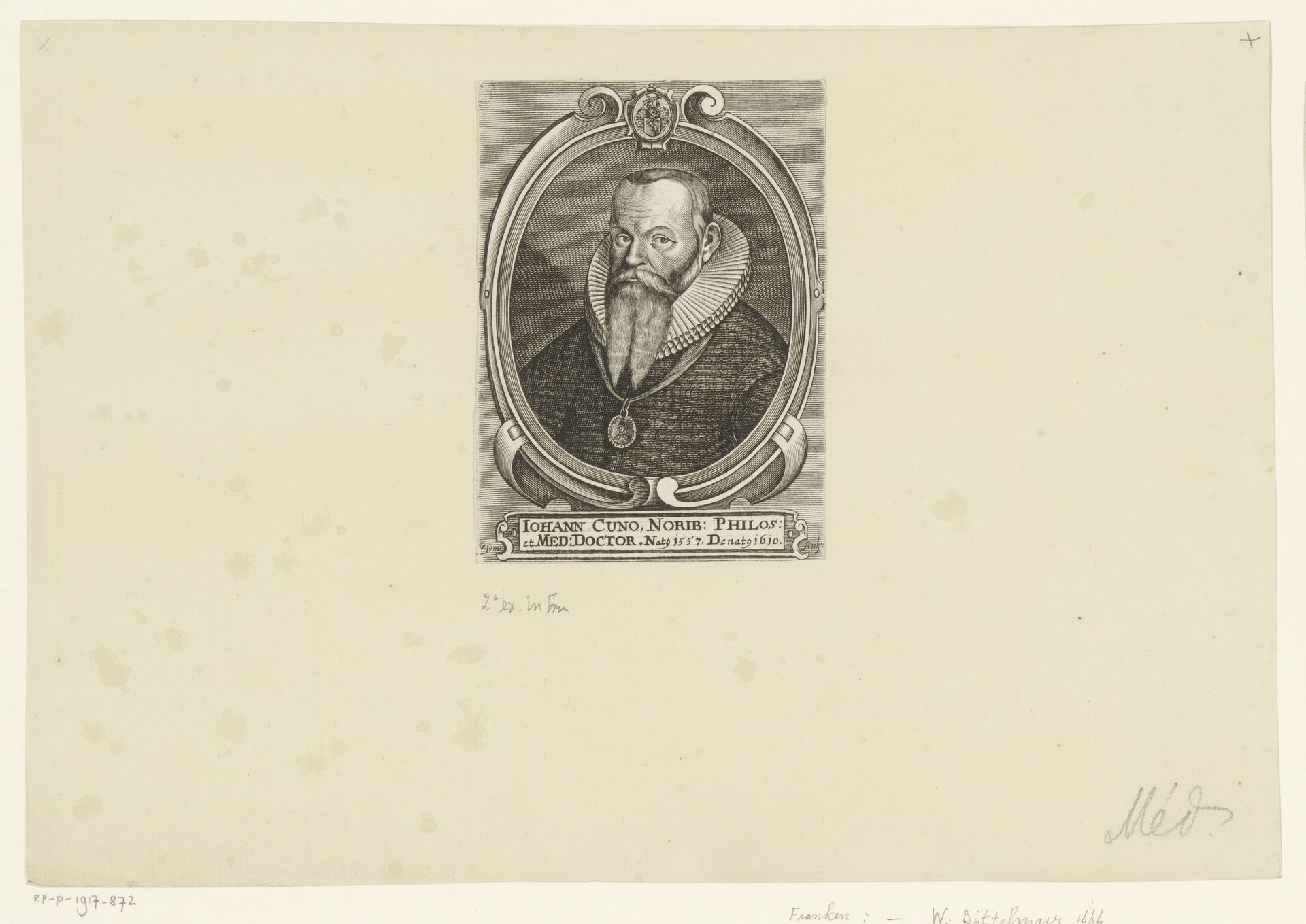
Portret van Johann Cuno

Listen to curator's interpretation
Curatorial notes
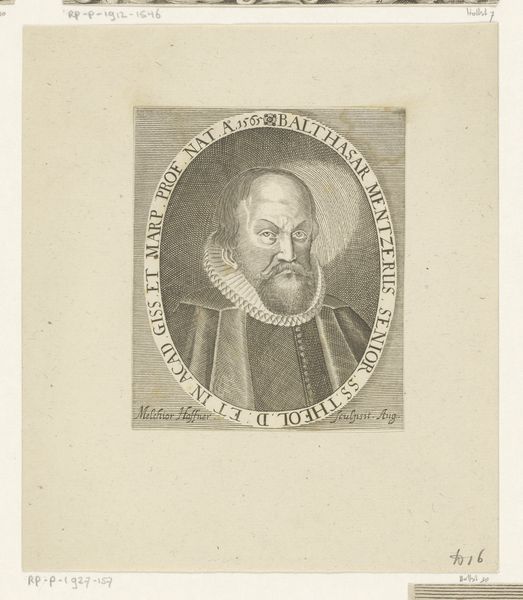
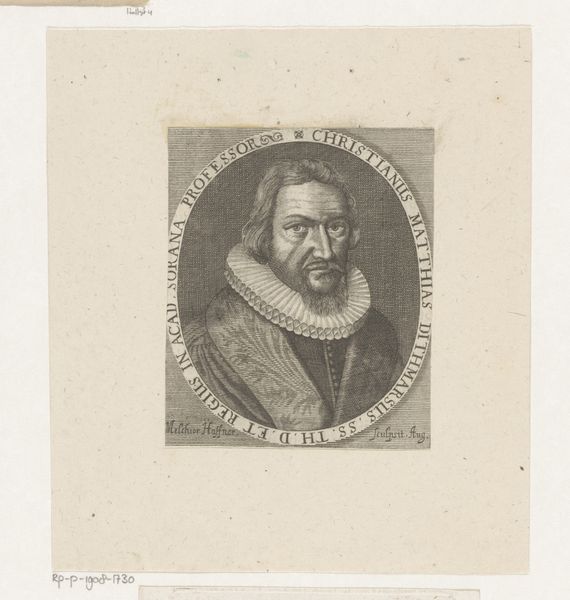
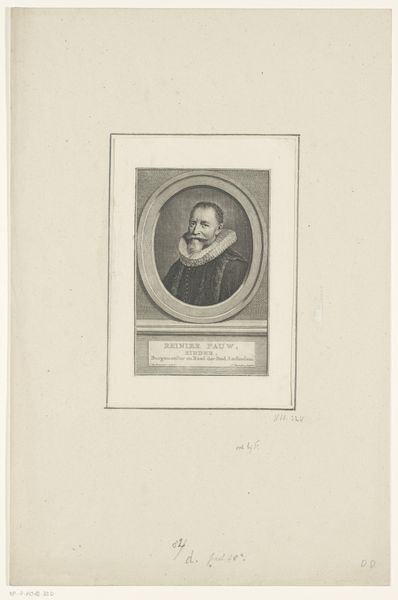
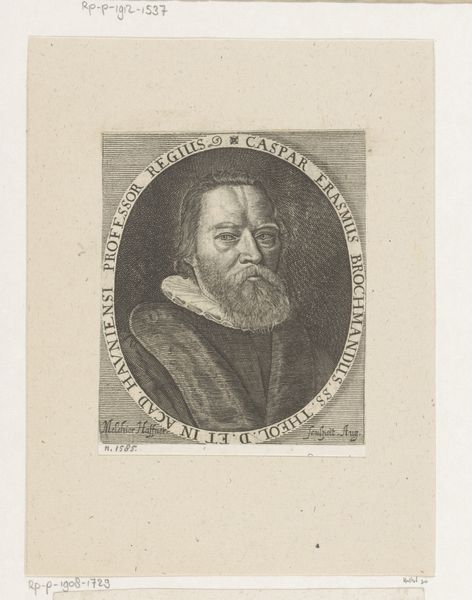
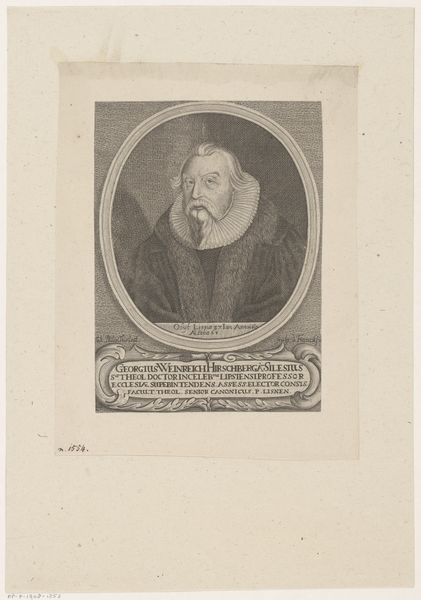
This is a portrait of Johann Cuno, made in 1616 by Matthias van Sommer. Look at that elaborate ruff collar encircling Cuno’s neck! The ruff was more than a mere fashion statement; it was a symbol of status and wealth during the 16th and 17th centuries. Its circular form, stiff and unyielding, speaks to a desire for order and control. Think of the halos in religious art, also circular, signifying sanctity and divine power. This portrait, though secular, shares a similar aspiration to elevate the sitter. Consider, too, how the ruff cages the head, almost separating it from the body. This motif appears in various forms throughout history, from royal headdresses to the collars of religious figures, each time emphasizing authority and spiritual elevation. The ruff, therefore, is not simply an article of clothing, but a potent emblem of social and psychological aspirations. It reveals a deep-seated human drive to distinguish oneself, to project an image of authority, and to seek a form of secular or sacred transcendence.