

1863
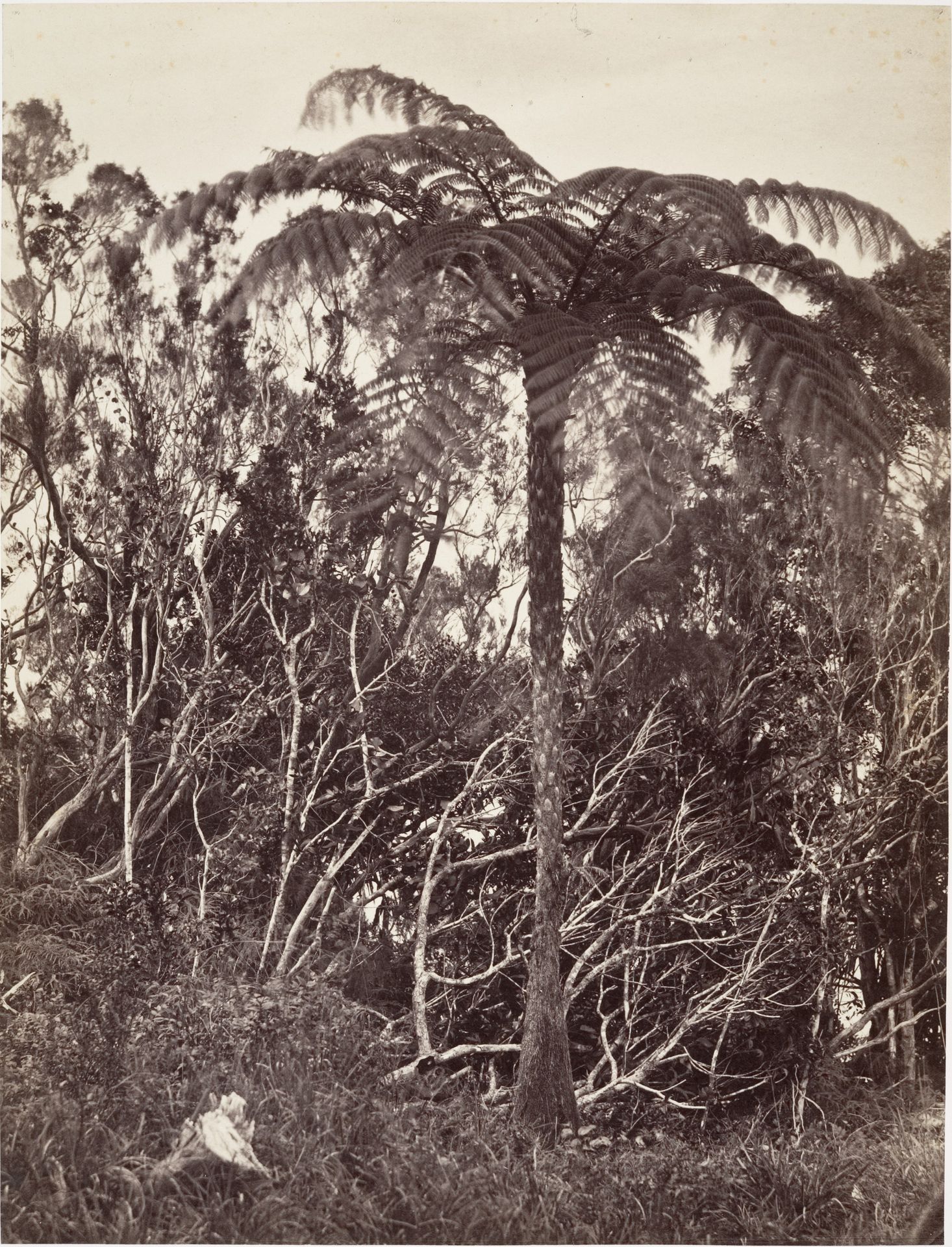
Fougère arborescente

Listen to curator's interpretation
Curatorial notes
Curator: Right, let's consider Désiré Charnay’s 1863 gelatin silver print, “Fougère arborescente," currently held at The Metropolitan Museum of Art. Editor: Ah, this scene feels familiar yet so...ancient. I’m immediately struck by the stark contrasts—the fern almost looms like a primeval sentinel amidst the thick, unruly scrub. It’s quite captivating! Curator: Yes, it is! The photograph captures a specific species of tree fern with considerable symbolic weight, you see. In many cultures, ferns represent resilience, new beginnings, and a connection to primordial Earth. The fact that Charnay focused on it so intensely gives me the sense that he sought to capture something deeply spiritual here. Editor: I agree—there is a sense of stillness, but also an almost restless energy with all the intertwined branches creating a sense of a secret, hidden world, like it is not completely tame. The almost monochrome quality enhances that dreamlike quality, making me feel like I am stumbling into another reality. What do you suppose the significance was to him in 1863? Curator: During the 19th century, photographic realism often served as a way to document newly 'discovered' botanical specimens but I also feel Charnay had deeper aims. The controlled gradation and high tonal contrasts, particularly when focusing on ferns as a re-emerging plant in the Anthropocene period gives one cause to contemplate on both loss and regeneration. Editor: A lot to consider, the symbolic and ecological narrative. I love how art can encapsulate those layered meanings and create feelings simultaneously. Thank you for shedding light on this fascinating piece! Curator: Indeed! Hopefully it makes you reflect upon the interwoven tapestry of natural history and art’s reflective qualities on time.