About this artwork
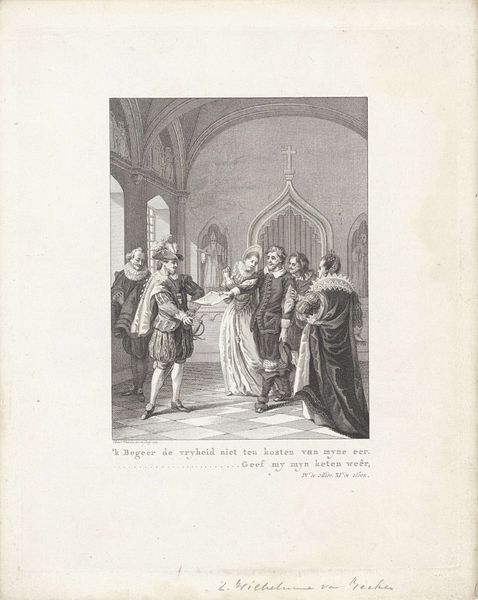
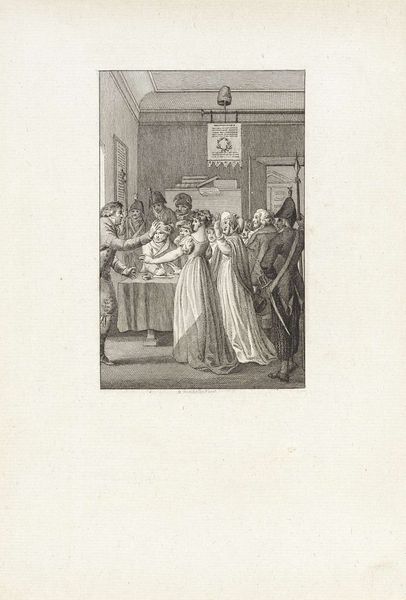
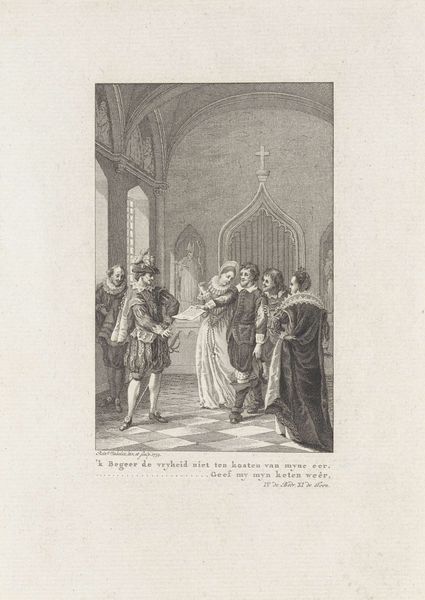
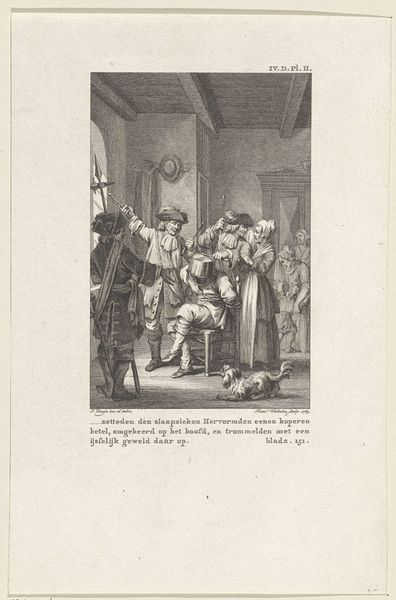
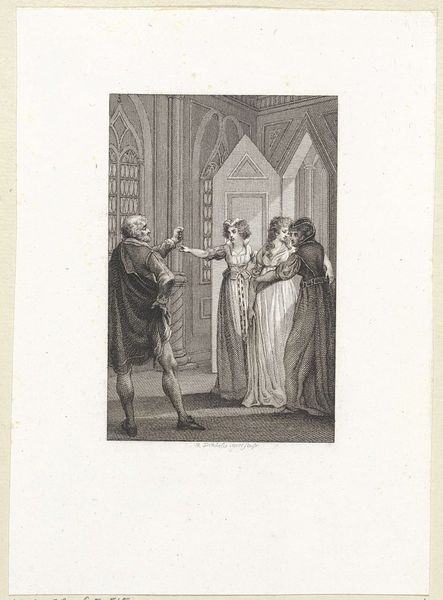
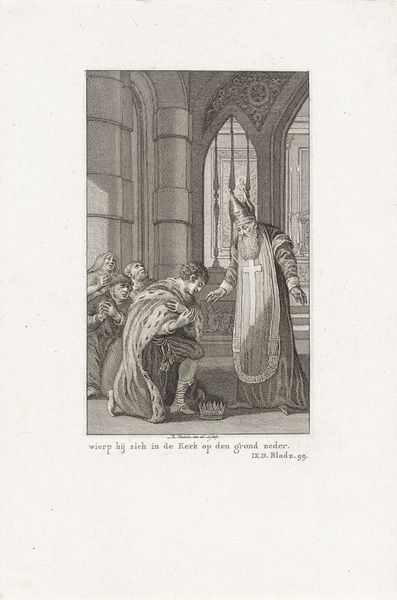
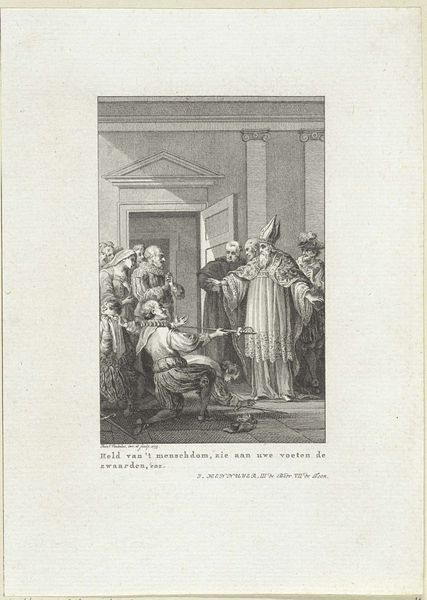
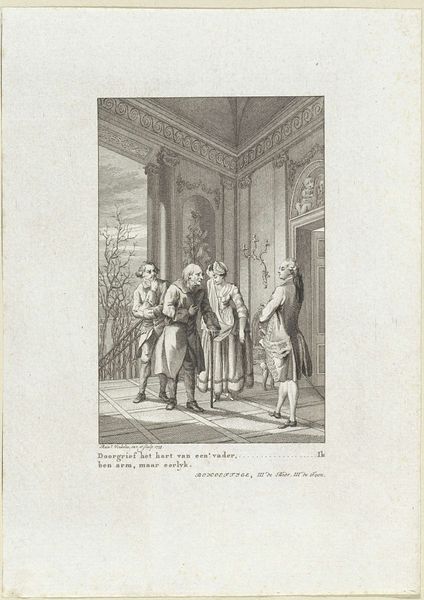
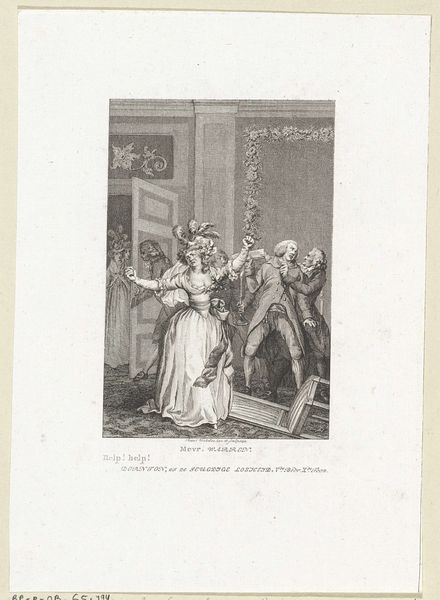
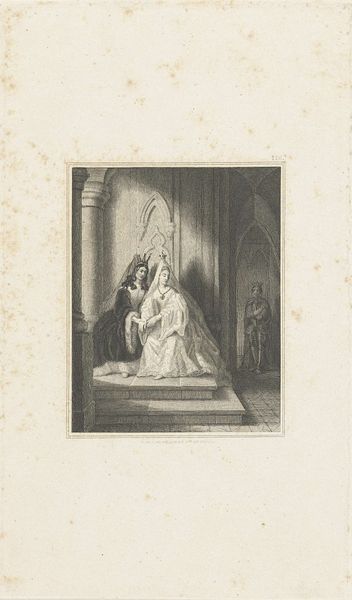
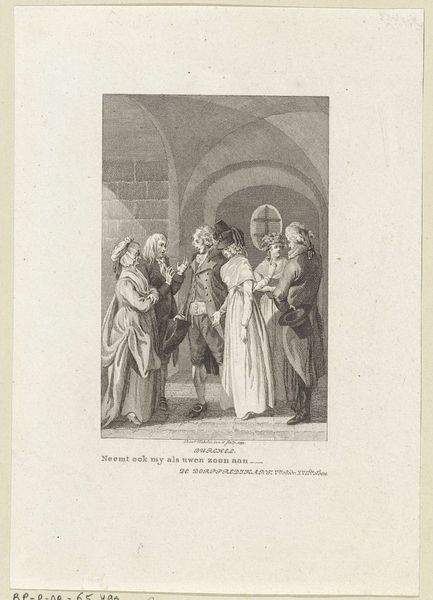
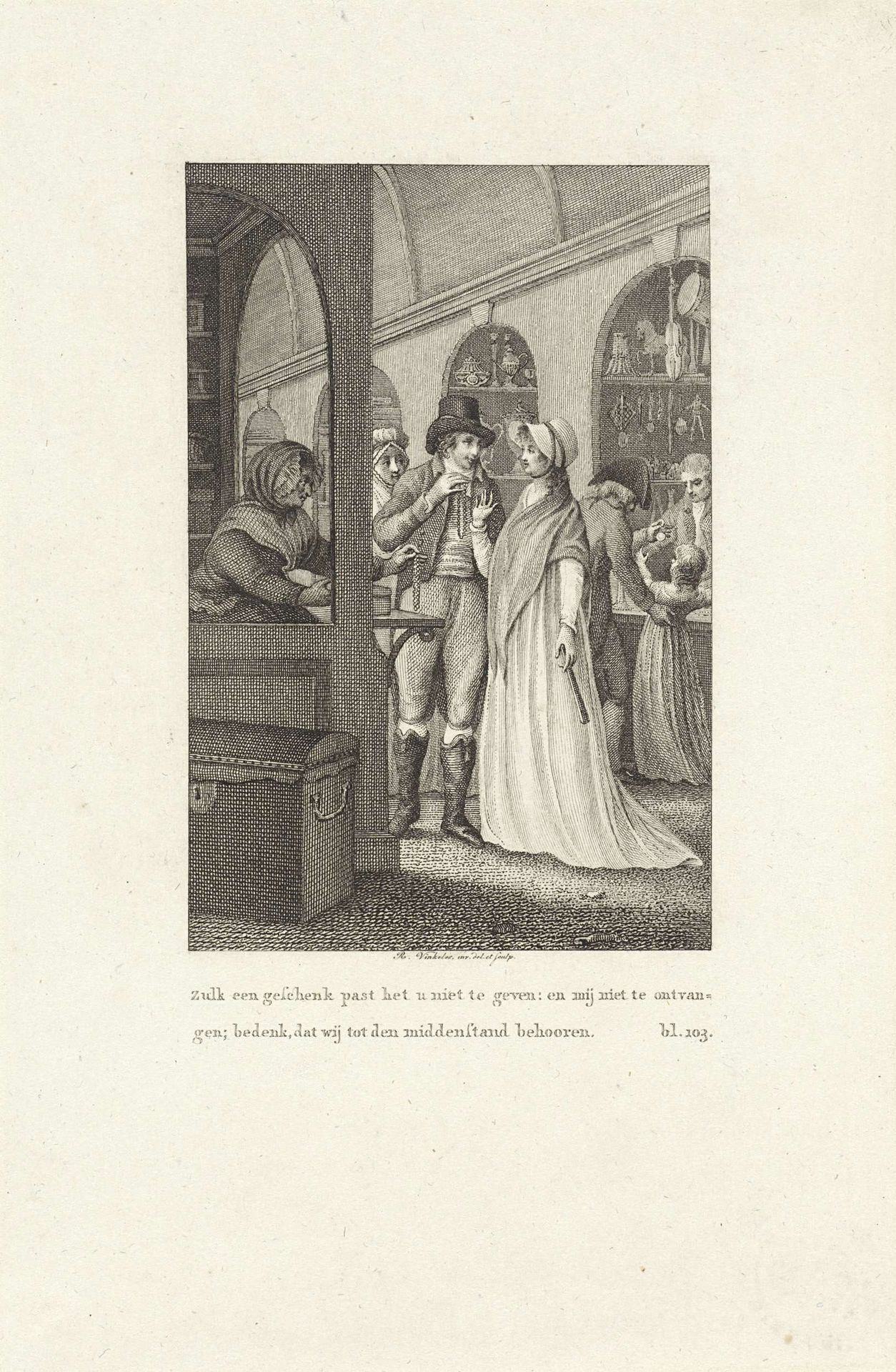
Editor: Here we have Reinier Vinkeles' engraving, "Young man offering his beloved a pearl necklace," created in 1803. The scene feels quite staged, like a moment plucked from a play. What strikes you about this work? Curator: What I find compelling here is the implied social commentary. We see a transaction happening, but is it one of pure affection? The textual snippet at the bottom references the "middle class," which suggests the print is engaging with societal anxieties about class mobility and appropriate behaviour within that context. Who is allowed what kind of present? Editor: So, the pearls might not just be a romantic gesture? Curator: Exactly. Think about the rise of the middle class in the 18th and early 19th centuries. Suddenly, there's this new group with disposable income, challenging established hierarchies. The print then, isn't simply illustrating a love story, it's commenting on this shifting social landscape and perhaps cautioning against overstepping one’s social bounds. Notice also the crowded interior: a space filled with implied witnesses. Is the piece celebrating or critiquing middle class social norms? Editor: It's fascinating to consider it as a social critique rather than just a romantic depiction. The almost theatrical staging definitely supports that reading. Curator: And what do we think about the woman's rigid stance? Does it express acceptance or unease towards the gift and towards the suitor? The image functions, I believe, as a space to examine the negotiation between desire and propriety. Editor: I didn't initially consider the implications of the gift itself being part of that social commentary. Thanks, that has expanded my understanding of this print tremendously. Curator: And thank you for making me look closer at the expressions! I can see her ambivalence more clearly now.
Jonge man biedt zijn geliefde een parelsnoer aan
1803

Reinier Vinkeles
1741 - 1816Location
RijksmuseumArtwork details
- Medium
- print, engraving
- Dimensions
- height 240 mm, width 160 mm
- Location
- Rijksmuseum
- Copyright
- Rijks Museum: Open Domain
Tags
portrait
narrative-art
old engraving style
figuration
romanticism
genre-painting
engraving
Comments
Be the first to share your thoughts about this work.
About this artwork
Editor: Here we have Reinier Vinkeles' engraving, "Young man offering his beloved a pearl necklace," created in 1803. The scene feels quite staged, like a moment plucked from a play. What strikes you about this work? Curator: What I find compelling here is the implied social commentary. We see a transaction happening, but is it one of pure affection? The textual snippet at the bottom references the "middle class," which suggests the print is engaging with societal anxieties about class mobility and appropriate behaviour within that context. Who is allowed what kind of present? Editor: So, the pearls might not just be a romantic gesture? Curator: Exactly. Think about the rise of the middle class in the 18th and early 19th centuries. Suddenly, there's this new group with disposable income, challenging established hierarchies. The print then, isn't simply illustrating a love story, it's commenting on this shifting social landscape and perhaps cautioning against overstepping one’s social bounds. Notice also the crowded interior: a space filled with implied witnesses. Is the piece celebrating or critiquing middle class social norms? Editor: It's fascinating to consider it as a social critique rather than just a romantic depiction. The almost theatrical staging definitely supports that reading. Curator: And what do we think about the woman's rigid stance? Does it express acceptance or unease towards the gift and towards the suitor? The image functions, I believe, as a space to examine the negotiation between desire and propriety. Editor: I didn't initially consider the implications of the gift itself being part of that social commentary. Thanks, that has expanded my understanding of this print tremendously. Curator: And thank you for making me look closer at the expressions! I can see her ambivalence more clearly now.
Comments
Be the first to share your thoughts about this work.