About this artwork
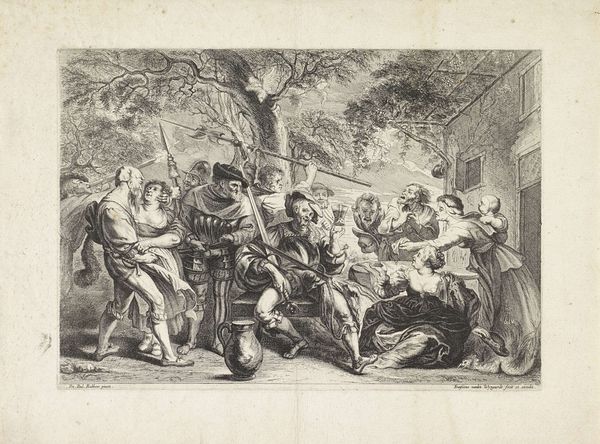
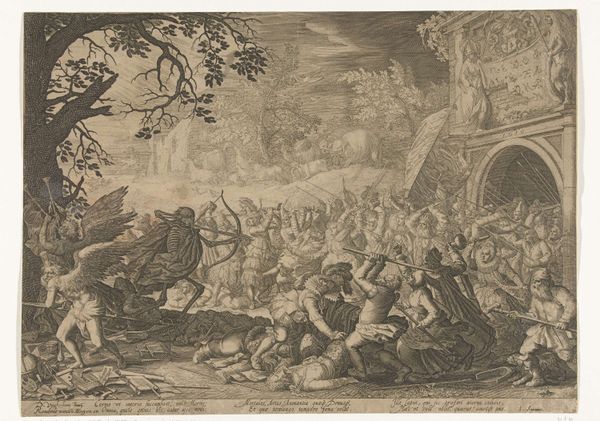
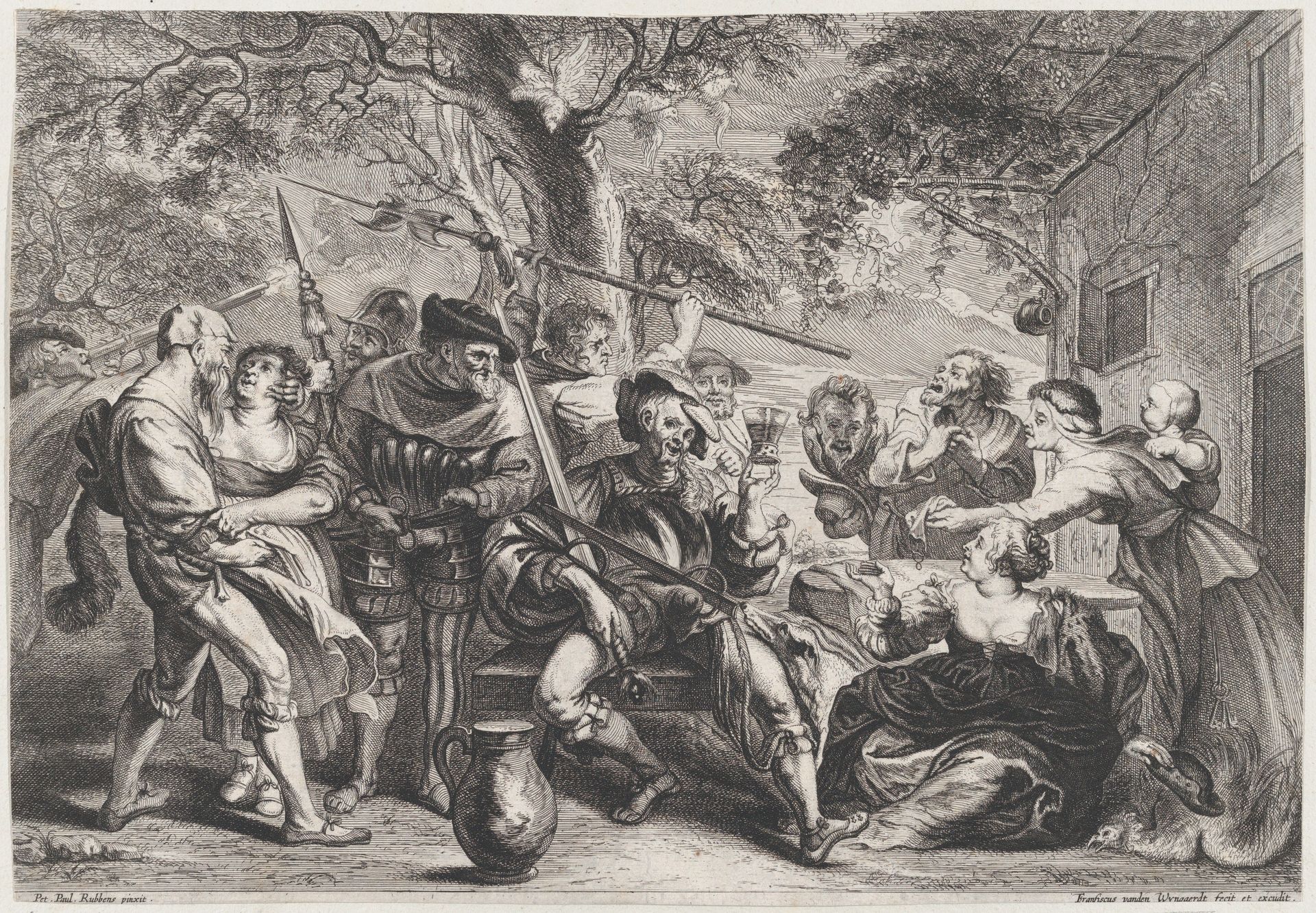
Frans van den Wyngaerde created this print, titled "Soldiers and peasants, sitting and fighting near a table," in the mid-17th century. It depicts a chaotic scene of conflict between soldiers and peasants, likely in the context of the Eighty Years' War between the Dutch Republic and Spain. The image creates meaning through its dramatic composition and detailed depiction of the figures' expressions and gestures. The clash between the armed soldiers and the vulnerable peasants highlights the social tensions and power dynamics of the time. Made in the Netherlands, this print reflects the economic structures of the Dutch Golden Age, a time of both prosperity and conflict. This work critiques the social structures of its time, portraying the violence and disruption caused by war. To understand this artwork better, we can consult historical records, political pamphlets, and visual culture of the 17th-century Netherlands. Art's meaning is always contingent on its social and institutional context.
Soldiers and peasants, sitting and fighting near a table
1630 - 1679

Frans van den Wyngaerde
1614 - 1679
The Metropolitan Museum of Art
Metropolitan Museum of Art, New York, NYArtwork details
- Medium
- drawing, print, engraving
- Dimensions
- Sheet (Trimmed): 9 1/2 × 13 3/4 in. (24.2 × 34.9 cm)
- Location
- Metropolitan Museum of Art, New York, NY
- Copyright
- Public Domain
Tags
Comments
Share your thoughts
About this artwork
Frans van den Wyngaerde created this print, titled "Soldiers and peasants, sitting and fighting near a table," in the mid-17th century. It depicts a chaotic scene of conflict between soldiers and peasants, likely in the context of the Eighty Years' War between the Dutch Republic and Spain. The image creates meaning through its dramatic composition and detailed depiction of the figures' expressions and gestures. The clash between the armed soldiers and the vulnerable peasants highlights the social tensions and power dynamics of the time. Made in the Netherlands, this print reflects the economic structures of the Dutch Golden Age, a time of both prosperity and conflict. This work critiques the social structures of its time, portraying the violence and disruption caused by war. To understand this artwork better, we can consult historical records, political pamphlets, and visual culture of the 17th-century Netherlands. Art's meaning is always contingent on its social and institutional context.
Comments
Share your thoughts