About this artwork
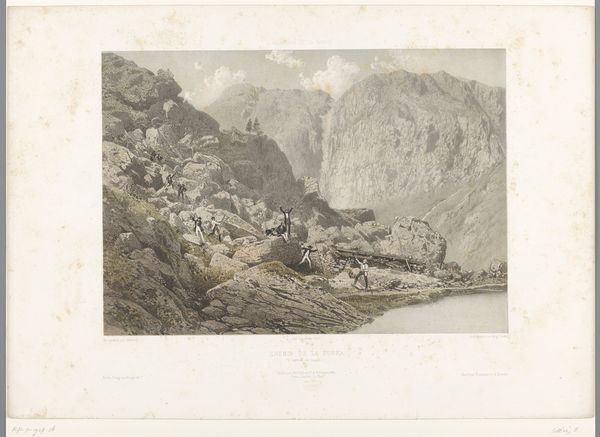
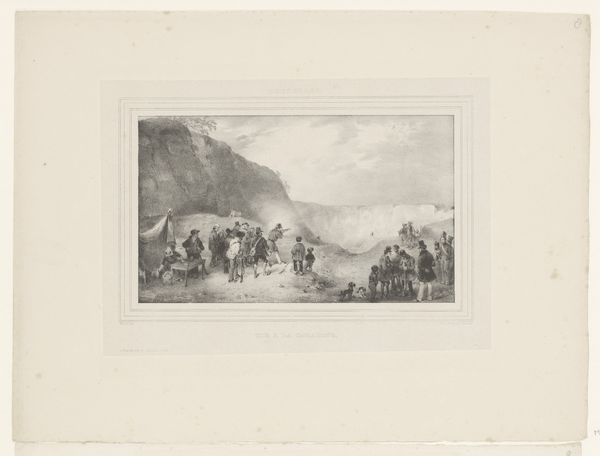
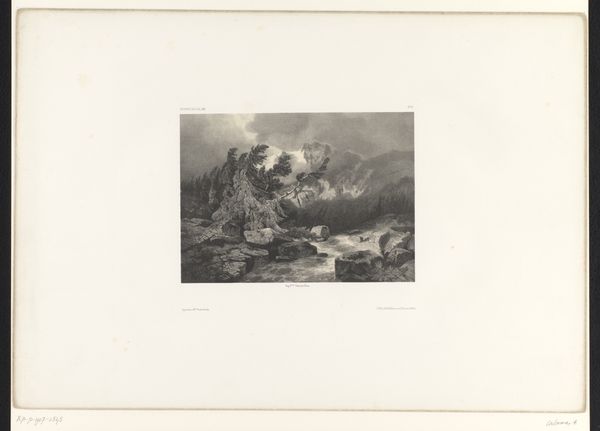
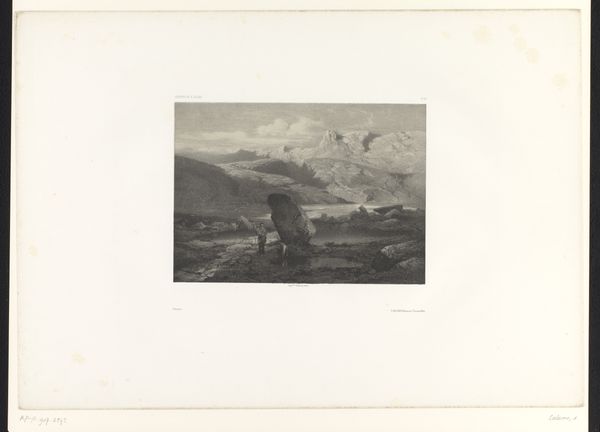
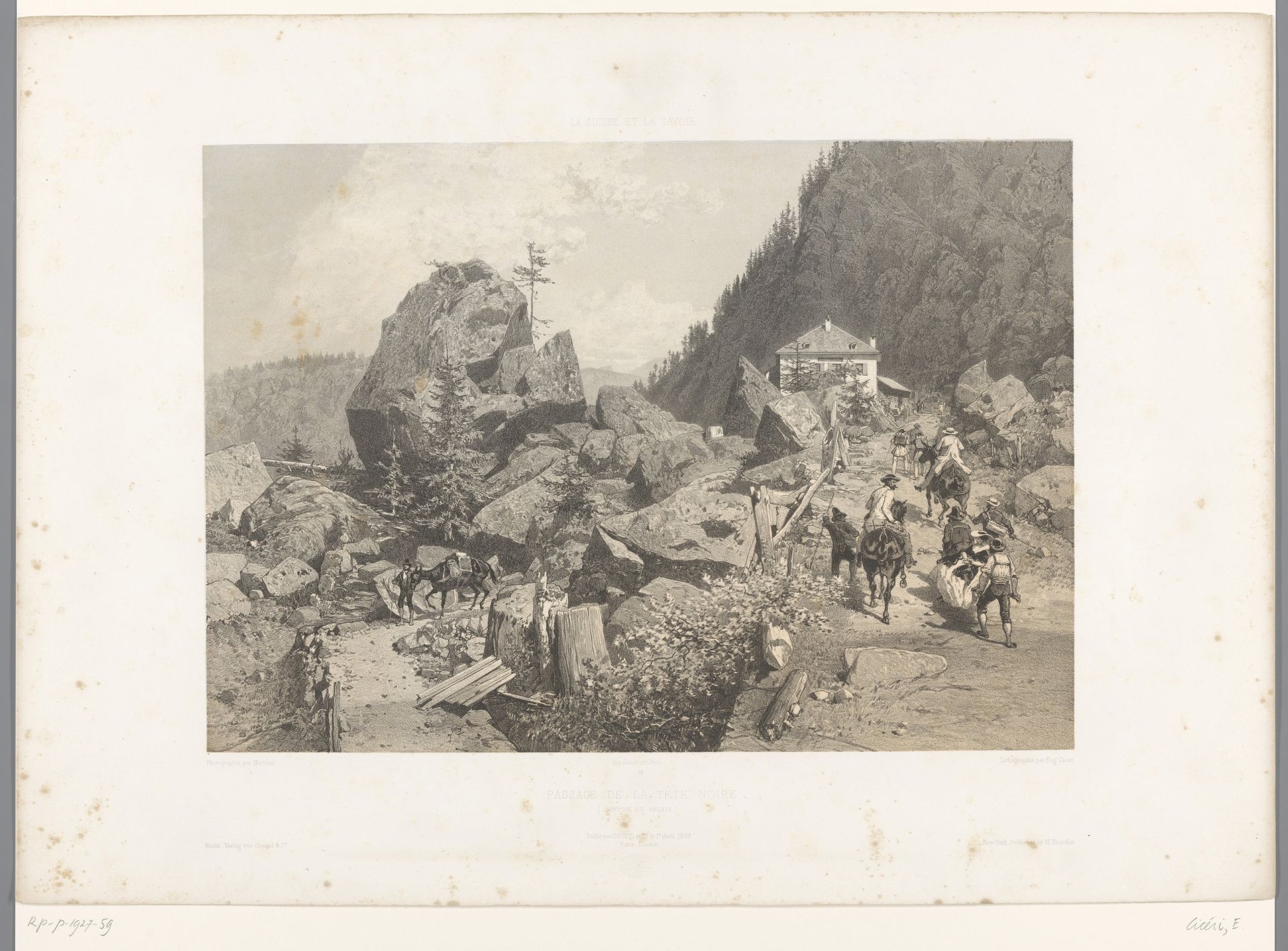
Curator: What strikes you first about this etching, Artist? Editor: It's the journey, isn’t it? The perilous kind, full of hefty rocks, steep inclines, that seems daunting yet there is such a strange, captivating peacefulness about it at the same time. Curator: This is Eugène Cicéri's "Reizigers op de pas van de Tête Noire tussen Martigny en Chamonix," from 1859, currently held at the Rijksmuseum. As an etching, the means of production interests me deeply: the acid, the plate, the repetitive actions, which feels apt considering its thematic concerns. Editor: Exactly! See how the labor of the line, etched meticulously, gives form to that challenging landscape, mimicking the laborious travel depicted within it? It’s as if you feel every footstep, the strain of each horse on that tough terrain. Curator: Yes, and there's something fascinating in observing how such detail becomes commodity. These landscapes were sold, consumed; the Romantic sublime packaged for a burgeoning tourist class able to undertake their own miniature Grand Tours. Editor: It’s more than just that, I think. Cicéri really captures a sense of scale—a small reminder of our own fleeting time against this ancient background. Those boulders look primordial and immovable while the figures crossing through them seem almost insignificant! Curator: Considering how popular picturesque scenes became, the very tools he employs, such as the etching technique, transform nature into a manufactured ideal ready for mass consumption. What does that contradiction communicate, I wonder? Editor: It communicates the ever presence of human drive to create something permanent out of passing experience, doesn't it? Maybe it even communicates some arrogance? Curator: Maybe, and so a print that captures that. I can feel myself thinking deeply about commodity, production, and what it meant to popularize nature's sublime, and perhaps that's its charm. Editor: For me, I feel it makes one contemplate not only art's means but art’s end - it gives reason to reflect on impermanence, human endeavour, all wrapped into a tiny frame - all stemming from, as you note, its materials!
Reizigers op de pas van de Tête Noire tussen Martigny en Chamonix
1859

Eugène Cicéri
1813 - 1890Location
RijksmuseumArtwork details
- Dimensions
- height 400 mm, width 565 mm
- Location
- Rijksmuseum
- Copyright
- Rijks Museum: Open Domain
Comments
Share your thoughts
About this artwork
Curator: What strikes you first about this etching, Artist? Editor: It's the journey, isn’t it? The perilous kind, full of hefty rocks, steep inclines, that seems daunting yet there is such a strange, captivating peacefulness about it at the same time. Curator: This is Eugène Cicéri's "Reizigers op de pas van de Tête Noire tussen Martigny en Chamonix," from 1859, currently held at the Rijksmuseum. As an etching, the means of production interests me deeply: the acid, the plate, the repetitive actions, which feels apt considering its thematic concerns. Editor: Exactly! See how the labor of the line, etched meticulously, gives form to that challenging landscape, mimicking the laborious travel depicted within it? It’s as if you feel every footstep, the strain of each horse on that tough terrain. Curator: Yes, and there's something fascinating in observing how such detail becomes commodity. These landscapes were sold, consumed; the Romantic sublime packaged for a burgeoning tourist class able to undertake their own miniature Grand Tours. Editor: It’s more than just that, I think. Cicéri really captures a sense of scale—a small reminder of our own fleeting time against this ancient background. Those boulders look primordial and immovable while the figures crossing through them seem almost insignificant! Curator: Considering how popular picturesque scenes became, the very tools he employs, such as the etching technique, transform nature into a manufactured ideal ready for mass consumption. What does that contradiction communicate, I wonder? Editor: It communicates the ever presence of human drive to create something permanent out of passing experience, doesn't it? Maybe it even communicates some arrogance? Curator: Maybe, and so a print that captures that. I can feel myself thinking deeply about commodity, production, and what it meant to popularize nature's sublime, and perhaps that's its charm. Editor: For me, I feel it makes one contemplate not only art's means but art’s end - it gives reason to reflect on impermanence, human endeavour, all wrapped into a tiny frame - all stemming from, as you note, its materials!
Comments
Share your thoughts