painting, oil-paint, impasto
#
abstract painting
#
painting
#
oil-paint
#
landscape
#
impasto
#
geometric
#
expressionism
#
abstraction
#
symbolism
Dimensions: 12.7 x 29.7 cm
Copyright: Public domain
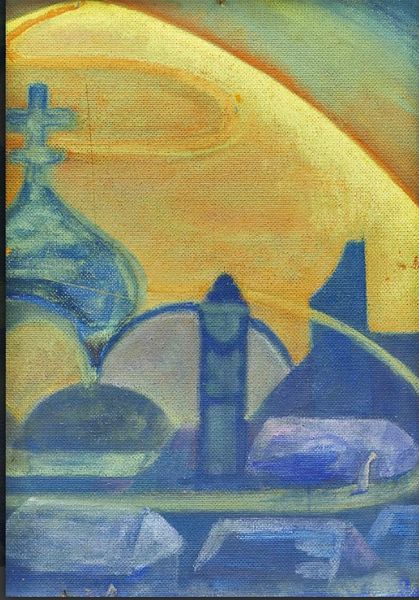
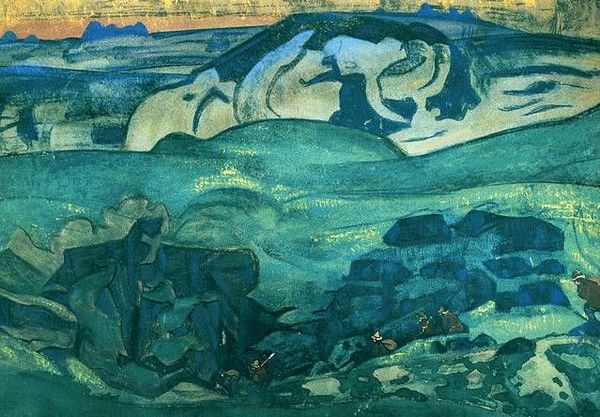
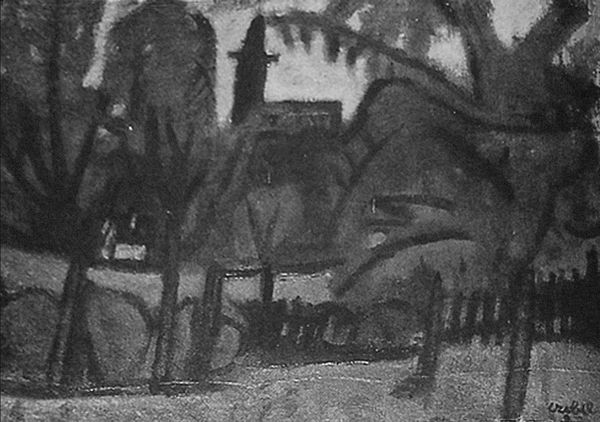
Editor: We're looking at Wassily Kandinsky's "The Golden Sail," painted in 1903. It looks like oil on canvas. It's got a dreamlike quality with that luminous color palette. What do you see when you look at this painting? Curator: I’m drawn to the application of the paint itself. Look at the thick impasto strokes. It’s not just about what's depicted – a boat, buildings – but how it's constructed through materiality. The rough texture suggests a laborious process, almost a challenge to traditional artistic practices, where smooth surfaces were often prized. How do the materials used relate to the broader social context of art production at the time? Editor: I see what you mean. The roughness juxtaposes against the symbolic, almost mystical, subject matter, like a craft object given serious subject matter. Do you see it challenging any existing high art concepts? Curator: Absolutely! This materiality speaks to the rising interest in folk art and craft traditions during the early 20th century, a movement that challenged the established hierarchies between "high" art and "low" craft. Think about the labor involved in creating these textured surfaces, in comparison to the smooth, seemingly effortless finishes often found in academic painting. What implications might this have regarding class and consumption of art? Editor: Interesting...I had initially approached the work as primarily spiritual or symbolic, and now I am understanding that its importance lies in this challenging the norms that elevate certain materials and certain forms of labor, while denigrating others. Curator: Exactly! We're prompted to think about the means of production and the social implications embedded in the artwork itself. That push and pull between labor, consumption, and aesthetic appreciation shapes our experience. Editor: I'll definitely look at paintings differently, focusing on production just as much as I would meaning. Curator: Glad I could offer you another lens through which to appreciate art.
Comments
No comments
Be the first to comment and join the conversation on the ultimate creative platform.
 Collect
 React
React Comment
More like this