About this artwork
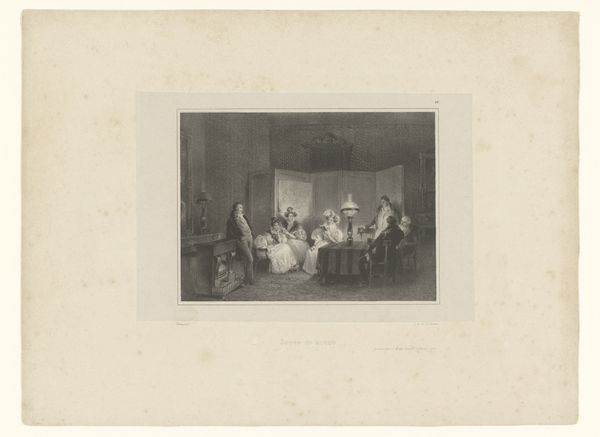
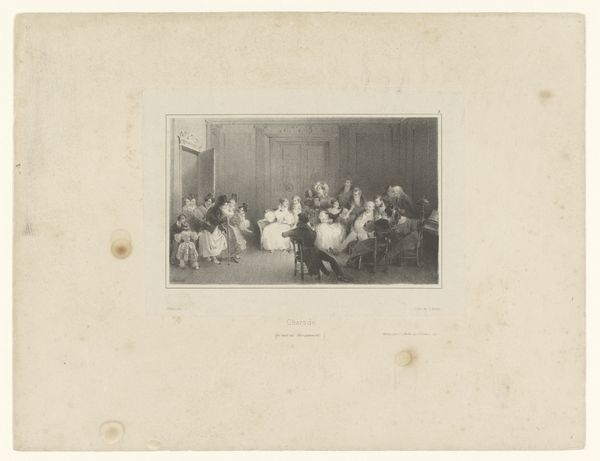
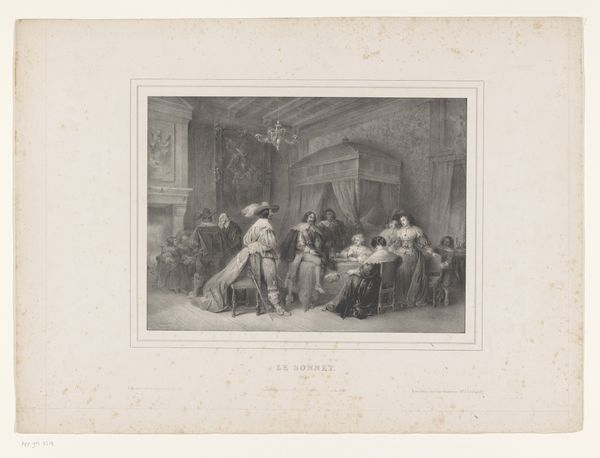
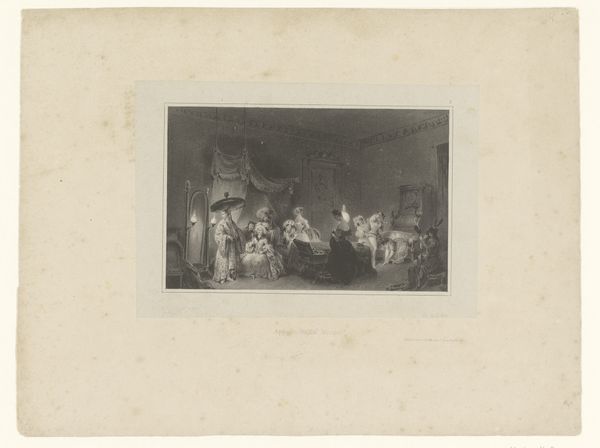
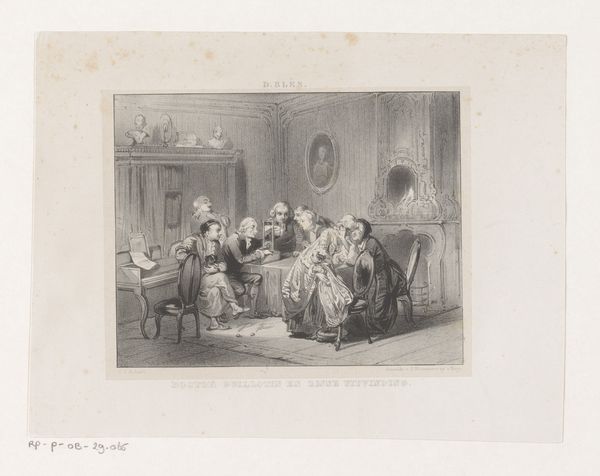
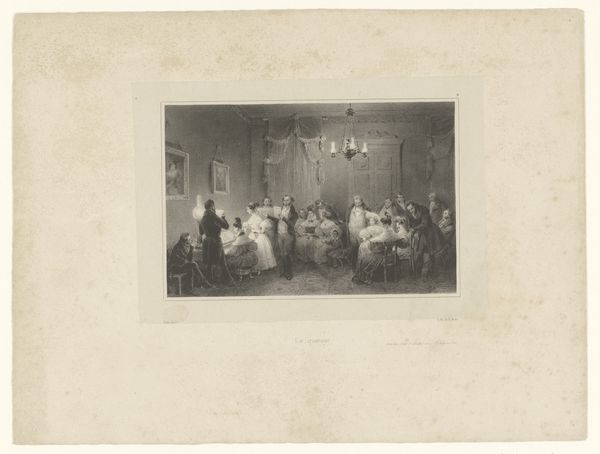
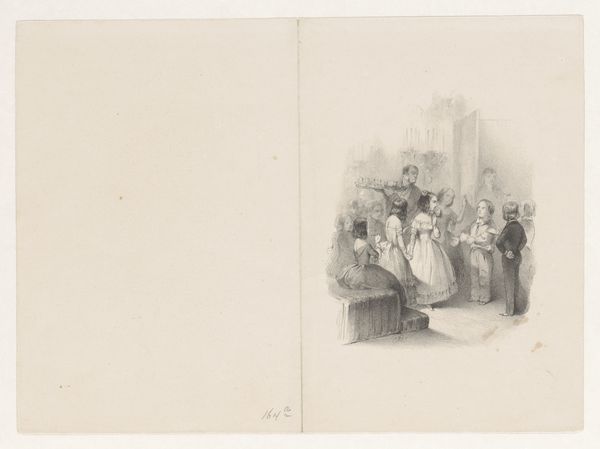
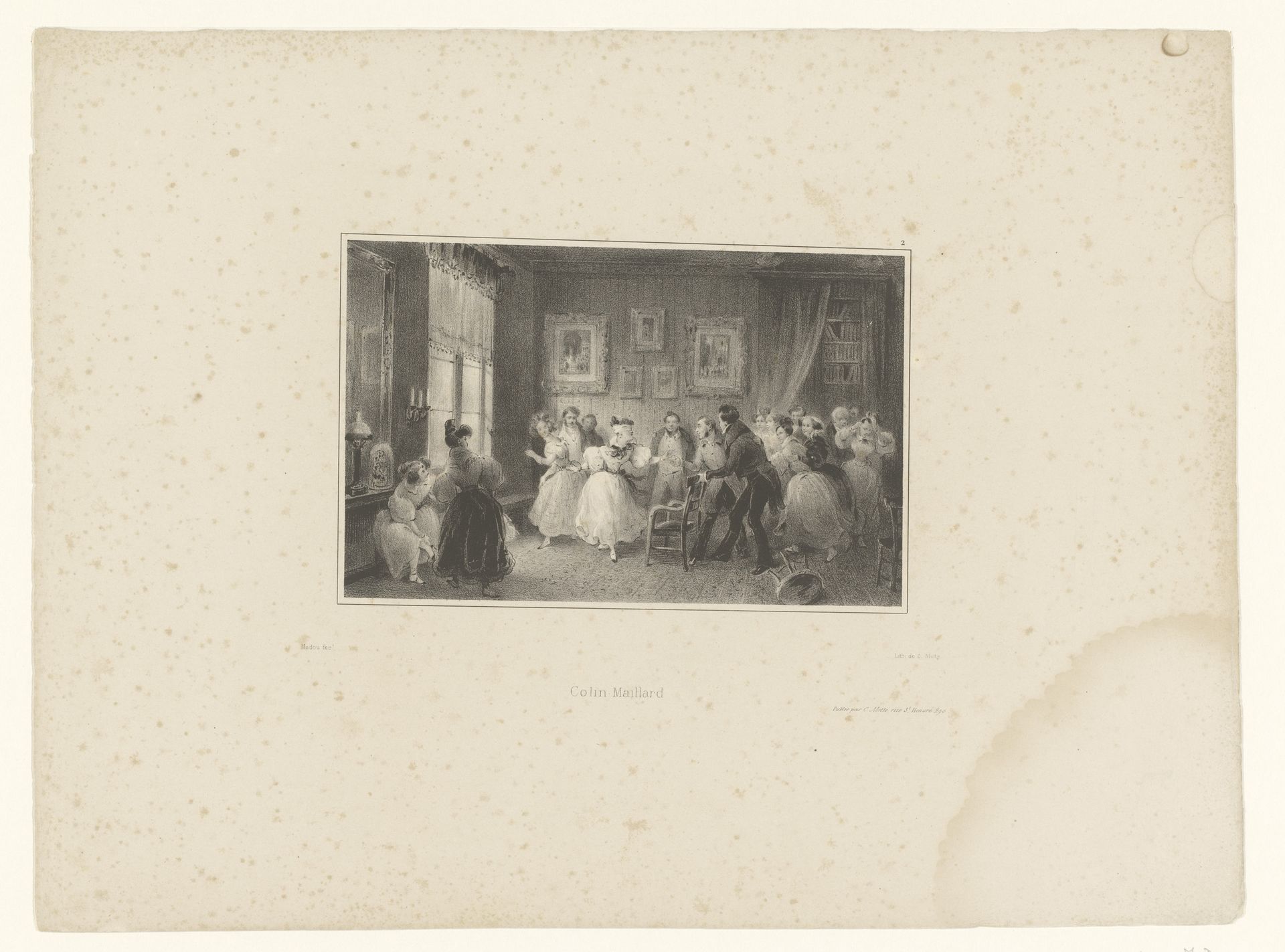
Jean-Baptiste Madou made this print, Gezelschap speelt een spel met blinddoek, by using a technique called lithography. Lithography involves drawing an image with a greasy crayon onto a flat stone or metal plate. The surface is then treated so that ink adheres only to the greasy areas, allowing the image to be printed. Look closely, and you can see the subtle gradations of tone, almost like a pencil drawing. It’s an inherently reproducible medium, and was perfect for circulating images widely during the 19th century. The texture and tone created through lithography lend a sense of immediacy, capturing a fleeting moment of bourgeois leisure. But consider too, the skilled labor involved in creating this image, and its purpose as a commodity, one small part of a vast print culture. Appreciating Madou’s print involves understanding not only its aesthetic qualities, but also its place within the social and economic landscape of its time.
Gezelschap speelt een spel met blinddoek
1833

Jean-Baptiste Madou
1796 - 1877Location
RijksmuseumArtwork details
- Medium
- drawing, lithograph, print
- Dimensions
- height 272 mm, width 367 mm
- Location
- Rijksmuseum
- Copyright
- Rijks Museum: Open Domain
Tags
portrait
drawing
narrative-art
lithograph
figuration
group-portraits
romanticism
genre-painting
watercolor
Comments
Be the first to share your thoughts about this work.
About this artwork
Jean-Baptiste Madou made this print, Gezelschap speelt een spel met blinddoek, by using a technique called lithography. Lithography involves drawing an image with a greasy crayon onto a flat stone or metal plate. The surface is then treated so that ink adheres only to the greasy areas, allowing the image to be printed. Look closely, and you can see the subtle gradations of tone, almost like a pencil drawing. It’s an inherently reproducible medium, and was perfect for circulating images widely during the 19th century. The texture and tone created through lithography lend a sense of immediacy, capturing a fleeting moment of bourgeois leisure. But consider too, the skilled labor involved in creating this image, and its purpose as a commodity, one small part of a vast print culture. Appreciating Madou’s print involves understanding not only its aesthetic qualities, but also its place within the social and economic landscape of its time.
Comments
Be the first to share your thoughts about this work.