Dimensions: height 108 mm, width 67 mm
Copyright: Rijks Museum: Open Domain
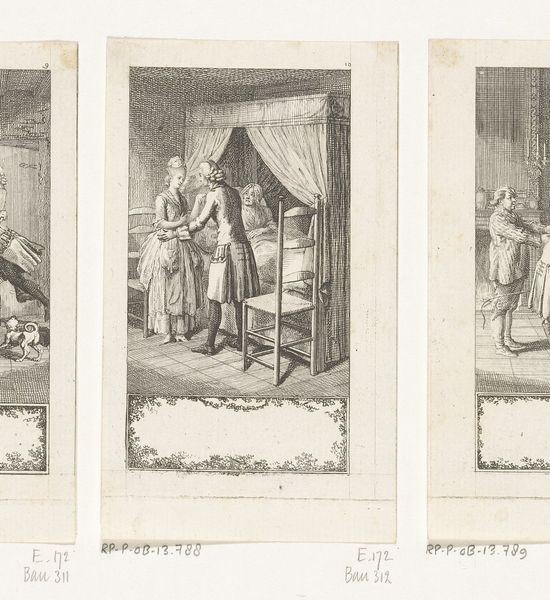
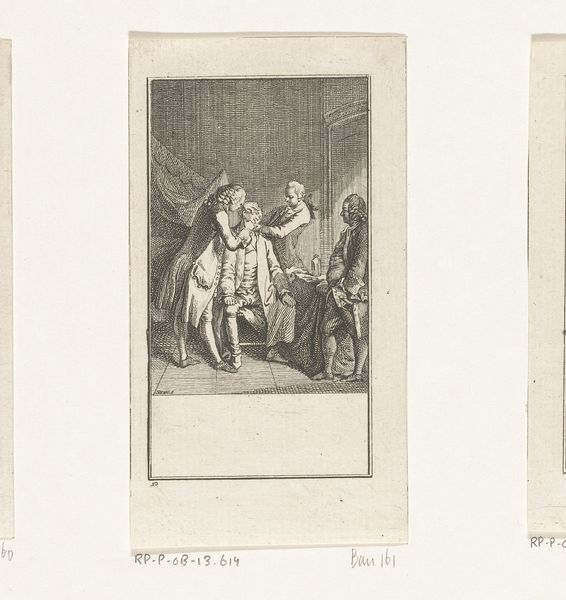
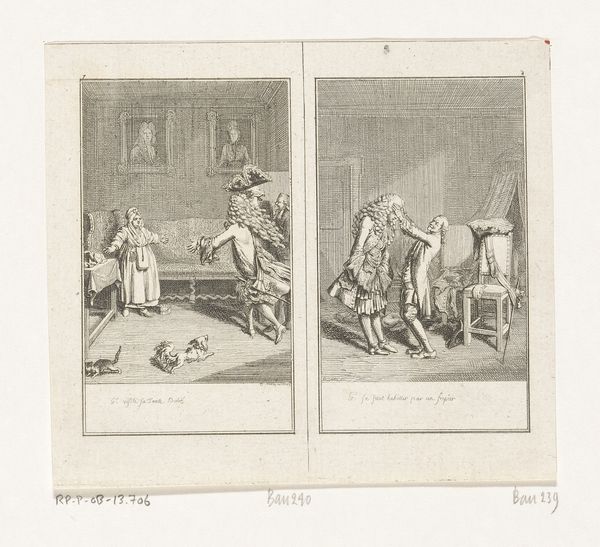
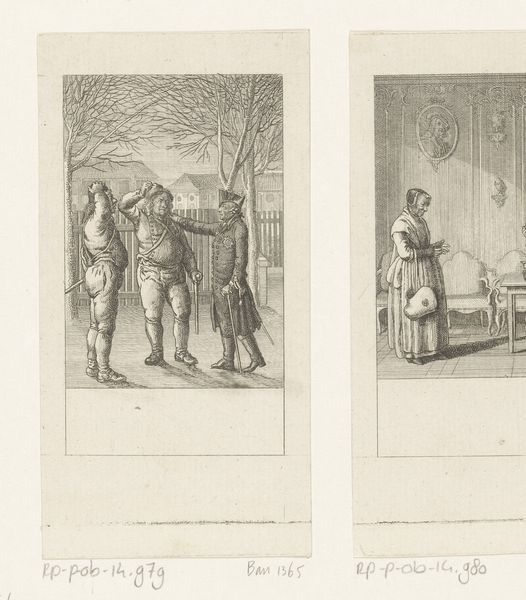
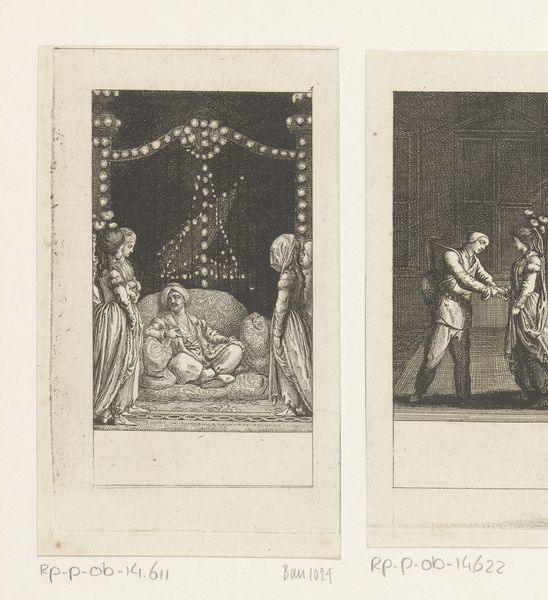
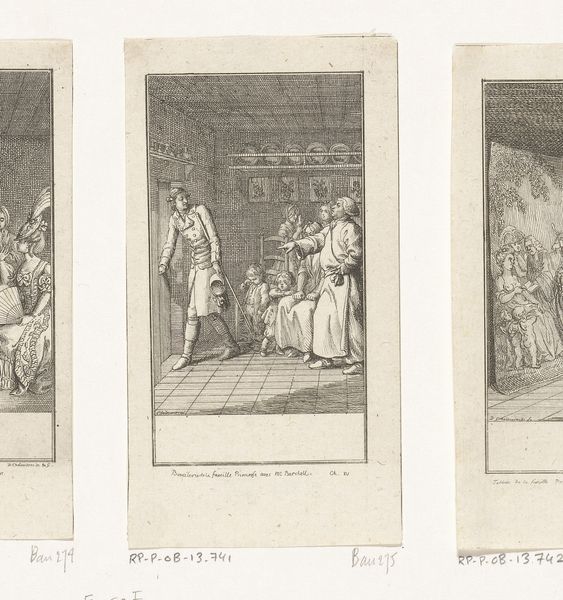
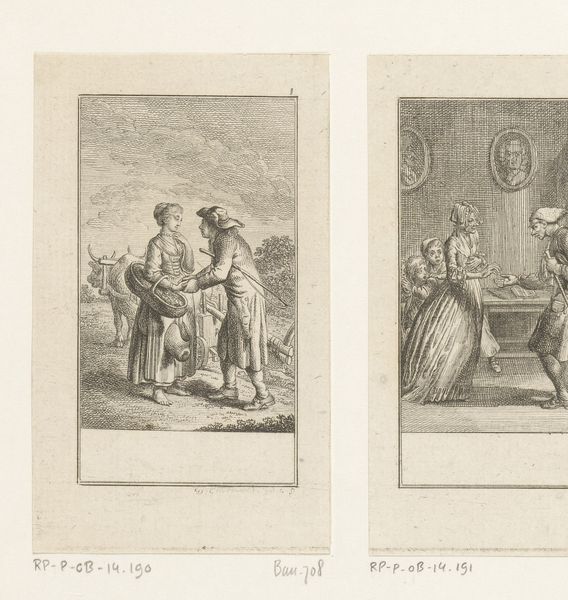
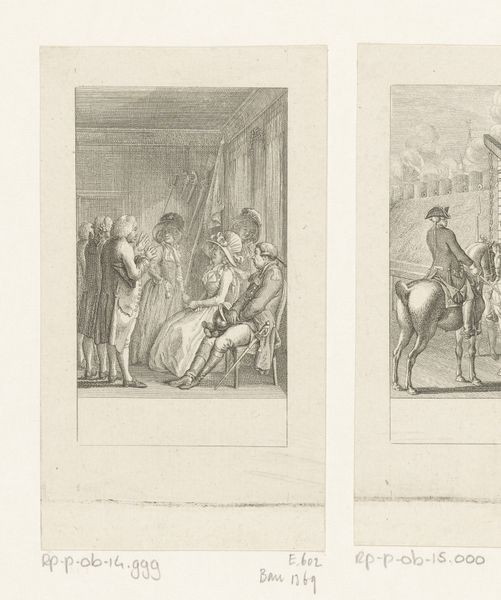
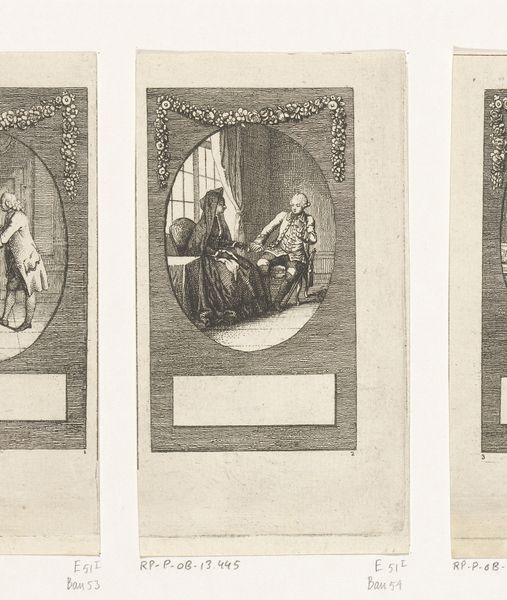
Curator: Welcome! Today we are exploring Daniel Chodowiecki's etching "Zorgvuldige basis voor de toekomstige opvoeding" from 1773, currently residing in the Rijksmuseum. Editor: This print depicts two contrasting scenes: a couple embracing with onlookers and a child diligently studying amongst books. I find the juxtaposition really striking! How do you interpret this work in its historical context? Curator: Precisely. Chodowiecki created this miniature artwork during the Enlightenment, a period where ideas about education and social order were being intensely debated. This was a time of shifting power dynamics where new forms of print media contributed significantly to how social issues were disseminated. Editor: I see! So, the print's title translates to "Careful Basis for Future Education." Was Chodowiecki making a statement on the role of love versus intellectual development? Curator: Perhaps. Consider the composition; on the left, the intimate embrace and crowded doorway present a chaotic image versus the solitary, ordered space of study on the right. What does this opposition suggest to you? Editor: It could be arguing that a passionate, possibly undisciplined, beginning contrasts with the merits of disciplined education to promote more socially desireable behavior. I suppose it comments on public morality. Curator: Precisely! Chodowiecki uses accessible imagery and printmaking technology to engage with public debates. What else strikes you about the image? Editor: I think it is clever that he used visual storytelling to provoke conversations around important topics, especially how education can lead to a well-ordered life. It highlights the impact imagery had as an instrument in political and social dialogues of the time. Curator: Exactly. Art in this era actively helped form, promote and regulate public consciousness. Editor: Thank you. I learned that understanding an artwork within its specific time offers greater appreciation for art's true societal influence.
Comments
No comments
Be the first to comment and join the conversation on the ultimate creative platform.
 Collect
 React
React Comment
More like this