1610
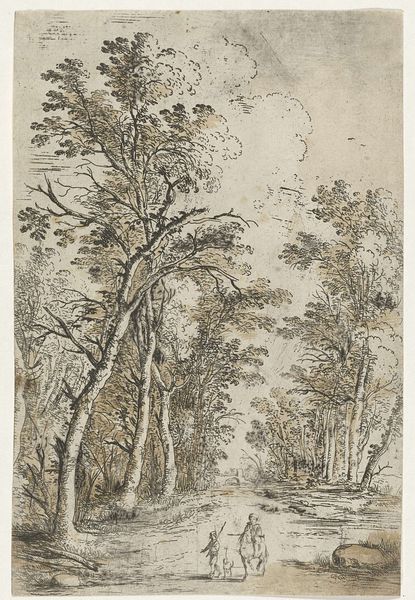
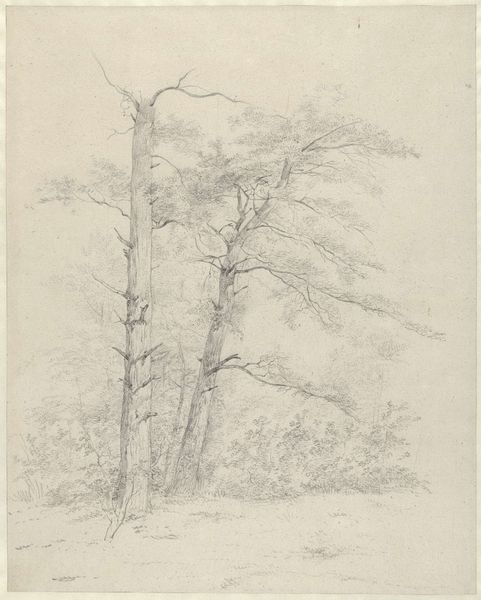
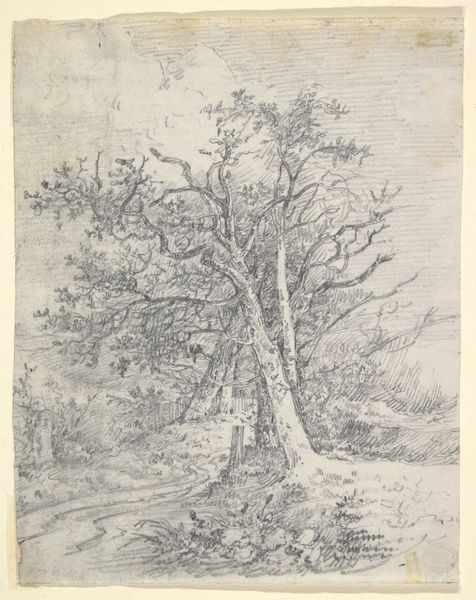
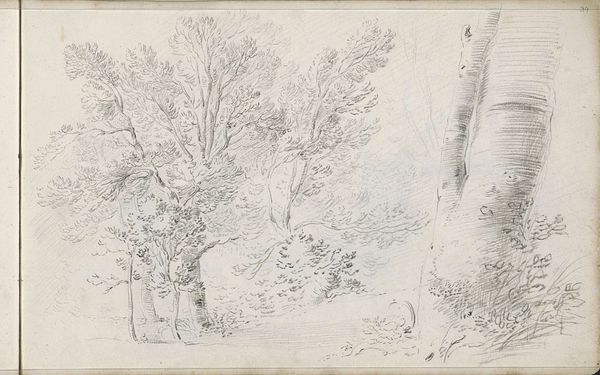
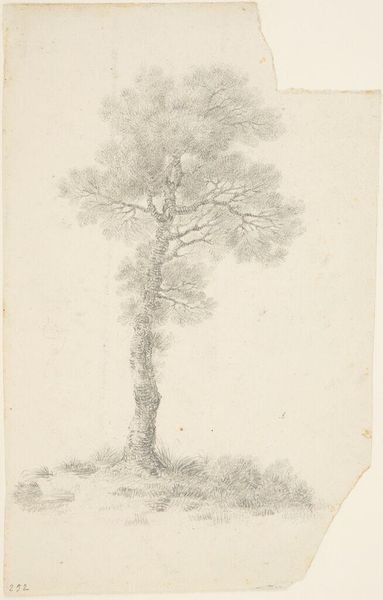
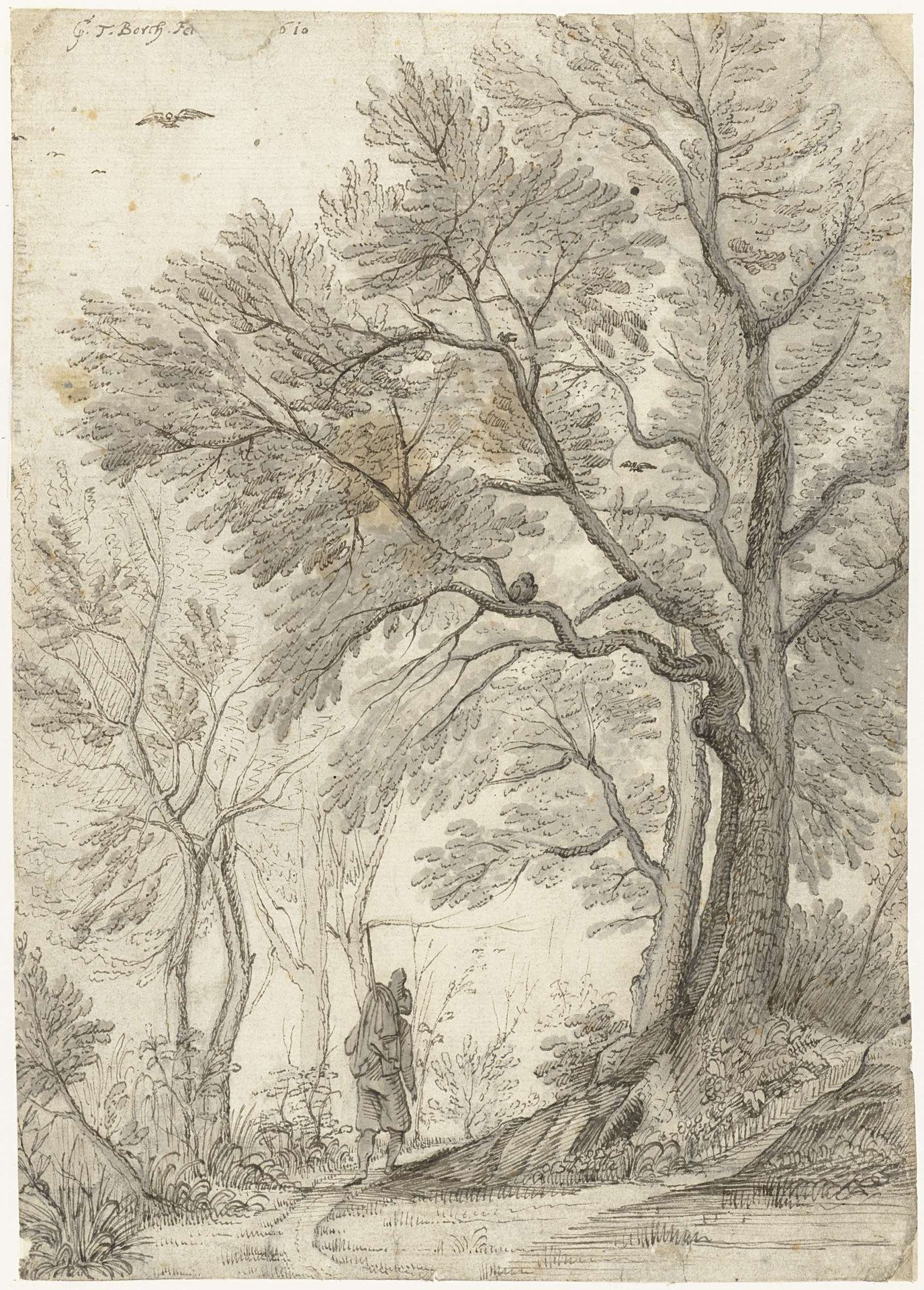
Bos van de Villa Madama buiten Rome

Gerard ter (I) Borch
1584 - 1662Location
RijksmuseumListen to curator's interpretation
Curatorial notes
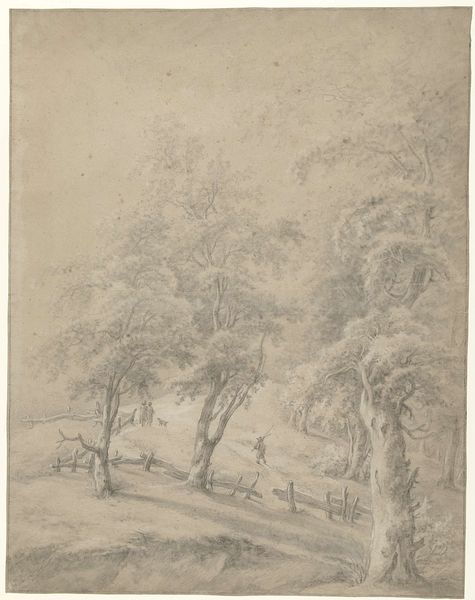
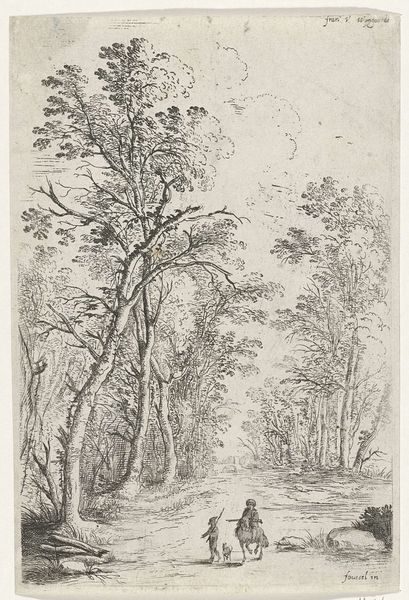
Editor: Here we have Gerard ter Borch’s “Bos van de Villa Madama buiten Rome,” created around 1610. It’s an ink and etching piece on paper and it gives me such a solitary, almost melancholic feeling. What do you see in this work? Curator: The iconography of the forest here is quite powerful. Throughout history, the forest has represented both danger and refuge, a place of the unknown where societal rules dissolve. Notice how the lone figure, perhaps a wanderer or pilgrim, enters this space. It mirrors a psychological journey, venturing into the depths of the self. Do you think he seems intimidated by his surroundings? Editor: I think there’s more curiosity than fear, really. But that single figure, does it tell us about genre-painting and the way figures relate to their landscapes? Curator: Precisely. Consider how landscape itself became a mirror of the human condition during the Baroque era. The path he walks symbolizes a journey through life, and that perch with birds is often used as a symbolic link to hope or something held sacred. How does the positioning of the trees affect the mood, in your view? Editor: They do frame him, almost protectively, even as they’re bare and reaching. And that creates a sense of enclosure but not necessarily of threat. Is it common to combine drawing with etching in Baroque landscapes like this one? Curator: It offered a rich texture and allows for more precise detail, adding layers of symbolic complexity. It represents not just a physical place, but also states a philosophical journey and that search of the self during the Baroque period. Editor: That emphasis on psychological space and historical understanding really shifts how I perceive the artwork now. Curator: Indeed. Art invites us to constantly see connections between cultural memory, personal reflection, and history. It provides insight on our current perspectives in looking and interpreting, don't you agree?