About this artwork
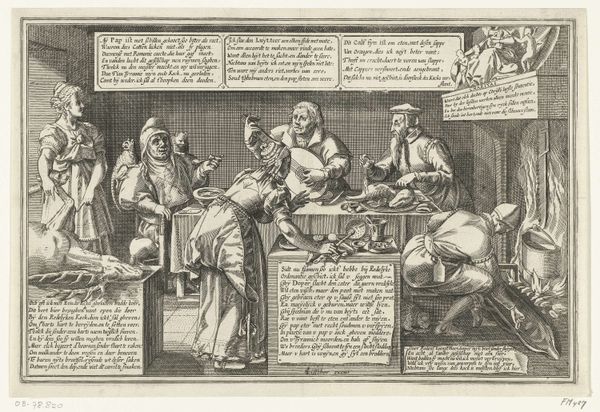
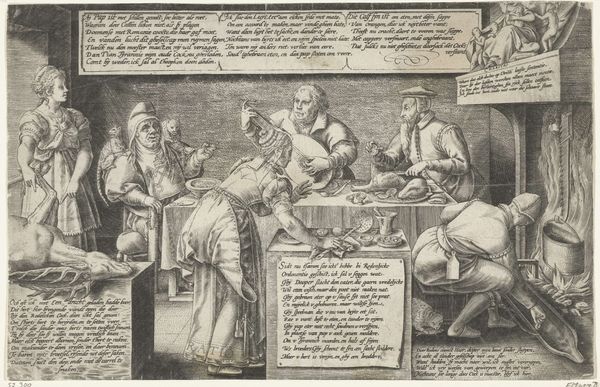
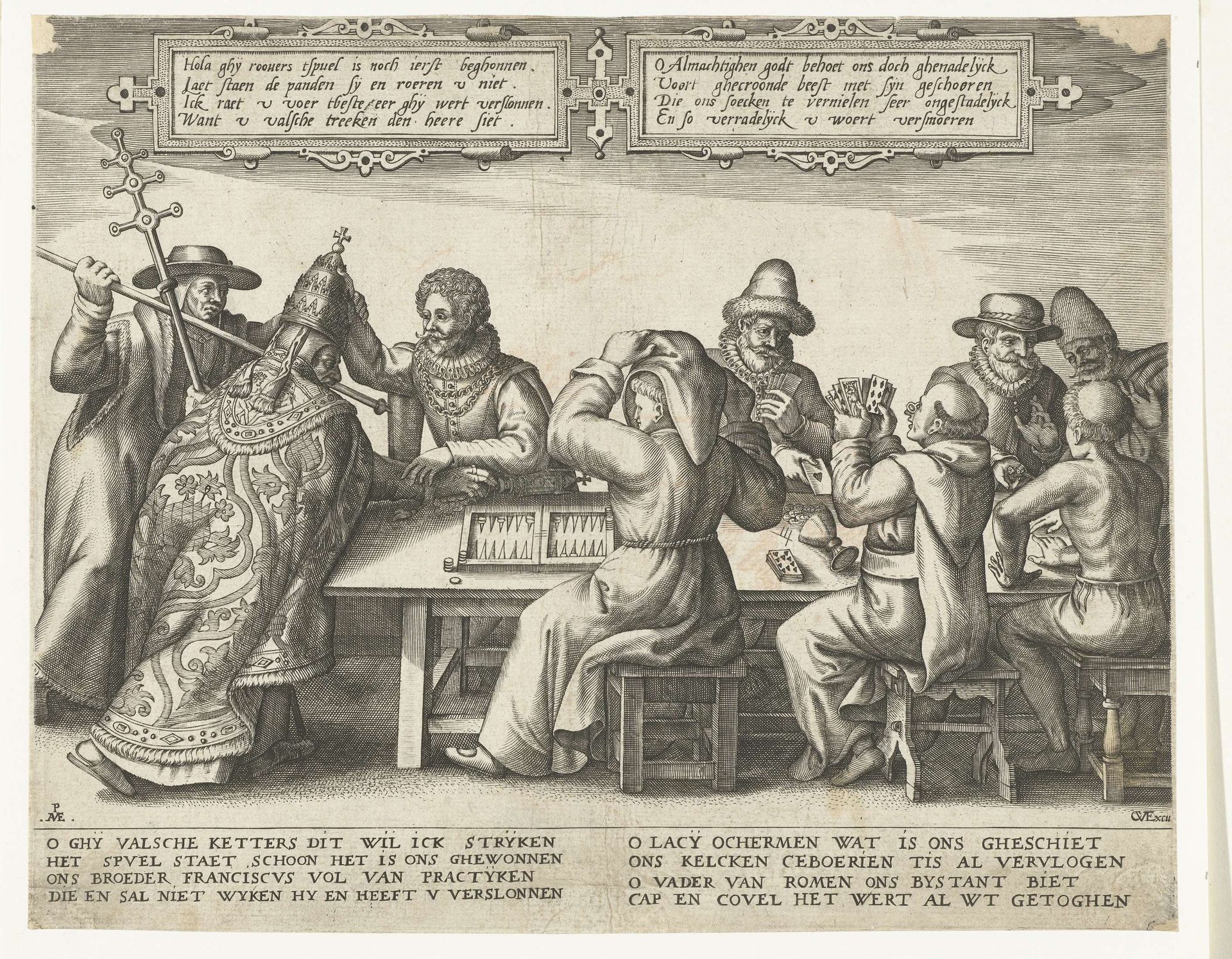
Curator: This is Pieter van der Heyden's "Het spel tegen de monniken," an engraving from around 1570, housed at the Rijksmuseum. It's quite striking, isn't it? Editor: It is! The composition is really intriguing. There's so much going on - figures playing cards and backgammon, others with elaborate religious garb… There's a sense of drama and maybe even a bit of chaos. How do you interpret this work? Curator: I see it as a potent piece of visual rhetoric, steeped in the religious and political tensions of the Reformation. Look at the central figures: a lavishly dressed clergyman is playing a game of backgammon with monks, while others are engrossed in cards. Don't you think it’s interesting how van der Heyden uses this mundane setting of games to represent deeper power dynamics and perhaps even critiques of religious authority? Editor: That makes sense. So the game isn't just a game; it's a metaphor? The engraving seems to accuse them of wasting time with games and neglecting their duties. Curator: Precisely! It speaks to a broader concern of the time – corruption within the Church. Do you notice the text boxes in the four corners of the engraving? In these, van der Heyden makes overt, textual attacks at the Catholic Clergy. The imagery then becomes another battleground through which one could voice reformationist arguments, and challenge the perceived moral failings of the Catholic Church. What do you make of that tension? Editor: It layers in a level of complexity. It seems the artist really wants to criticize this behaviour. Thank you, I would have just seen some people gambling in fancy garments. I have learnt to see this in the appropriate cultural and social contexts of the 16th century. Curator: Indeed. And seeing the art through the cultural wars helps unveil a historical understanding and the social dynamics within that era.
Het spel tegen de monniken, ca. 1570
1560 - 1582

Pieter van der Heyden
1525 - 1569Location
RijksmuseumArtwork details
- Medium
- print, engraving
- Dimensions
- height 220 mm, width 275 mm
- Location
- Rijksmuseum
- Copyright
- Rijks Museum: Open Domain
Tags
Comments
Share your thoughts
About this artwork
Curator: This is Pieter van der Heyden's "Het spel tegen de monniken," an engraving from around 1570, housed at the Rijksmuseum. It's quite striking, isn't it? Editor: It is! The composition is really intriguing. There's so much going on - figures playing cards and backgammon, others with elaborate religious garb… There's a sense of drama and maybe even a bit of chaos. How do you interpret this work? Curator: I see it as a potent piece of visual rhetoric, steeped in the religious and political tensions of the Reformation. Look at the central figures: a lavishly dressed clergyman is playing a game of backgammon with monks, while others are engrossed in cards. Don't you think it’s interesting how van der Heyden uses this mundane setting of games to represent deeper power dynamics and perhaps even critiques of religious authority? Editor: That makes sense. So the game isn't just a game; it's a metaphor? The engraving seems to accuse them of wasting time with games and neglecting their duties. Curator: Precisely! It speaks to a broader concern of the time – corruption within the Church. Do you notice the text boxes in the four corners of the engraving? In these, van der Heyden makes overt, textual attacks at the Catholic Clergy. The imagery then becomes another battleground through which one could voice reformationist arguments, and challenge the perceived moral failings of the Catholic Church. What do you make of that tension? Editor: It layers in a level of complexity. It seems the artist really wants to criticize this behaviour. Thank you, I would have just seen some people gambling in fancy garments. I have learnt to see this in the appropriate cultural and social contexts of the 16th century. Curator: Indeed. And seeing the art through the cultural wars helps unveil a historical understanding and the social dynamics within that era.
Comments
Share your thoughts