1862 - 1876
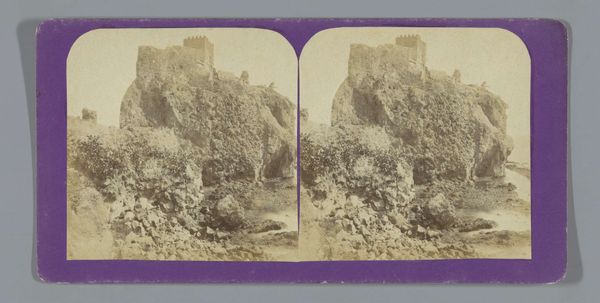
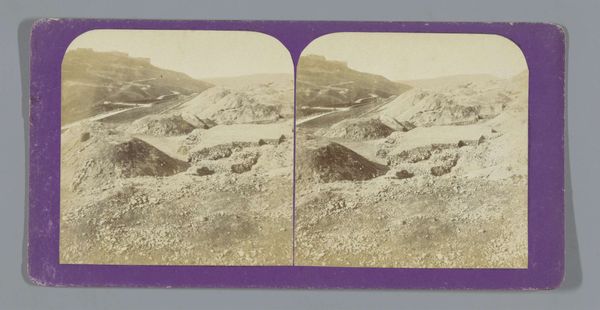
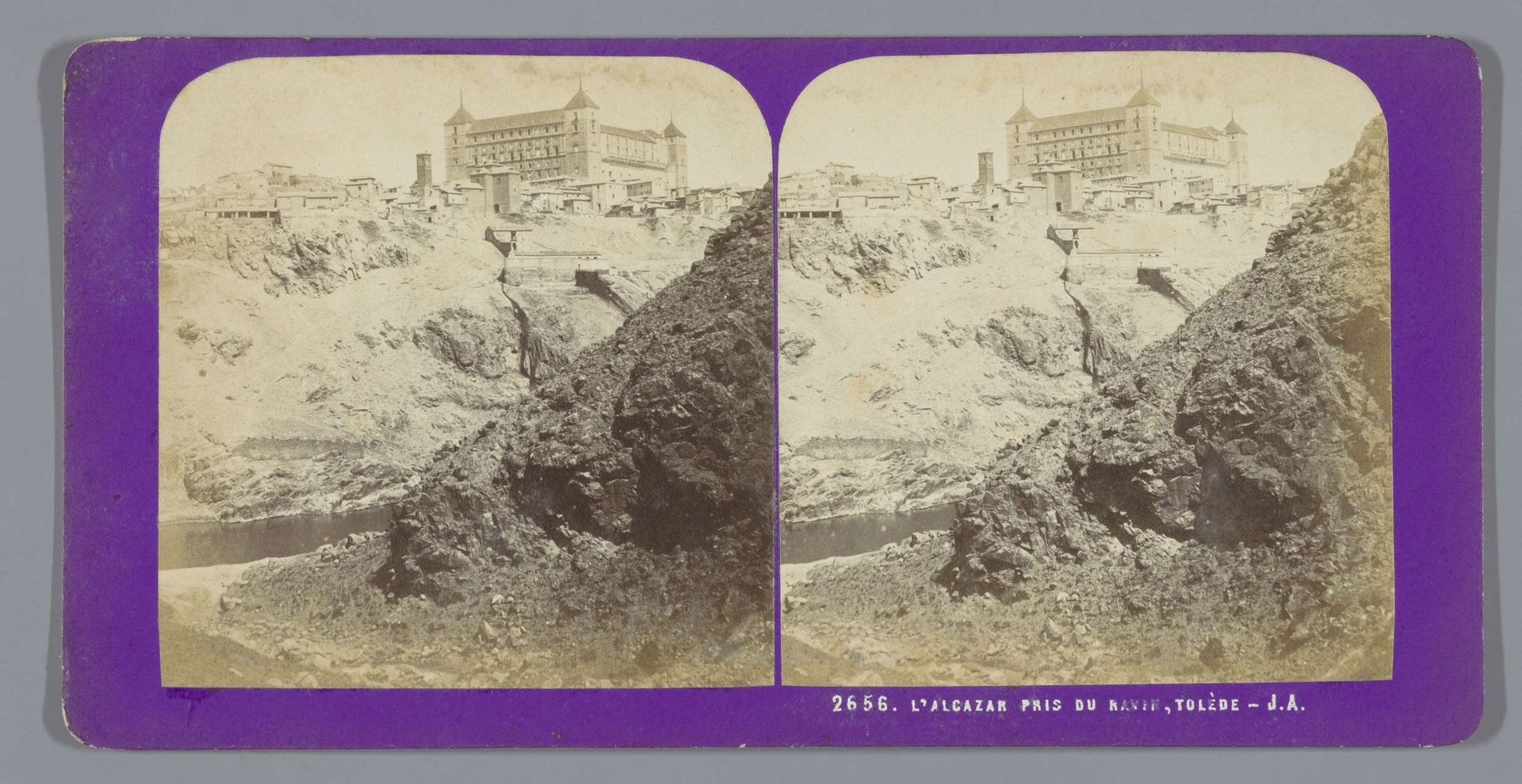
Gezicht op het Alcázar van Toledo

Listen to curator's interpretation
Curatorial notes
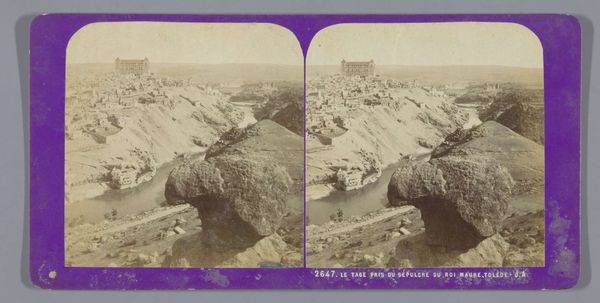
Curator: Here we have a gelatin-silver print titled “View of the Alcázar of Toledo” by Jean Andrieu, dating from 1862 to 1876. What are your first thoughts? Editor: It’s… monolithic. The fortress dominates, but the barren landscape somehow steals the scene with its intricate play of light and shadow. It exudes this palpable sense of solitude and permanence. Curator: Indeed, that interplay is critical. Observe how the composition establishes a distinct foreground, middle ground, and background, each rendered with subtle tonal variations. Note the rough texture of the rocks contrasting sharply with the fortress’s ordered facade. Editor: That fortress... Alcázar has powerful connotations. Royal power, military might... it all concentrates into this visual symbol. Did Andrieu deliberately choose this viewpoint to amplify those themes? Curator: Quite possibly. Consider that in Orientalist art, architectural monuments are often imbued with symbolic value to evoke a sense of history and grandeur. The photograph also features, minimally, the presence of the locals that are overshadowed. Editor: Right. Beyond its historical function, the fortress may also speak to larger cultural attitudes and biases related to power, control, and perception of space. Curator: Exactly. This composition utilizes depth and spatial relationships to subtly reinforce pre-existing notions of societal hierarchies, placing an emphasis on structure. The vertical lines draw our eye upwards. Editor: But the ruins and crevices around it feel almost untouched. It creates an interesting tension: The man-made fortress rising rigidly above the uneven nature. Is that part of its power? The sheer, blunt statement of human will made manifest? Curator: I agree entirely. And the very process of rendering reality through the chemical processes of early photography further complicates our relationship with what is shown. Editor: It all works to shape a certain view and understanding... food for thought, for sure! Curator: Precisely. A testament to how closely interconnected are visual representation and our perceptions of historical narratives and symbolic understanding.