1893
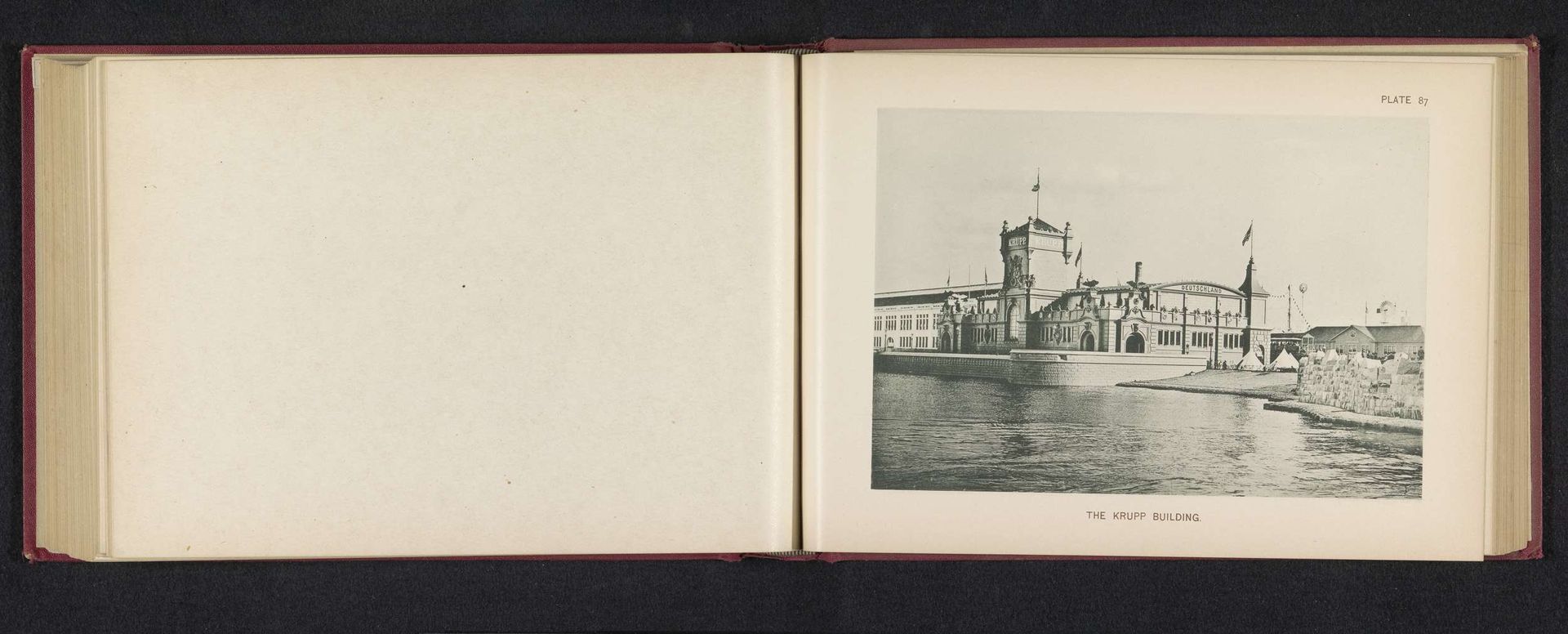
Paviljoen van de firma Krupp met wapens op de World's Columbian Exposition in Chicago in 1893

Listen to curator's interpretation
Curatorial notes
Charles Dudley Arnold captured the Krupp Pavilion at the World's Columbian Exposition in Chicago in 1893. It shows the imposing architecture of the Krupp Pavilion, adorned with flags that celebrate industrial might. These flags are not mere decorations; they echo ancient heraldry, symbols of power and dominion. Think back to medieval banners leading armies, or the standards of the Roman legions—visual assertions of authority and control. Here, they represent the industrial power of the Krupp company. Consider the swastika, once a symbol of well-being, which later became a powerful emblem of Nazi Germany. Its transformation underscores how symbols, like restless spirits, can be imbued with new, often contradictory, meanings over time, shaped by cultural and historical forces. This display, while seemingly benign, carries an unconscious weight. The collective memory of conflict and conquest is ever-present, influencing our response to these emblems of industrial strength. The pavilion, with its flags, engages us on a deep, subconscious level, stirring emotions tied to our shared past and the cyclical nature of power throughout history.