1624 - 1626
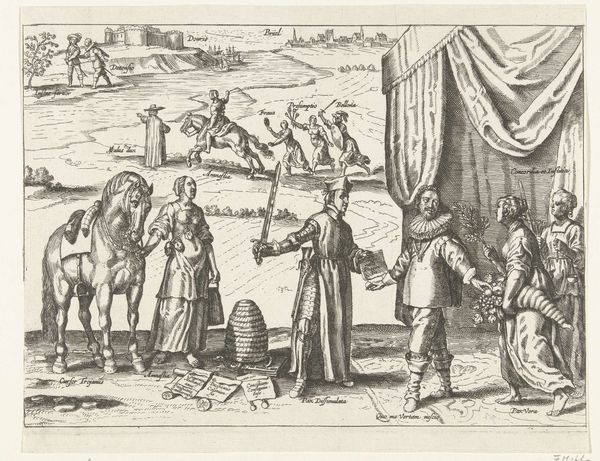
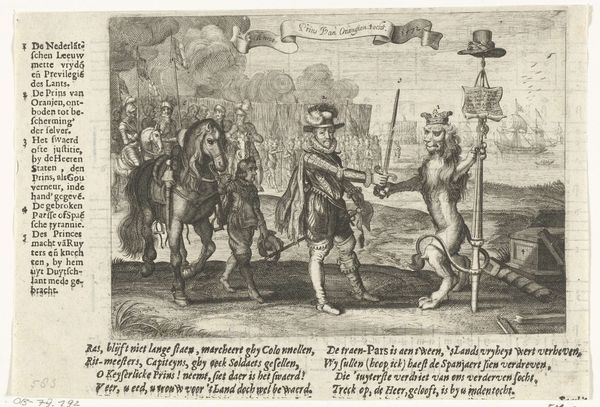
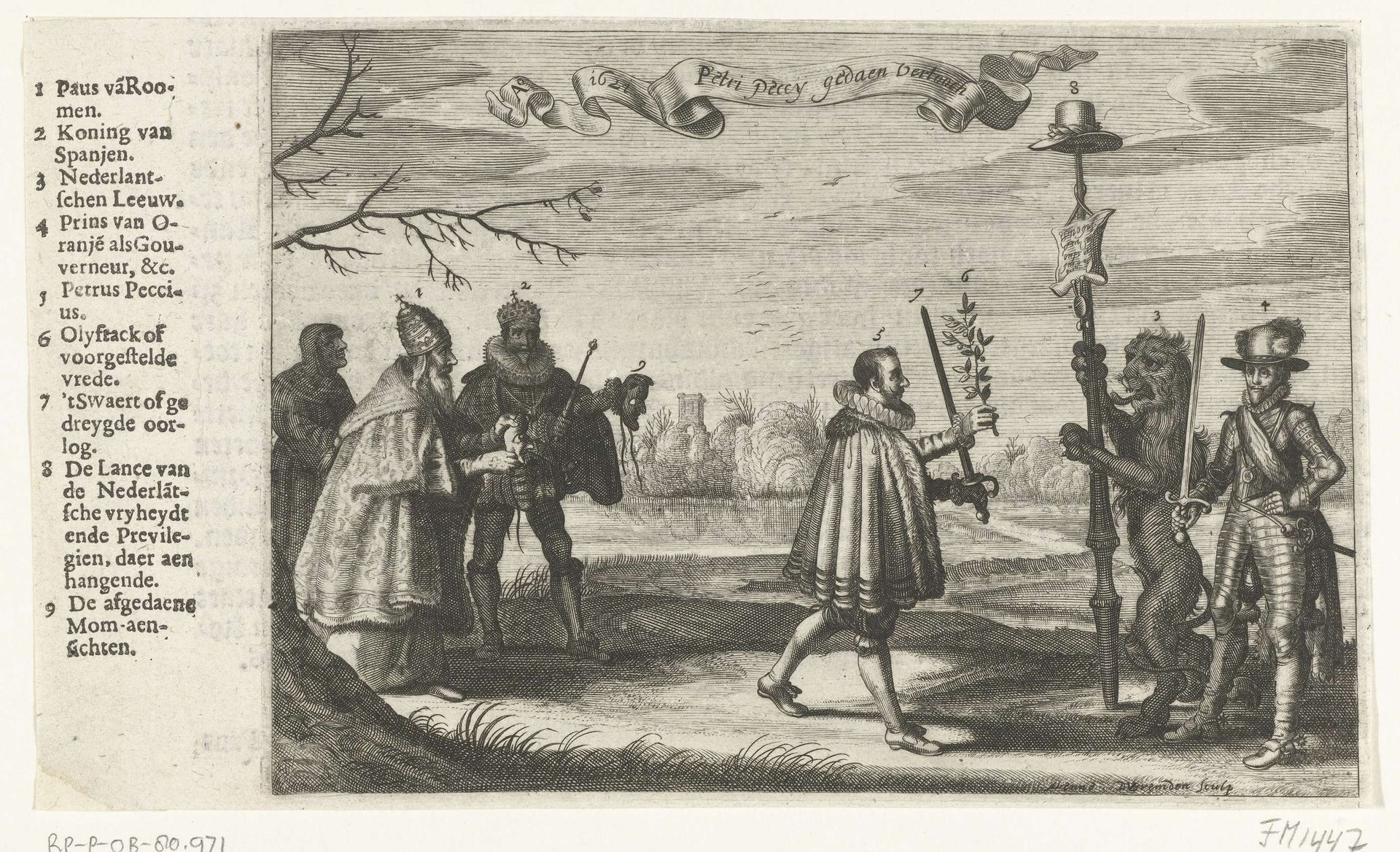
Allegorie op het afwijzen van de vredesvoorstellen gedaan door Peckius namens de Spaanse koning, 1621

Daniël van den Bremden
1587Location
RijksmuseumListen to curator's interpretation
Curatorial notes
Editor: This is an engraving made between 1624 and 1626 by Daniël van den Bremden, currently at the Rijksmuseum. It's titled "Allegory on the rejection of peace proposals made by Peckius on behalf of the Spanish King, 1621". The intricacy of the line work is stunning. I'm curious, what catches your eye when you look at this piece? Curator: As a materialist, I'm immediately drawn to the means of production. This print, an engraving, makes it inherently reproducible and widely distributable, meaning the ideas represented within could be disseminated to a large audience, becoming a tool of political discourse. Consider the labor involved in its making, each line meticulously carved to create this dense image. Who was this message really for? Editor: That's a great point. So, the fact that it's a print elevates its social purpose, in a way? Curator: Precisely. Look at the allegory itself. We have these figures clearly labeled: The Pope, King of Spain, the Dutch Lion... this isn’t just aesthetic art. It directly engages with power structures and the ongoing conflict, the Eighty Years' War. The printing process makes that political message physical, turning a debate into something tangible. How do you think this materiality informs our reading of the piece? Editor: Well, knowing it could be reproduced changes my view. It’s not just a statement, it's propaganda meant to sway public opinion! The details of the manufacturing and dispersal process suddenly seem so crucial. Curator: Exactly! Think about the cost of the paper, the skill of the engraver, the networks of distribution—each aspect played a part in shaping and solidifying these political ideologies. It's a conversation between material and ideology. Editor: This really encourages a new line of questions when approaching art; focusing on how it was made, distributed and how that impacted the message being conveyed. Curator: Indeed. Seeing art as a product of labor, and a force *in* social production, changes everything.